

Collagen supplements for athletes are products built from collagen peptides, a source of collagen-derived amino acids that many athletes add to their nutrition routine. Collagen is commonly discussed for connective tissue support, including tendons, ligaments, and joints, but it works alongside complete protein sources rather than replacing them.
Table of Contents:
- What Are Collagen Supplements for Athletes
- Why Do Athletes Consider Collagen Supplements
- What Does Research Say About Collagen and Athletic Performance
- Collagen vs Whey Protein: Which One Do Athletes Need
- How to Choose Collagen Supplements for Athletes
- How Athletes Can Add Collagen Into Their Nutrition Routine
- Why Athletes Choose BioOptimal Collagen Peptides
- FAQs
- Building Collagen Into Your Training Routine
Key Highlights
- Collagen supplements supply collagen-derived amino acids such as glycine, proline, and hydroxyproline. They are not a complete protein source on their own.
- Research on collagen peptides paired with vitamin C points to increased markers of collagen synthesis in tendons and connective tissue, especially when combined with resistance training.
- Collagen and whey protein play different roles in an athlete's diet. Whey supports muscle protein synthesis, while collagen supports the connective tissue that surrounds and transmits force through muscle.
- Several studies suggest taking collagen roughly 30 to 60 minutes before training, alongside a source of vitamin C, as the window most strongly associated with a synthesis response.
- A quality collagen product comes down to sourcing transparency, a short ingredient list, and documented third-party testing.
- BioOptimal Collagen Peptides are sourced from grass-fed, pasture-raised bovine and are third-party tested for heavy metals and other contaminants.
What Are Collagen Supplements for Athletes
Understanding Collagen Peptides
Collagen is the most abundant structural protein in the human body, making up roughly a third of total body protein. It forms the scaffolding of skin, tendons, ligaments, cartilage, and bone. Most collagen supplements on the market are hydrolyzed collagen peptides, meaning the collagen has been broken down into smaller chains of amino acids so the body can absorb them more readily. This is true whether the product comes in powder or capsule form.
The amino acid profile of collagen leans heavily toward glycine, proline, and hydroxyproline, three amino acids that are far less concentrated in typical dietary protein sources. That profile is a large part of why collagen has become a distinct category of sports nutrition supplement rather than a general protein powder.
Why Collagen Is Different From Other Protein Sources
Collagen is considered an incomplete protein because it is low in tryptophan and does not match the essential amino acid profile of complete proteins like whey, eggs, or meat. That does not make it less useful; it makes it a different tool. Complete proteins are the foundation for muscle protein synthesis. Collagen's amino acids are directed more toward the connective tissue matrix that surrounds muscle fibers, tendons, and joints. Most sports dietitians frame collagen as a complement to a protein-adequate diet, not a substitute for it.
Why Do Athletes Consider Collagen Supplements
Training places repeated mechanical stress on tendons, ligaments, and cartilage, tissues that recover more slowly than muscle because they receive less blood flow. Runners dealing with Achilles or patellar tendon strain, lifters managing elbow or shoulder joint stress, and field sport athletes absorbing repetitive impact all rely on the same connective tissue that collagen peptides are built to support.
Collagen functions as a structural protein rather than a fuel source. Its role in an athlete's routine is to provide the raw material, glycine, proline, and hydroxyproline, that the body uses to build and remodel the extracellular matrix in tendons and ligaments. This is why active individuals researching joint comfort and connective tissue resilience tend to land on collagen rather than a standard protein powder.
What Does Research Say About Collagen and Athletic Performance
Research suggests collagen primarily supports connective tissue health rather than directly improving athletic performance.
Key findings:
- 2017 Randomized Controlled Trial: Vitamin C-enriched gelatin consumed about an hour before exercise increased collagen synthesis markers, but the study did not show improved tendon health or athletic performance.
- 2021 Systematic Review (15 RCTs): Collagen peptides combined with exercise may help reduce joint pain, improve joint function, and support recovery. Evidence for increased muscle strength or body composition was inconsistent.
- 2026 Systematic Review: Collagen supplementation combined with high-intensity resistance training may improve tendon cross-sectional area and stiffness, but it does not provide additional gains in muscle strength beyond those achieved through resistance training alone.
Overall takeaway: Collagen is best used to support tendons, ligaments, cartilage, and other connective tissues, especially when paired with resistance training. It should complement, not replace adequate dietary protein for muscle growth and athletic performance.
Collagen vs Whey Protein: Which One Do Athletes Need
This is one of the most common questions athletes ask, and the honest answer is that these two proteins are not competing for the same job.
|
Factor |
Collagen |
Whey Protein |
Verdict |
|---|---|---|---|
|
Protein type |
Collagen-derived peptides |
Complete dairy protein |
Different jobs |
|
Main amino acids |
Glycine, proline, hydroxyproline |
Broad essential amino acid profile |
Different jobs |
|
Common use |
Connective tissue nutrition focus |
Supporting daily protein intake and muscle repair |
Complementary |
|
Replacement for meals |
No |
No |
Neither |
|
Athlete role |
Complementary support option |
Main protein source for many athletes |
Use both |
Most athletes get the best results using both. Whey or another complete protein source carries the daily protein load that drives muscle repair, while collagen is layered in specifically for tendon, ligament, and joint support. Neither one is designed to replace whole food protein or a balanced training diet.
How to Choose Collagen Supplements for Athletes
1. Check the Collagen Source
The quality of collagen starts with its source. Look for collagen made from grass-fed, pasture-raised bovine cattle, as these products are typically produced under stricter sourcing standards. Reputable brands should clearly disclose where their collagen comes from and how it is processed. If you're looking for a trusted option, explore our Grass-Fed Collagen collection, which features high-quality collagen sourced from grass-fed, pasture-raised cattle and is third-party tested for purity.
2. Look at Ingredient Simplicity
A collagen supplement does not need a long ingredient list to work. Fillers, artificial sweeteners, and unnecessary additives add cost without adding benefit. A single-ingredient, unflavored collagen powder or capsule gives you control over how it fits into a shake, coffee, or meal without introducing anything your training diet does not need.
3. Review Quality and Testing Information
Third-party testing for heavy metals and contaminants is one of the clearest signals of a quality supplement, since collagen sourced from animal tissue can concentrate environmental contaminants if the sourcing and testing process is not rigorous. It is worth checking whether a brand discloses its testing practices and where its products are manufactured before adding a collagen supplement to your routine.
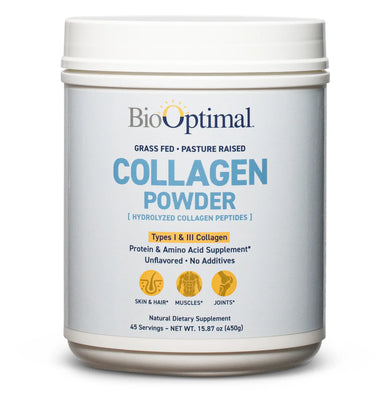
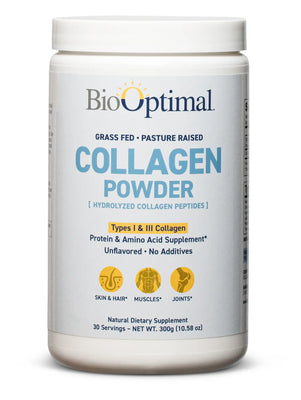
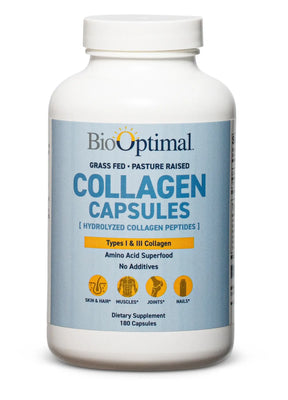
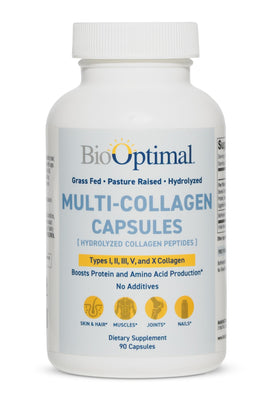
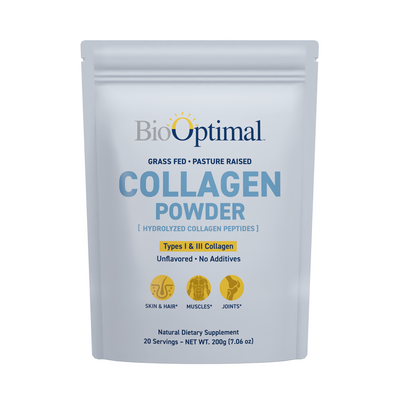
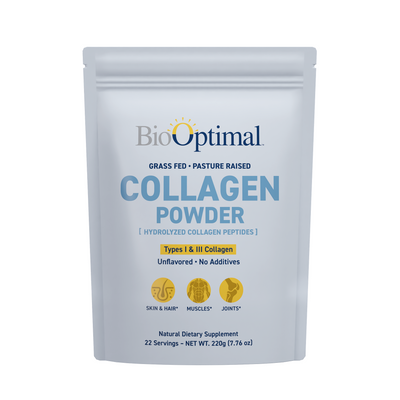
BioOptimal Collagen Peptides are sourced from grass-fed, pasture-raised bovine, contain no fillers, binders, or preservatives, and are third-party tested for heavy metals and other contaminants. You can compare the collagen capsules and collagen powder side by side to see which format fits your training routine.
Looking for collagen peptides built for a daily training routine? Browse BioOptimal Collagen Peptides to compare capsule and powder options.
How Athletes Can Add Collagen Into Their Nutrition Routine
Timing appears consistently throughout the research. Several studies suggest taking collagen about 30 to 60 minutes before training, ideally alongside a source of vitamin C, such as citrus fruit or a vitamin C supplement, since vitamin C is an essential cofactor in the body's natural collagen production process.
Consistency matters more than any single serving. Most research and product guidance points to a minimum of 4 to 8 weeks of daily use before noticing a meaningful difference in joint comfort or connective tissue resilience, with continued use supporting results over time.
An unflavored collagen powder mixes easily into a pre-training smoothie, a post-workout protein shake, or a cup of coffee without changing the taste. If you are already using other training supplements, our guide on taking collagen and creatine together walks through how the two work side by side. For athletes who prefer training first thing in the morning, taking collagen on an empty stomach is a common approach and one that hydrolyzed collagen peptides handle well.
Collagen capsules are the more portable option for athletes who travel for competitions or split their day between a gym, a field, and a desk. If you want to see what a realistic timeline of results looks like, our 12-week collagen results guide breaks down what to expect week by week.
Why Athletes Choose BioOptimal Collagen Peptides
Athletes researching collagen tend to land on the same short list of priorities: clean sourcing, a simple ingredient panel, and documented testing. BioOptimal Collagen Peptides are formulated around exactly that short list.
- Grass-fed, pasture-raised bovine collagen, Types I and III, free from hormones and antibiotics
- Double hydrolyzed for bioavailability, with no fillers, binders, gluten, dairy, soy, or added sugar
- Third-party tested for heavy metals and other contaminants, manufactured in the United States
- Available as an unflavored powder that dissolves in hot or cold liquid, or as a capsule for on-the-go convenience
Male athletes managing joint stress from heavy training loads may also want to read our collagen for men guide, which covers dosage and what changes to expect. For a broader look at how long consistent use takes to show results, our collagen timeline by goal breaks results down by skin, joints, and hair. Athletes rounding out a broader superfood routine can also compare spirulina and chlorella as additional daily nutrition support.
See how BioOptimal Collagen Peptides compare View BioOptimal Collagen Products and pick the format that fits your training schedule.
FAQs
1. Are collagen supplements good for athletes?
Yes. Collagen provides amino acids that support tendons, ligaments, cartilage, and other connective tissues. It works best alongside complete protein sources like whey or lean meat.
2. When should athletes take collagen?
Research suggests taking collagen 30–60 minutes before exercise, ideally with a source of vitamin C to support collagen production.
3. Is collagen better than whey protein?
No. Whey supports muscle growth, while collagen supports connective tissues. They complement each other rather than compete.
4. Can collagen support joints and tendons?
Yes. Studies suggest collagen, combined with resistance training, may help support joint health, tendon structure, and stiffness. It is not a treatment for injuries.
5. How much collagen should athletes take?
Most studies use 10–20 grams per day. Follow the serving size recommended on your product label.
6. What should you look for in a collagen supplement?
Choose grass-fed, pasture-raised collagen with a simple ingredient list and third-party testing for quality and purity.
7. Is collagen a complete protein?
No. Collagen lacks some essential amino acids, so it should supplement, not replace complete protein sources.
8. Are collagen supplements safe?
Collagen is generally safe for most healthy adults. If you're pregnant, nursing, have allergies, or have a medical condition, consult your healthcare provider before use.
Building Collagen Into Your Training Routine
Collagen supplements are not a replacement for a solid training diet, but they fill a specific gap that complete proteins are not built to fill: nutritional support for the tendons, ligaments, and connective tissue that carry the load of every rep, sprint, and mile. Pair a quality collagen peptide with your existing protein intake, take it consistently in the window before training, and give it the 4 to 8 weeks the research suggests before judging the results.
Choose a collagen product built for your training goals with BioOptimal Collagen Peptides, grass-fed, third-party tested, and available in powder or capsule form.