

Louis's takeaways:
Table of Contents:
- Should Men Take Collagen? Yes - Here's What the Research Shows
- The Testosterone Myth: Does Collagen Affect Male Hormones?
- Top Benefits of Collagen for Men (with Clinical Evidence)
- Collagen for Men by Decade: What to Expect at 25, 35, 45, and 55+
- Best Type of Collagen for Men
- How Much Collagen Should a Man Take? Dose by Goal
- How Men Should Take Collagen: Timing and Stacking
- How Long Until Men See Results?
- Side Effects and Safety for Men
- Frequently Asked Questions
Collagen helps men by supporting joint comfort, tendon and ligament strength, muscle recovery, and skin resilience. Men lose about 1 percent of natural collagen production per year starting in their late 20s. Daily supplementation with 10 to 15 grams of hydrolyzed collagen peptides for 8 to 12 weeks produces measurable results across all four areas, regardless of age or training status.
Walk into any supplement store and collagen looks like a women's product. Pink packaging. Beauty messaging. Skin-and-nails marketing. None of that reflects the actual research. Collagen is a structural protein that builds tendons, ligaments, cartilage, bones, skin, and the connective tissue around your muscles. Your body uses it the same way regardless of sex.
This guide covers what collagen does for men specifically, the testosterone myth that comes up in every supplement forum, the realistic benefits backed by clinical research, dose by goal, how to stack it with creatine and whey, and what to expect by decade. No fluff.
Should Men Take Collagen? Yes - Here's What the Research Shows
Collagen is the most abundant protein in your body. It accounts for roughly 30 percent of total protein content and provides the structural foundation for skin, bones, tendons, ligaments, and cartilage. Men and women have the same collagen types, the same fibroblast cells producing it, and the same age-related decline.
That decline matters. Natural collagen production starts dropping by approximately 1 percent per year beginning in your late 20s. By age 50, you have lost roughly 20 percent of your baseline. The decline accelerates with sun exposure, smoking, poor sleep, and diets high in ultra-processed sugar. The result is slower tendon recovery, joint stiffness, reduced skin elasticity, and increased injury risk during training.
Hydrolyzed collagen peptides supply your body with concentrated amino acids - glycine, proline, and hydroxyproline - that fibroblasts use to synthesize new collagen fibers. The clinical evidence base for men specifically is strong: a 2015 trial in older men with sarcopenia showed measurable gains in muscle mass and strength when collagen peptides were combined with resistance training. A 2017 trial in male athletes documented significant reductions in joint pain at 5 grams daily. A 2019 trial in healthy men showed improved Achilles tendon structure when collagen was paired with vitamin C and training.
The Testosterone Myth: Does Collagen Affect Male Hormones?
Walk through any supplement forum and you will find conflicting claims: some sites insist collagen boosts testosterone, others claim it tanks it, and most dodge the question entirely. Here is the actual evidence.
There is no clinical evidence in human trials that hydrolyzed collagen peptides increase or decrease testosterone levels in men. Multiple studies measuring body composition, strength, and recovery in male populations have not reported meaningful changes in testosterone, free testosterone, or other androgen markers as a result of collagen supplementation. The studies that show muscle mass gains in older men, including the 2015 Zdzieblik trial, attribute those gains to amino acid availability supporting muscle protein synthesis - not to hormonal effects.
The biological reasoning is straightforward. Testosterone is synthesized from cholesterol inside Leydig cells in the testes through a multi-step enzymatic process. The structural extracellular matrix surrounding Leydig cells does contain collagen, and animal research suggests excessive Type IV collagen accumulation in testicular tissue can impair Leydig cell function. But that is a pathological scenario in mutant mice, not a supplementation outcome. Ingesting hydrolyzed peptides in your morning coffee does not influence steroidogenesis.
The practical takeaway: do not take collagen expecting a testosterone boost. The proven benefits for men are joint comfort, tendon resilience, recovery support, and skin health. If your goal is testosterone, the evidence-backed levers are resistance training, adequate protein intake, sleep of 7 hours or more, sunlight or supplemented vitamin D, and managing body fat. Collagen complements those inputs but does not replace them.
Top Benefits of Collagen for Men (with Clinical Evidence)
Joint Pain Reduction in Active Men
Joint pain is the most-cited reason men start supplementing. A 2017 study published in Applied Physiology, Nutrition, and Metabolism followed athletes taking 5 grams of collagen peptides daily and found significant reductions in activity-related joint pain compared with placebo. The effect was strongest in knees and ankles, the joints under highest impact load during running, lifting, and explosive sport. Collagen is the primary structural protein in cartilage, the tissue that cushions joints; supplementation supplies the amino acids your body uses to support cartilage maintenance.
Tendon and Ligament Strength
Tendons and ligaments are made almost entirely of Type I collagen and recover slowly because they receive less blood flow than muscle tissue. A 2019 trial in the British Journal of Sports Medicine found that pairing 15 grams of collagen with 50 milligrams of vitamin C plus an Achilles tendon training protocol improved tendon stiffness and structural properties in healthy male participants over 6 months. For men lifting heavy or doing explosive movements, stronger tendons mean better force transfer and lower rupture risk.
Muscle Mass Support in Older Men
Sarcopenia is the age-related loss of muscle mass that accelerates after 50. The 2015 Zdzieblik trial paired 15 grams of collagen peptides daily with three weekly resistance training sessions in older men with sarcopenia and documented significantly greater fat-free mass and strength gains compared with placebo plus training. Collagen alone is not a complete protein because it is low in leucine, the amino acid that drives muscle protein synthesis - but it provides a useful supplementary protein source for active older men.
Skin Resilience and Recovery
Skin thickness and elasticity decline with age, which affects how well skin protects against sun, wind, and physical wear. A 2019 review of 11 clinical trials found that hydrolyzed collagen supplementation improved skin elasticity, hydration, and dermal collagen density in both male and female participants. For men spending time outdoors or training in harsh conditions, this is functional skin integrity, not aesthetics.
Collagen for Men by Decade: What to Expect at 25, 35, 45, and 55+
Collagen affects different priorities at different life stages. The table below maps the primary benefits men typically notice by decade, the recommended daily dose, and the most relevant collagen type for that goal. Numbers reflect clinical study consensus, not best-case marketing.
|
Decade |
Primary Concern |
What Collagen Helps Most |
Daily Dose |
Best Type |
|
20s |
Recovery from training, injury prevention |
Faster recovery, tendon resilience, DOMS reduction |
5 to 10 g |
Type I and III |
|
30s |
Early stiffness, slower recovery, training plateaus |
Joint comfort, post-workout recovery, skin |
10 g |
Type I and III |
|
40s |
Knee or shoulder pain, tendon issues, weight gain |
Joint pain reduction, tendon support, body composition |
10 to 15 g |
Type I, II, III |
|
50s+ |
Sarcopenia, bone density, mobility, recovery |
Muscle mass with training, bone density, joint mobility |
15 g |
Multi-collagen (I, II, III, V, X) |
The pattern holds across populations: men in their 20s use collagen primarily for training recovery and injury prevention, men in their 30s start noticing the early effects of declining collagen production, men in their 40s often start because of a specific joint or tendon issue, and men 50 and older use collagen alongside resistance training to fight sarcopenia and support bone density. Multi-collagen blends covering Types I, II, III, V, and X provide the broadest coverage for older men because the body needs cartilage support (Type II) alongside skin/tendon support (Types I and III) and bone matrix support (Types V and X).
Best Type of Collagen for Men
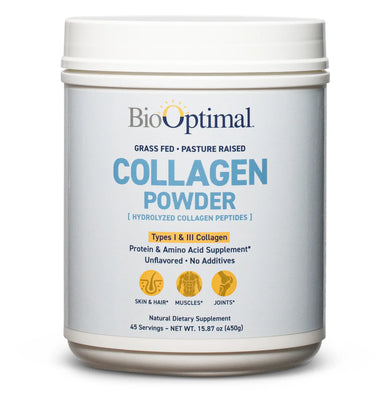
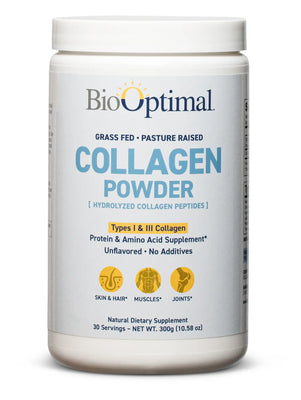
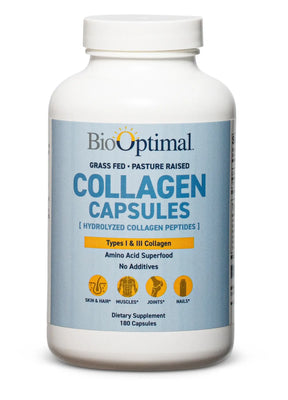
Most collagen supplements use Type I and III, sourced from bovine. These two types make up the majority of skin, bones, tendons, and ligaments, and they map to the male goals discussed above. Bovine collagen is the most studied source, the most cost-effective, and the form used in nearly all positive trials in male populations. Grass-fed and pasture-raised sources offer cleaner amino acid profiles and avoid the hormones and antibiotics found in conventional bovine sources.
Marine collagen, sourced from fish skin, is rich in Type I and absorbs slightly faster due to smaller peptide size, but it costs more and offers no clinically meaningful advantage for the male goals here. Marine is a reasonable choice for men with bovine-source restrictions or fish-positive dietary preferences.
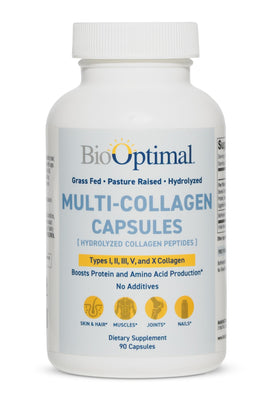
Multi-collagen blends covering Types I, II, III, V, and X are worth considering for men over 40 or for any man combining joint support with skin and tendon goals. Type II is the dominant cartilage collagen and gets minimal coverage in single-source Type I/III powders.
The form matters more than the source. Look for hydrolyzed collagen peptides (also labeled collagen peptides) on the ingredient panel. Hydrolyzation breaks the protein into smaller peptide chains, which absorb faster and more reliably. Non-hydrolyzed gelatin and unhydrolyzed collagen do not produce the same outcomes in research. Vegan collagen does not exist as a directly equivalent product; vegan collagen builders combine vitamin C, amino acids, and silica to support endogenous synthesis but do not deliver collagen peptides.
How Much Collagen Should a Man Take? Dose by Goal
Clinical trials use doses between 2.5 and 20 grams per day. The right number depends on your primary goal:
- Joint pain in active men: 5 to 10 grams daily, based on the 2017 athlete trial.
- Tendon and ligament support paired with training: 10 to 15 grams daily plus 50 milligrams of vitamin C, based on the 2019 Achilles tendon trial.
- Muscle mass with resistance training: 15 grams daily, based on the 2015 Zdzieblik trial in older men.
- Skin and recovery, no specific joint or tendon goal: 5 to 10 grams daily.
- General foundational support, no specific goal: 10 grams daily as a safe middle ground.
Doses up to 30 grams per day have been studied without notable adverse effects, but higher doses do not produce proportionally better results. Consistency at 10 to 15 grams matters more than dose escalation. Skipping 2 to 3 days a week roughly doubles the time to result because peptide concentration in the bloodstream needs to remain steady.
How Men Should Take Collagen: Timing and Stacking
Hydrolyzed peptides reach peak blood concentration within 1 to 2 hours and remain in circulation for 24 hours at lower levels. Timing is less important than consistency, but a few details improve outcomes:
Best Time of Day
Most men take collagen with morning coffee or a smoothie because it dissolves cleanly in hot or cold liquid and forms an automatic daily habit. There is no clinical advantage to morning over evening. The 2019 Achilles tendon study used pre-training dosing 60 minutes before exercise, which may direct more peptide circulation to tendons during the loading window, but the evidence base for this timing is limited. If you train in the morning, take collagen 60 minutes before. Otherwise, morning routine is fine.
Stacking with Creatine
Creatine and collagen are fully compatible. Creatine works through a different mechanism (phosphocreatine for explosive energy) and does not interact with collagen synthesis. Many men take 5 grams of creatine and 10 to 15 grams of collagen in the same drink. There is no absorption conflict. Both are flavorless and water-soluble.
Stacking with Whey or Casein Protein
Collagen and whey serve different roles. Whey is a complete protein with high leucine content that drives muscle protein synthesis. Collagen is incomplete (low in leucine, missing tryptophan) but rich in connective tissue amino acids. Many men take both: whey post-workout for muscle, collagen for joints and tendons. Mix them in the same shake or stagger the timing - either approach works.
Vitamin C Cofactor
Vitamin C is required for collagen synthesis at the cellular level. The 2019 Achilles trial paired collagen with 50 milligrams of vitamin C, and most positive skin trials include vitamin C in the protocol. If your collagen powder does not include vitamin C, take 75 to 90 milligrams alongside it from a separate supplement or from food.
How Long Until Men See Results?
Plan for 8 to 12 weeks of daily use before evaluating outcomes. The order of perceived results in men typically goes: reduced post-workout soreness within the first 2 to 4 weeks, joint stiffness improvements at 8 to 12 weeks, tendon and ligament changes at 12 weeks to 6 months, and muscle composition changes at 12 weeks (when paired with resistance training). Skin changes are usually a secondary noticing - elasticity and texture improvements at 8 to 12 weeks.
Track at least one objective signal so you have real data at the milestone. Useful signals for men: post-workout soreness on a 1 to 10 scale across the same training session, joint stiffness on the same scale at the same time of day, weekly weight on the bar at the same lift, or daily front-lit photos for skin tracking.
Side Effects and Safety for Men
Collagen peptides are generally well-tolerated. Reported side effects are mild and uncommon: bloating or fullness at high doses (15+ grams on an empty stomach), occasional changes in stool consistency in the first week of supplementation, and rare allergic reactions in men with bovine or fish protein sensitivities. There are no documented serious adverse events at clinically supported doses.
Two safety considerations are worth flagging. Men taking blood pressure medications should consult a clinician before high-dose protein supplementation, because high-protein intake can theoretically reduce the efficacy of certain antihypertensives. Men with existing kidney disease should also consult a clinician before adding any concentrated protein supplement to their routine.
Quality matters as much as safety. The FDA does not regulate dietary supplements with the same rigor as pharmaceuticals, which means purity standards vary widely between manufacturers. Choose a product that publishes third-party heavy metals testing results and uses single-source grass-fed bovine or marine collagen with no fillers, binders, or undisclosed ingredients.
Frequently Asked Questions
1. Does collagen affect testosterone in men?
No. There is no clinical evidence in human trials that hydrolyzed collagen peptides increase or decrease testosterone levels in men. Studies measuring strength and body composition outcomes in male populations do not report meaningful changes in testosterone or other androgen markers. Take collagen for joint, tendon, and recovery benefits, not for hormone effects. For testosterone, the proven levers are resistance training, adequate protein, sleep, and managing body fat.
2. Is there a difference between men's and women's collagen?
No biological difference. Men and women have the same collagen types, the same fibroblast cells producing it, and the same decline rate after age 30. Products labeled collagen for men are typically marketing rather than formulation - any difference is added ingredients like creatine or B vitamins, not a unique collagen blend. What matters is hydrolyzed form, type matched to your goal, source quality, and dosage.
3. At what age should men start taking collagen?
Men benefit from collagen supplementation starting in their late 20s, when natural production begins declining at roughly 1 percent per year. Active men in their 20s benefit primarily for recovery and injury prevention. Men 30 and older benefit from joint, tendon, and skin support. There is no upper age limit; men in their 50s, 60s, and 70s see the most measurable gains because they are rebuilding from a lower baseline.
4. How much collagen should a man take daily?
Most clinical research supports 10 to 15 grams of hydrolyzed collagen peptides daily for men. The exact amount depends on your goal: 5 to 10 grams for joint comfort, 10 to 15 grams for muscle mass with resistance training, and 15 grams for tendon and ligament support paired with training and vitamin C. Doses above 20 grams offer no clear additional benefit and may cause mild bloating.
5. What is the best type of collagen for men?
Hydrolyzed bovine collagen peptides containing Type I and III is the most studied and cost-effective choice for most male goals - skin, tendons, ligaments, and recovery. Men over 40 or those prioritizing joint support benefit from multi-collagen blends covering Types I, II, III, V, and X, because Type II is the dominant cartilage collagen. Marine collagen is a reasonable alternative for men avoiding bovine sources.
6. Should men take collagen pre or post workout?
Both timing options work; consistency matters more than timing. The 2019 Achilles tendon study used pre-workout dosing 60 minutes before exercise to direct more peptides toward loading tendons during the training window. Post-workout dosing alongside whey protein covers both muscle recovery and connective tissue repair. Pick whichever fits your routine and stick with it daily.
7. Can men take collagen with creatine and whey protein?
Yes. Collagen, creatine, and whey are fully compatible and target different pathways. Creatine supports explosive energy through phosphocreatine, whey drives muscle protein synthesis through high leucine content, and collagen supports connective tissue through glycine and proline. Many men combine all three: 5 grams creatine, 25 grams whey post-workout, and 10 to 15 grams collagen daily. Mix them in the same shake or stagger - both approaches produce results.
8. Does collagen help men's hair loss?
Collagen does not reverse androgenic hair loss, which is driven by DHT sensitivity in hair follicles, not collagen status. However, collagen peptides supply amino acids including proline that support keratin synthesis, the protein that builds hair shafts. Some men report thicker-feeling hair and reduced shedding at 8 to 12 weeks of supplementation. The clinical evidence base for hair outcomes is thinner than for joints or skin, so set expectations accordingly.