

Louis's takeaways:
Table of Contents:
- What Collagen Supplements Actually Do
- The Honest 12-Week Timeline
- How to Photograph Your Own Before & After (A Standardized Protocol)
- How to Spot Misleading Before & After Photos
- Non-Photo Ways to Track Your Results
- What to Look For in a Collagen Supplement
- Factors That Slow or Mask Your Results
- Frequently Asked Questions
- The Bottom Line
Collagen supplements before and after results typically show gradual improvements in skin hydration, elasticity, hair density, nail strength, and joint comfort after 4 to 12 weeks of consistent daily use of 10 to 20 grams. Changes are cumulative rather than dramatic, and visible photo differences usually emerge around week 8.
If you are here looking at polished before and after photos and wondering whether collagen supplements actually deliver the results the marketing promises, you are asking the right question. This guide cuts past aspirational imagery and gives you three things no other article combines: a research-backed week-by-week timeline of what to expect, a standardized protocol for documenting your own results, and a practical framework for spotting misleading transformation photos online.
The goal is not to sell you a fantasy. It is to help you run your own honest 12-week experiment and know what measurable success actually looks like.
What Collagen Supplements Actually Do
Collagen is the most abundant structural protein in the human body and the primary building block of skin, tendons, ligaments, cartilage, and bones. Natural collagen production begins declining in the mid-20s at roughly 1 to 1.5 percent per year, and the decline accelerates after menopause and with sun exposure, smoking, and poor sleep.
Oral collagen supplements are almost always hydrolyzed collagen, meaning the protein has been broken into small peptides (typically 2,000 to 5,000 Daltons) that absorb through the gut lining. Research has identified specific bioactive peptides — including Pro-Hyp and Pro-Hyp-Gly — that reach the bloodstream intact and appear to signal fibroblasts (the cells that make collagen) to increase production of new collagen and related skin-matrix components like elastin and proteoglycans.
The amino acids in collagen — primarily glycine, proline, and hydroxyproline — also serve as raw materials for your body to rebuild its own collagen. This is why vitamin C matters so much: it is a required cofactor for collagen synthesis, and low vitamin C is one of the most common reasons people see weaker-than-expected results.
Understanding the mechanism matters because it tells you why results take weeks rather than days. You are not applying collagen to your skin — you are giving your body the signals and building blocks to make more of its own, and that biological process runs on a skin-cycle clock of roughly 28 to 60 days depending on your age.
The Honest 12-Week Timeline
Based on a 2023 meta-analysis of 26 clinical trials (1,721 participants) and multiple placebo-controlled studies, here is a realistic timeline for what happens inside your body and what may become visible externally:
|
Week |
What's Happening Internally |
What You May Notice |
Evidence Level |
|
0–2 |
Peptides absorb through the gut; fibroblasts begin signaling. No visible change yet. |
Usually nothing. A subtle "glow" some users report is more likely hydration from drinking more water alongside the supplement. |
Low |
|
3–4 |
Skin hydration increases measurably in clinical corneometer readings. |
Skin feels slightly plumper to the touch. Nails may start breaking less often. |
Moderate (meta-analysis) |
|
5–8 |
Skin elasticity improvements become measurable; joint pain scores drop in active adults. |
Mid-point photos (taken correctly) may show subtle fine-line softening. Morning joint stiffness may ease. |
Strong (RCT data) |
|
9–12 |
Wrinkle depth reductions reach statistical significance; hair density measurements improve. |
Clearest "before and after" differences visible. Hair may feel thicker at the scalp; nail growth accelerates. |
Strong (multiple RCTs) |
What You Will Likely See
The most consistent research-backed changes between week 4 and week 12 are improved skin hydration and elasticity, a reduction in nail breakage (a 24-week study in the Journal of Cosmetic Dermatology reported a 42 percent drop), and modest reductions in exercise-related joint discomfort. Hair users commonly report stronger ponytail feel and less shedding at the 8 to 12 week mark. These are the outcomes with the strongest clinical support.
What You Will Not See (Realistic Limits)
Collagen supplements will not tighten significantly loose or sagging skin, erase deep-set wrinkles, remove stretch marks, or produce the dramatic jawline definition seen in heavily filtered social media posts. They will not cause meaningful weight loss, and they will not work while you are actively damaging your skin with tanning beds, smoking, or chronic poor sleep. If a before and after photo shows results that look like a surgical outcome, it almost certainly is not from a supplement alone.
How to Photograph Your Own Before & After (A Standardized Protocol)
The reason most personal before and after comparisons are useless is that the two photos were not taken under the same conditions. Lighting, angle, expression, and camera settings can add or remove years from a face independent of any supplement. Treat your photos like clinical data points — if the setup is inconsistent, the comparison is worthless.
Step 1 — Choose a fixed location and time
Pick a spot with consistent natural light (near a north-facing window is ideal — no direct sun). Take your photo at the same time of day every time, preferably morning before applying any skincare or makeup. Morning light and fresh skin eliminate two of the biggest variables.
Step 2 — Lock your camera position
Use a phone tripod and mark the tripod legs' position on the floor with tape. Set the phone at the same height every time. Use the same camera mode, the same lens (do not switch between wide and portrait), and turn off all beauty filters, auto-smoothing, and HDR enhancements.
Step 3 — Standardize your expression and framing
Neutral face, relaxed jaw, eyes forward, mouth closed. Smiling lifts cheeks and flattens nasolabial folds — it makes every before and after photo look like a win even when nothing has changed. Include a scale marker: a necklace with a clasp in the same position, or a sticky note on the mirror at a fixed height.
Step 4 — Log your regimen
Date-stamp every photo and record collagen type, grams per day, time of day taken, and any co-factors (vitamin C dose, sleep hours, skincare products). Without this log, you cannot tell what caused a change if you see one.
Step 5 — Shoot at set intervals
Take photos on day 0, day 28 (week 4), day 56 (week 8), and day 84 (week 12). Do not take photos more often — daily comparisons make it impossible to see slow changes, and it will erode your motivation.
How to Spot Misleading Before & After Photos
The internet is flooded with collagen transformation photos that are not what they appear. You do not need to become a forensic analyst — but learning to spot a few telltale signs will save you from buying into hype. Here is what to look for when you are evaluating anyone's before and after claim:
Different lighting in each photo. Warm yellow light in the "before" and cool diffuse light in the "after" will make any face look transformed. Check the direction and color of shadows.
- Inconsistent expression. If the before photo is a tired neutral face and the after photo shows a slight smile with lifted cheeks, the cheek position alone can appear to soften fine lines by 30 percent.
- Camera angle shift. Photos taken from below emphasize jowls and neck looseness; photos from slightly above do the opposite. A small camera tilt change can simulate years of aging reversal.
- Different makeup or skincare. If the after photo has noticeably more bronzer, highlighter, filled-in brows, or a fresh application of moisturizer, you are seeing makeup — not supplement results.
- No date stamps or unrealistically short intervals. A real collagen change takes a minimum of 4 weeks to become measurable. Any dramatic transformation claimed in 7 days is almost certainly lighting, makeup, or filtering.
- The same person appearing in multiple brands' testimonials. Reverse-image searching a suspicious photo occasionally reveals the same face across unrelated supplement companies.
None of this means every online before and after is fake — many are genuine. It just means you should apply the same skepticism you would apply to any other internet claim, and prioritize your own documented 12-week experiment over strangers' photos.
Non-Photo Ways to Track Your Results
Photos are useful but imperfect. The researchers who run the clinical trials behind collagen claims rely on specialized instruments — the Corneometer measures skin hydration via electrical capacitance, the Cutometer measures elasticity via suction deformation, and digital phototrichograms count hair density per square centimeter. You cannot replicate those at home, but you can replicate the principle: track something measurable.
Here are five objective metrics any reader can log with no equipment beyond a phone and a notebook:
|
Metric |
How to Measure |
What Improvement Looks Like |
|
Nail breakage count |
Tally each time a nail breaks or peels badly. Record weekly totals. |
30–50% fewer breaks by week 8–12 |
|
Hair shedding count |
Count visible hairs in your shower drain catcher after each wash. Log weekly average. |
Noticeable reduction by week 10–12 |
|
Joint stiffness score |
Rate morning joint stiffness on a 1–10 scale within 5 minutes of waking. Log daily. |
1–2 point drop by week 8 |
|
Ponytail circumference |
Gather hair the same way and wrap a cloth tape around the base. Measure monthly. |
Subtle increase by week 12 (for active shedders) |
|
Skin "pinch and recoil" test |
Pinch the back of your hand for 5 seconds and time how fast the skin flattens back out. Log monthly. |
Faster recoil by week 8–12 |
Pair these metrics with your photography protocol and you have something most collagen users never build: an actual dataset that can confirm or disprove whether your supplement is working for you specifically.
What to Look For in a Collagen Supplement
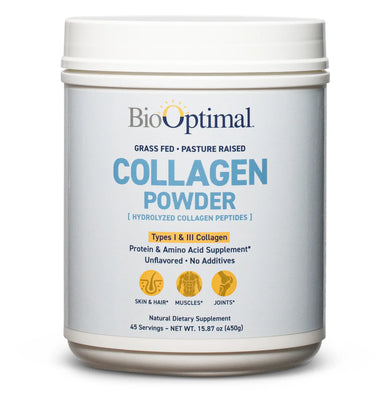
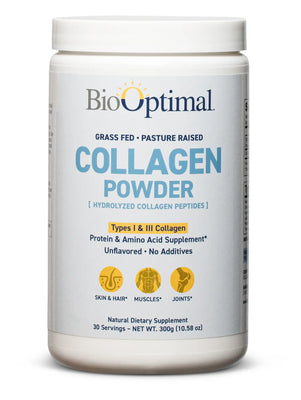
Not all collagen supplements produce equivalent before and after results. The research base for collagen is strongest for hydrolyzed collagen peptides at doses between 2.5 and 15 grams per day, with most skin and joint studies using 10 grams daily. Below this dosage range, measurable results are unlikely regardless of duration.
When evaluating a product, check these criteria:
- Hydrolyzed (also labeled "collagen peptides") — non-hydrolyzed collagen absorbs poorly
- 10 grams or more of collagen per serving (not per container)
- Third-party tested for heavy metals and contaminants — certificates should be available on request
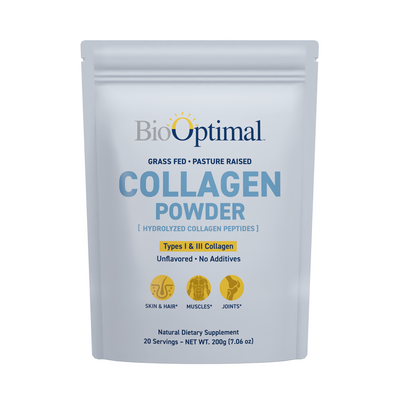
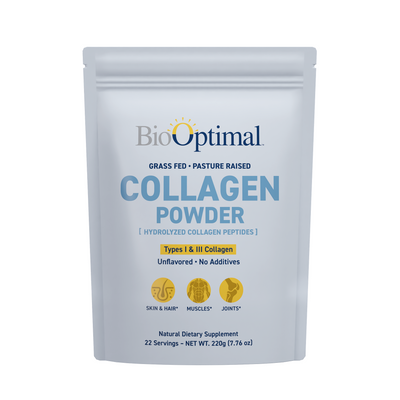
- Sourced transparency — grass-fed bovine, wild-caught marine, or pasture-raised porcine
- Includes or is taken with vitamin C — 50 to 100 milligrams alongside each dose supports collagen synthesis
- No proprietary blends hiding the actual collagen amount behind a combined weight figure
Comparison: Forms and Sources
|
Source / Form |
Collagen Types |
Best For |
Considerations |
|
Bovine powder |
Types I & III |
Skin, hair, nails, overall |
Most studied; highest cost-effectiveness per gram |
|
Marine powder |
Type I (primarily) |
Skin hydration (fastest) |
Higher cost; smaller peptide size; avoid with fish allergies |
|
Type II (chicken sternum) |
Type II only |
Joint comfort specifically |
Lower doses (40mg) effective; not for skin |
|
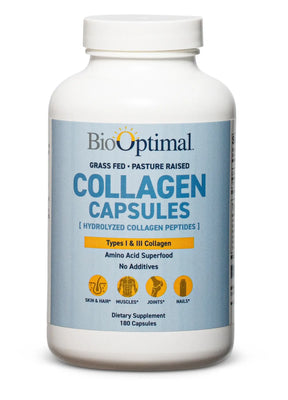
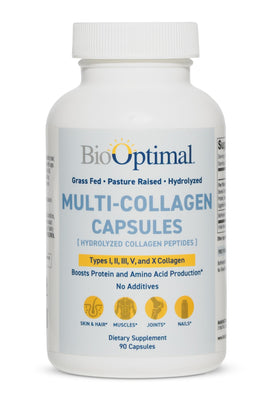
Collagen pills / capsules |
Varies |
Convenience / travel |
Rarely hit 10g dose; may require 10+ pills daily |
|
Collagen drinks |
Typically Type I |
Flavored convenience |
Premium price; check sugar content |
|
"Vegan collagen" |
Contains no collagen |
Plant-based users |
Provides cofactors (vitamin C, silica) that support your body's own synthesis |
Factors That Slow or Mask Your Results
If you are eight weeks into consistent collagen use and seeing nothing, one of these is almost always the reason:
- Insufficient dose. If your product delivers 5 grams and you are taking it every other day, you are below every dose used in clinical trials.
- Missing vitamin C. Collagen synthesis cannot complete without adequate vitamin C. Aim for 50–100 milligrams with each dose.
- Poor sleep. Fibroblasts do most of their work during deep sleep. Fewer than 6 hours a night dramatically reduces collagen synthesis.
- Active sun damage. UV exposure degrades collagen faster than you can build it. Daily SPF 30+ is non-negotiable if you want to see skin results.
- Smoking and heavy alcohol use. Both accelerate collagen breakdown and reduce fibroblast activity.
- Perimenopause or menopause. Estrogen drops reduce collagen by up to 30 percent in the first 5 post-menopausal years. Results may still come but more slowly.
- Chronic stress. Elevated cortisol suppresses collagen production directly.
Age and baseline. Someone at 28 with good baseline skin will see subtler changes than someone at 55 with more room to improve — but the 55-year-old's journey takes longer.
Frequently Asked Questions
1. How long does it take to see results from collagen supplements?
Most people notice improvements in skin hydration within 4 weeks of daily 10-gram dosing, with clearer skin elasticity, reduced fine lines, and hair or nail changes typically visible between weeks 8 and 12. Joint comfort improvements often appear at weeks 6 to 12. Results depend on age, baseline, consistency, and whether vitamin C is included alongside the collagen dose.
2. Do collagen supplements actually work?
A 2023 meta-analysis of 26 randomized controlled trials with 1,721 participants found that hydrolyzed collagen supplements significantly improved skin hydration and elasticity compared to placebo, with the strongest effects after 8 weeks of consistent use. The evidence is strongest for skin hydration, skin elasticity, joint pain reduction, and nail strength. It is weaker for cellulite, hair growth alone, and weight-related claims.
3. How do I know if collagen supplements are working for me?
Track objective metrics, not just photos: count weekly nail breaks, log morning joint stiffness on a 1–10 scale, measure ponytail circumference monthly, and time your hand-skin pinch recoil. Combine these with standardized before and after photos taken at weeks 0, 4, 8, and 12 under identical lighting. If three or more metrics have measurably improved by week 12, your supplement is likely working.
4. How much collagen should I take daily to see before and after results?
Clinical studies showing measurable results use doses between 2.5 and 15 grams daily of hydrolyzed collagen peptides, with 10 grams being the most common effective dose for skin and joint outcomes. Lower doses may work but require longer timelines. Splitting the dose into morning and evening portions with vitamin C can improve absorption.
5. What should I look for in collagen supplements to get real results?
Prioritize hydrolyzed collagen peptides delivering at least 10 grams per serving, with transparent sourcing (grass-fed bovine or wild-caught marine), third-party testing for contaminants, and no proprietary blends. Taking the supplement with 50 to 100 milligrams of vitamin C supports the synthesis process. Avoid products that rely on hair or skin appearance claims without dosage transparency.
6. Are there side effects of collagen supplements?
Hydrolyzed collagen is well-tolerated in studies, with the most commonly reported issues being mild digestive upset (bloating or fullness) that typically resolves within a week. People with seafood allergies should avoid marine sources. Those with a history of kidney disease or who are pregnant should consult a healthcare provider before starting any new supplement, including collagen.
7. Can collagen supplements really improve skin elasticity?
Multiple placebo-controlled studies have shown measurable improvements in skin elasticity using Cutometer and similar devices after 8 to 12 weeks of daily collagen peptide use. The improvements are modest but statistically significant. Elasticity changes are typically less dramatic than hydration changes and require the full 12-week window to become visible in photographs.
8. What is the best time to take collagen supplements?
Research does not show a clearly superior time of day. Consistency matters more than timing. Many users take collagen in the morning with coffee or a smoothie because it is easier to remember, while others prefer evening because glycine may support sleep quality. Taking collagen with vitamin C is more important than when you take it.
The Bottom Line
Collagen supplements before and after results are real but modest, measurable but slow, and highly dependent on dosage, consistency, and the rest of your lifestyle. The difference between people who swear collagen transformed them and people who call it a scam is usually not the product — it is whether they took a clinical-level dose consistently for at least 12 weeks, took it alongside vitamin C, and knew what changes to actually look for.
Start with a standardized before photo, choose a hydrolyzed collagen peptide at 10 grams per day, add your measurement log, and revisit your results at weeks 4, 8, and 12. The honest answer to whether collagen will deliver your before and after is waiting for you — in your own data, not anyone else's photos.