

There is no universally established maximum amount of collagen that applies to everyone. Most collagen supplements provide a serving size based on product formulation and intended use. Taking more than recommended does not necessarily provide additional benefits, so you should consider your total collagen intake, nutrition goals, and product instructions.
Table of Contents:
- What Is Collagen and Why Do People Take Supplements?
- How Much Collagen Do People Usually Take?
- How Much Collagen Is Too Much?
- Can You Take Too Much Collagen in One Day?
- What Happens If You Take More Collagen Than You Need?
- Can You Take Collagen Powder and Collagen Capsules Together?
- Does More Collagen Provide Better Results?
- How to Choose the Right Amount of Collagen for Your Routine
- BioOptimal Collagen Products for Different Supplement Preferences
- Frequently Asked Questions About Collagen Intake
- Finding the Right Collagen Intake for You
What Is Collagen and Why Do People Take Supplements?
Collagen is found throughout your body. It is a major component of your skin, bones, cartilage, ligaments, and other connective tissues.
Your body create collagen using amino acids from dietary protein along with nutrients such as vitamin C. Collagen production and turnover can change with age and may also be influenced by nutrition, lifestyle habits, sun exposure, and other factors.
Collagen supplements provide an additional source of collagen-derived protein. People commonly add them to their routines to support areas such as:
- Healthy skin
- Hair and nail health
- Joint health
- Bone health
- Connective tissue
- Daily protein intake
Collagen supplements are available in several formats. Collagen powder can be mixed into beverages and foods, while collagen capsules or pills offer a premeasured and portable option.
You may also see multi-collagen supplements containing collagen from different sources or collagen associated with several collagen types.
Why Most Supplements Use Collagen Peptides
Many collagen supplements contain hydrolyzed collagen, also called collagen peptides.
During hydrolysis, larger collagen proteins are broken into smaller peptide chains. This processing makes collagen easier to dissolve and produces the form commonly used in powders, capsules, and other nutritional supplements.
Hydrolyzed collagen does not mean that you are taking intact collagen that travels directly to your skin or joints. Your digestive system breaks dietary proteins and peptides down further, and your body uses the resulting amino acids and peptides as needed.
Collagen peptides have become popular because they can be conveniently added to your daily nutrition routine. Powdered collagen peptides, in particular, generally mix easily into water, coffee, smoothies, and other foods or beverages.
How Much Collagen Do People Usually Take?
There is no single collagen dosage that every person needs. Your daily intake can vary depending on the product you choose, its serving size, your overall diet, and your reason for taking it.
Clinical research on collagen has used varying amounts depending on the type of collagen, study population, and health outcome. Many studies on hydrolyzed collagen report amounts in grams rather than a single recommended dose.
Commercial collagen products also differ significantly. A scoop of collagen powder may provide several grams of collagen, whereas capsules often contain less per capsule and require multiple capsules to make one serving.
|
Collagen Product Type |
How Intake Is Usually Measured |
|
Collagen powder |
Grams per scoop or serving |
|
Collagen capsules |
Number of capsules per serving and total collagen content |
|
Multi-collagen formulas |
Total collagen amount across the complete serving |
Always check the Supplement Facts or nutrition label instead of assuming that one scoop, capsule, or product provides the same amount as another.
The serving instructions are particularly important when you switch brands or supplement formats.
A powder might list one scoop as a serving, for example, while a capsule product could require several capsules. Comparing the total amount of collagen, rather than just the number of scoops or pills, provides clarity on your daily intake.
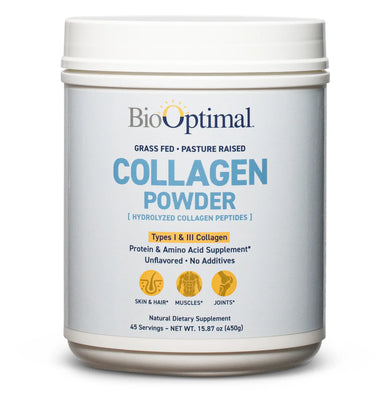
Compare BioOptimal collagen options and review the serving information for each product to determine which format best fits your nutrition routine.
How Much Collagen Is Too Much?
There is no universally established maximum daily collagen intake for healthy adults.
That does not mean unlimited collagen intake is appropriate.
Collagen supplements help provide protein, and your individual needs depend on factors such as your overall diet, health status, body size, activity level, other supplements, and nutrition goals.
Research also does not show that continually increasing your collagen dosage will continually increase its effects. Studies use specific quantities based on their design, and taking substantially more than a studied or labeled amount cannot be assumed to produce a stronger result.
A practical approach is to focus on:
- The serving amount provided by the manufacturer
- Your total collagen intake from all supplements
- Your overall dietary protein intake
- Other nutrients and supplements in your routine
- How well you tolerate the product
- Recommendations from your healthcare professional
If you are considering taking more than the recommended serving, you should first consider why you want to increase the amount. Taking more simply because one serving seems beneficial does not necessarily provide additional benefits.
People with medical conditions, dietary restrictions, allergies, kidney concerns, or other factors that affect protein intake should speak with a healthcare professional before making significant changes to their supplement use.
Can You Take Too Much Collagen in One Day?
It is possible to consume more collagen than you need for your nutrition goals, particularly if you take several servings or use more than one collagen supplement.
For example, you might use collagen powder in your morning coffee without realizing that your afternoon supplement capsules also contain collagen. A protein blend, beauty supplement, joint formula, or multi-collagen product could add even more.
This is sometimes called supplement stacking.
You can reduce the risk of unintentionally consuming excessive amounts by checking every product you use and adding up the amounts.
Consider these questions:
- How many grams of collagen does each serving contain?
- How many servings do you take each day?
- Do other protein supplements contain collagen?
- Are you taking both powders and capsules?
- Does a multi-ingredient supplement already include collagen peptides?
Your total daily collagen intake is more useful than the number of collagen products in your cabinet.
Two supplements can have very different serving sizes. One product might supply a relatively large amount of collagen per serving, while another supplies much less.
If you intentionally use multiple collagen products, review the total amount and ensure each product serves a clear purpose in your routine.
What Happens If You Take More Collagen Than You Need?
Taking more collagen than you need does not guarantee that you will experience side effects. However, increasing your intake can make certain issues more likely for some people.
Digestive Discomfort
Some people may experience digestive symptoms after taking collagen supplements, particularly with larger servings.
Possible symptoms can include:
- Fullness
- Bloating
- Mild stomach discomfort
- Changes in bowel habits
- Nausea in sensitive individuals
These effects are not guaranteed and can also be related to other ingredients in a supplement rather than collagen itself.
Sweeteners, flavors, sugar alcohols, minerals, vitamins, or additional protein ingredients can influence how well you tolerate a product.
If you experience persistent or significant side effects, stop or reduce the supplement as appropriate and speak with a healthcare professional.
For side effects, please contact a healthcare professional for medical advice when in doubt.
Unnecessary Protein or Calorie Intake
Collagen contributes protein and calories to your diet. While the amount in a normal serving can fit easily into many eating patterns, repeatedly adding servings can increase your overall intake.
More protein is not automatically useful once your dietary needs are already being met.
Collagen is also not a complete replacement for a varied dietary protein intake. It has a different amino acid profile from foods such as eggs, dairy products, meat, fish, soy, or balanced combinations of plant proteins.
Your goal should be to fit collagen into a well-rounded diet rather than relying on it as your only protein source.
Extra Supplements May Add Complexity
Taking several collagen products may make your routine harder to track. Multi-ingredient formulas can also provide vitamins, minerals, botanicals, or other nutrients that you may already receive from separate supplements.
Reviewing every Supplement Facts panel helps you avoid unnecessary duplication.
Can You Take Collagen Powder and Collagen Capsules Together?
In many cases, healthy adults can use collagen powder and collagen capsules within the same nutrition plan. The main issue is not whether the collagen comes from powder or capsules. It is how much collagen you consume in total and what else the products contain.
Use the label to compare your options.
|
Combination |
What to Consider |
|
Powder only |
Check grams of collagen per serving |
|
Capsules only |
Review collagen per capsule and per complete serving |
|
Powder + capsules |
Add the collagen from both products to calculate the total daily intake |
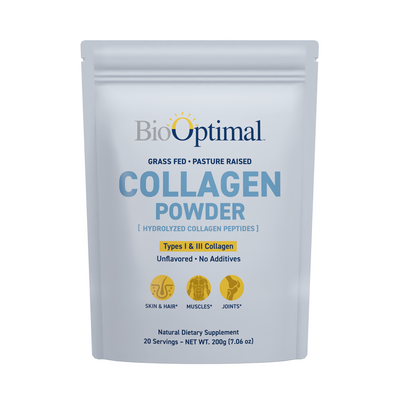
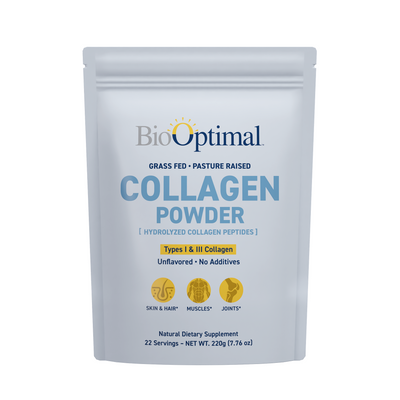
Powder may be convenient when you want to add collagen to coffee, smoothies, or food. If you prefer this format, review the serving details for BioOptimal Collagen Powder.
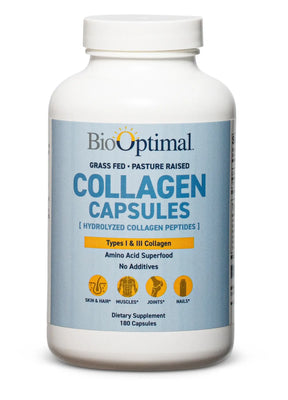
Capsules can be easier when you travel or prefer not to mix a powder. You can compare serving information for BioOptimal Collagen Pills.
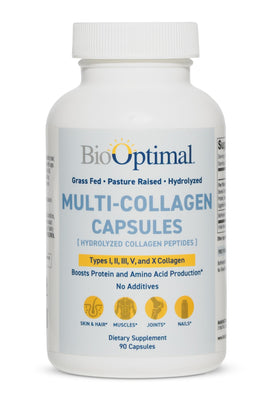
If you use a multi-collagen formula, pay attention to the total collagen provided per serving, rather than adding the number of collagen types together as though each represents a separate full serving.
You can also review BioOptimal Multi Collagen Supplement Capsules when comparing multi-collagen options.
Using both powder and capsules is not inherently better than choosing a single format. For many people, selecting the format they can use consistently is simpler.
Does More Collagen Provide Better Results?
More collagen does not automatically provide better results.
Nutrients and supplements do not generally follow a simple rule in which doubling the amount doubles the effect. Research evaluates defined amounts under controlled conditions, and results cannot automatically be extended to much larger doses.
Your body also uses protein according to its physiological needs.
Instead of focusing on the largest possible collagen serving, consider whether your supplement routine is:
- Consistent
- Appropriate for your nutrition goals
- Easy to maintain
- Within the product's directions
- Compatible with your overall diet
- Well tolerated
Collagen supplements should complement your nutrition, not replace a varied diet.
Adequate total protein, vitamin C, minerals, healthy fats, fruits, vegetables, hydration, sleep, exercise, and other lifestyle factors can all play roles in maintaining healthy tissues.
Consistency with an appropriate amount is generally more practical than frequently changing doses or taking increasingly larger servings.
How to Choose the Right Amount of Collagen for Your Routine
Finding an appropriate collagen intake does not require guessing. Start with the product label and evaluate how the supplement fits into everything else you consume.
Start With the Product Serving Instructions
Read the manufacturer's serving directions before taking a new collagen supplement.
Pay attention to:
- Serving size
- Grams of protein
- Amount of collagen or collagen peptides
- Number of scoops or capsules
- Suggested frequency
- Other active ingredients
Do not assume a serving is one capsule. Some capsule products count several capsules as a single complete serving.
The same principle applies to powders. Scoop sizes vary by formula, so one scoop from one product may not provide the same amount as one scoop from another.
If you want to change the serving substantially, particularly because of a medical or nutritional concern, discuss the change with your healthcare professional.
Consider Your Preferred Supplement Format
The best format is often the one you can use consistently without complicating your routine.
Collagen powder may work well if you regularly prepare drinks or smoothies. It can also provide a larger quantity of collagen without requiring multiple capsules.
Collagen capsules or pills may suit you if you prefer a premeasured supplement, travel frequently, or do not want to mix a powder.
Neither format is automatically superior simply because of how you take it.
Look at the collagen amount, additional ingredients, serving directions, source, and product quality when comparing formulas.
Review Total Daily Intake
If you take more than one nutritional supplement, periodically review your entire routine.
You might find collagen in:
- Standalone collagen powders
- Collagen capsules
- Multi-collagen supplements
- Protein blends
- Joint-support supplements
- Beauty-focused nutritional products
Add the collagen supplied by each product to estimate your total supplemental intake.
This simple step can help prevent accidental stacking and allow you to decide whether every product is necessary.
Browse BioOptimal Collagen Products to compare powder and capsule options and select a format that fits your daily routine.
BioOptimal Collagen Products for Different Supplement Preferences
Choosing the right collagen product depends on your preferred format, daily routine, and how you want to include collagen in your nutrition plan. BioOptimal offers collagen powders and capsules designed for different supplement preferences.
You may prefer powder if you want to mix collagen into beverages or food. Capsules may be a better fit if portability and premeasured servings are more important to you.
Whichever format you choose, check the serving instructions and account for all collagen supplements you take during the day.
Your supplement routine does not need to be complicated. A clearly labeled product that fits comfortably into your normal habits can make consistent supplementation easier.
Frequently Asked Questions About Collagen Intake
1. How much collagen should I take per day?
There is no single daily collagen amount that applies to everyone. Collagen products have different formulations and serving sizes, and research uses different amounts depending on the intended outcome.
Start with the serving directions on your product. Consider your overall diet, protein intake, health needs, and any other collagen-containing supplements you use.
2. Can you take too much collagen?
You can consume more collagen than you need, particularly by taking multiple servings or combining several collagen products.
There is no universally established maximum collagen dosage. Taking increasingly large amounts should not be assumed to provide additional benefits. Follow product instructions and discuss unusually high supplement intake with a healthcare professional.
3. What happens if you take too much collagen?
Some people may experience digestive discomfort, fullness, bloating, nausea, or changes in bowel habits after larger servings. These reactions are not guaranteed and may also be caused by other ingredients in the supplement.
Taking excessive amounts may also add unnecessary protein and calories to your diet.
For side effects, please contact a healthcare professional for medical advice when in doubt.
4. Is 20 grams of collagen too much?
Twenty grams cannot automatically be considered too much for everyone, as no universal maximum collagen intake has been established.
Whether 20 grams is appropriate depends on the product, your dietary protein intake, health status, nutrition goals, and other supplements you take. Do not assume that 20 grams will provide more benefit than a lower amount simply because the serving is larger.
If 20 grams exceeds the directions for your product or you have a medical condition affecting protein intake, speak with a healthcare professional before using that amount regularly.
5. Can I take collagen powder and collagen capsules together?
You can use powder and capsules within the same routine, but you should calculate the combined collagen amount.
Check the grams listed on your powder and the total amount provided by a complete capsule serving. Also, review other active ingredients to avoid duplicating nutrients unnecessarily.
6. How many collagen supplements can I take in a day?
The number of products is less important than their combined contents.
One collagen product might provide several grams per serving, while another could provide much less. Check each label, calculate your total daily collagen intake, and follow the directions for each individual serving.
Avoid adding products simply to increase your collagen intake without a specific reason.
7. Should I take collagen every day?
Many collagen supplements are formulated for regular daily use, and research on collagen peptides often evaluates the effects of consistent supplementation over a defined period.
Follow the directions for your specific product. If you have health conditions, allergies, dietary restrictions, or questions about long-term supplement use, ask your healthcare professional whether daily collagen is appropriate for you.
8. Does more collagen provide better results?
Not necessarily. Increasing your collagen intake does not guarantee greater benefits.
Clinical research evaluates specific amounts and durations. Taking substantially more cannot be assumed to improve the outcome. A consistent serving that fits your nutrition plan is generally a more practical approach than continually increasing your intake.
Finding the Right Collagen Intake for You
There is no single maximum amount of collagen that applies to every person. Your appropriate intake depends on the product you use, your diet, your health needs, and the other supplements in your routine.
Start with the manufacturer's serving instructions, calculate your total intake when combining products, and remember that more collagen does not automatically mean better results.
Powders and capsules can both provide a convenient way to include collagen in your nutrition plan. Choosing the format that fits your daily habits helps maintain a consistent routine without unnecessary supplement stacking.
Shop BioOptimal Collagen Products today to compare collagen powder, pills, and multi-collagen capsule options for your daily routine.
The FDA has not evaluated these statements. Dietary supplements should not be used to diagnose, treat, cure, or prevent any disease.
This information is for educational purposes and not a substitute for individualized medical advice. If you have a medical condition, take medications, have allergies, are pregnant or breastfeeding, or experience side effects, consult a qualified healthcare professional for guidance.