

The best collagen for women over 50 is a single-ingredient hydrolyzed collagen powder at 10 grams or more per serving, third-party tested for heavy metals, from grass-fed or wild-caught sources. Collagen production goes down by 1% per year starting in the mid-20s, and the decline accelerates around menopause as estrogen levels drop.
Louis's takeaways:
The best collagen for women over 50 is a single-ingredient hydrolyzed powder that provides at least 10 grams per serving and is third-party tested for heavy metals. Collagen production declines by roughly 1% per year from the mid-20s onward and drops more sharply around menopause. Dose and purity matter more than marine-versus-bovine or any added ingredient.
Table of Contents:
Why collagen matters more after 50
Collagen is the most abundant protein in the body and provides structure to the skin, bone, cartilage, tendons, and the gut lining. Natural production begins to decline in the mid-20s at roughly 1% per year. Around menopause, the decline steepens because estrogen supports collagen synthesis in the skin and bone.
That shows up as thinner, drier skin, more visible fine lines, joint stiffness, and weaker hair and nails. Supplemental collagen does not stop this, but clinical research supports its role in supporting skin elasticity, hydration, and joint comfort.
How much collagen should a woman over 50 take?
|
Skin hydration and elasticity |
2.5 to 10 g |
|
Joint comfort and cartilage support |
10 to 15 g |
|
Bone mineral density, long-term |
5 g |
|
Hair and nail strength |
2.5 to 5 g |
One 10-gram serving covers the full skin range and reaches the lower end of the joint range. This is where most liquid and gummy products fall short - they typically deliver 4 to 10 grams per serving, so hitting a joint-support dose means two to four servings a day.
What to look for
- At least 10 g of hydrolyzed collagen peptides per serving. Check the label, not the marketing.
- Third-party testing for heavy metals, with published results. Collagen comes from animal connective tissue, which accumulates lead, arsenic, mercury, and cadmium from the environment.
- A single ingredient. Fewer additives mean fewer things to react to, making the dose easy to verify.
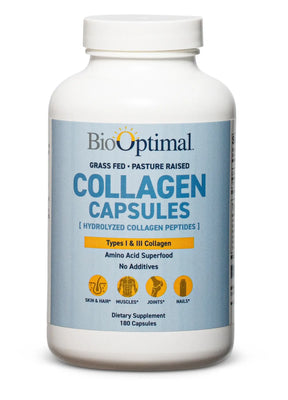
- Types I and III for skin, hair, nails, and bone. Type II is specifically for joint cartilage.
- Grass-fed and pasture-raised, or wild-caught if marine.
What does not matter as much as you think
Marine versus bovine. Both are hydrolyzed into the same peptides. Marine collagen can contain mercury if the fish were sourced from polluted waters. Grass-fed bovine tend to have lower exposure than factory-farmed bovine. Testing matters more than the source label.
Liquid versus powder. Liquid collagen is made by dissolving collagen powder in water and adding stabilizers. There is no peer-reviewed evidence that it absorbs better. It usually costs more per gram and delivers less per serving.
Added collagen boosters. Vitamin C supports collagen synthesis, but most women already get enough from their diet. A proprietary blend often means you cannot see how much collagen you are actually getting.
Is BioOptimal collagen suitable for women over 50?
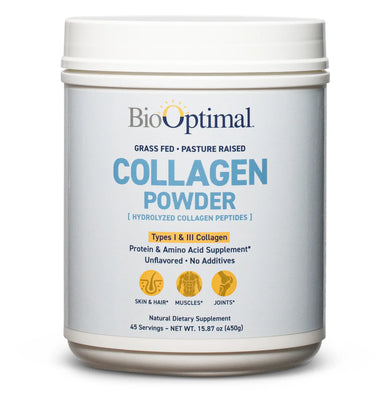
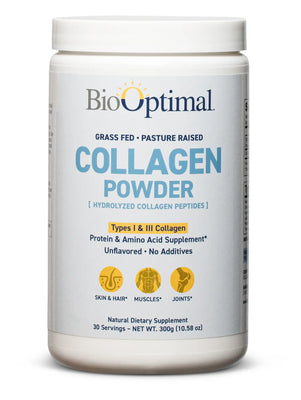
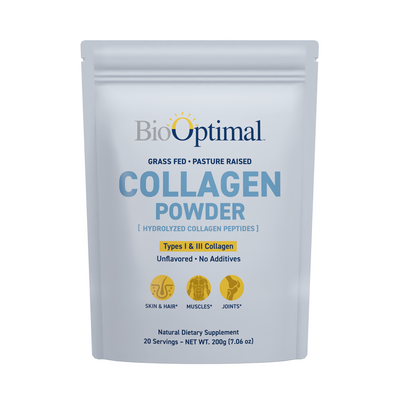
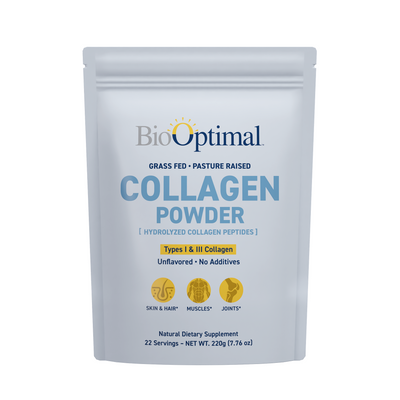
BioOptimal Collagen Powder provides 10 grams of hydrolyzed Type I and III collagen peptides per serving as a single ingredient, from grass-fed, pasture-raised cattle. Every batch is third-party tested for heavy metals and made in a GMP-certified US facility. It is unflavoured, odorless, sugar-free, and dissolves in hot or cold liquid.
That combination - a full 10-gram dose, a single ingredient, and published testing - is what this guide recommends looking for.
Frequently Asked Questions
1. How much collagen intake is essential for a woman over 50?
Clinical research supports 2.5 to 10 grams daily for skin elasticity and hydration, and 10 to 15 grams for joint comfort. Consistency over weeks matters more than the exact figure on any single day.
2. Does collagen help with menopause symptoms?
Collagen supports skin elasticity, joint comfort, and bone density, which commonly decline around menopause as estrogen levels fall. It is not a hormone treatment and does not address hot flushes or other vasomotor symptoms.
3. Which collagen type is best after 50?
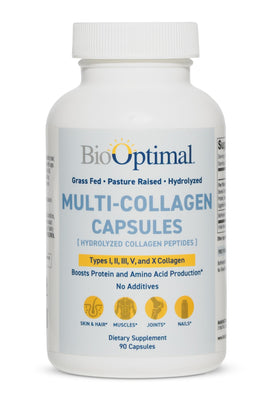
Types I and III support skin, hair, nails, and connective tissue. Type II targets joint cartilage specifically. A multi-collagen blend covers both, though usually at a lower dose per serving.
4. How long does collagen take to work?
Clinical studies on skin and joint outcomes typically run 8 to 12 weeks. Collagen accumulates in tissue over time, so consistency over time matters more than the dose on any given day.
5. Is marine collagen better than bovine collagen for older women?
No. Both are hydrolyzed into peptides, and the body absorbs them the same way. Marine collagen can carry mercury if sourced from polluted waters. Third-party testing and per-serving dose are better selection criteria than the source animal.
6. Can I take collagen with other supplements?
Generally yes. Collagen is a protein and mixes with most routines. If you take prescription medication or have a medical condition, check with your doctor first.