

Louis's takeaways:
Table of Contents:
- What Is Spirulina?
- What Is Chlorella?
- Spirulina vs Chlorella: Nutritional Comparison
- Key Differences Beyond Nutrients
- Which One Is Right for You? The Decision Framework by Health Goal
- Can You Take Spirulina and Chlorella Together?
- Dosage, Timing, and How to Take Them
- Quality and Sourcing: What to Look For
- Safety, Side Effects, and Who Should Avoid Them
- Frequently Asked Questions
Spirulina and chlorella are nutrient-dense microalgae sold as dietary supplements. Spirulina is a blue-green cyanobacterium that is higher in protein and easier to digest, while chlorella is a freshwater green algae that is higher in chlorophyll, omega-3 fatty acids, vitamin B12, iron, and other minerals. The right choice depends on your specific health goal.
Both algae are sold as tablets, capsules, and powder, and they appear together in superfood and detox supplement blends. They share several health benefits, including antioxidant support, blood sugar management, and cardiovascular support, but their nutrient profiles, mechanisms, and best use cases differ in ways that matter for any buyer. This guide walks through everything you need to choose the right one, take it correctly, and recognize quality before you buy.
What Is Spirulina?
Spirulina is a blue-green microalgae classified as a cyanobacterium, most commonly sold as Spirulina platensis or Spirulina maxima. It grows naturally in warm, alkaline freshwater lakes and is now cultivated in controlled outdoor ponds for commercial supplement production. The Aztecs harvested spirulina from Lake Texcoco in Mexico, and NASA has used it as a concentrated nutrient source during space missions.
Nutritionally, spirulina contains roughly 60 to 70 percent complete plant protein with all nine essential amino acids, plus iron, copper, thiamine (B1), riboflavin (B2), and smaller amounts of other B vitamins. Its deep blue-green color comes from phycocyanin, a unique protein-pigment complex with antioxidant and anti-inflammatory properties that chlorella does not contain. Spirulina also has no cellulose cell wall, which makes it approximately 85 to 95 percent digestible without any mechanical processing.
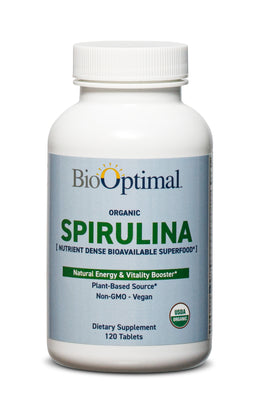
Because of these traits, spirulina is most often used for protein supplementation, sustained energy, immune support, and antioxidant intake. USDA Organic spirulina tablets are typically taken at 1 to 3 grams daily for general wellness, with athletes and high-performance users taking up to 8 grams per day.
What Is Chlorella?
Chlorella is a single-celled freshwater green algae from the genus Chlorella, most commonly Chlorella pyrenoidosa or Chlorella vulgaris in supplement form. It is one of the oldest organisms on Earth, with origins traced back over two billion years. Most commercial chlorella today is cultivated in controlled freshwater ponds in Japan, Taiwan, and South Korea.
Chlorella's most distinctive feature is its high chlorophyll content, two to three times that of spirulina, which gives it a vibrant green color. It is also rich in carotenoids including lutein and beta-carotene, plus iron, zinc, magnesium, riboflavin, and provitamin A. Crucially, chlorella provides bioavailable vitamin B12, while the B12 found in spirulina is largely pseudo-B12 that the human body cannot effectively use. Chlorella also contains Chlorella Growth Factor (CGF), a unique compound derived from the cell nucleus during rapid photosynthesis that research associates with cellular regeneration.
Unlike spirulina, chlorella has a tough cellulose cell wall that the human digestive system cannot break down on its own. To make the nutrients bioavailable, the cell wall must be mechanically cracked during processing. This is why quality chlorella tablets are always labeled “cracked cell wall” or “broken cell wall” chlorella. Without this processing step, most of the nutrients pass through the body undigested.
Spirulina vs Chlorella: Nutritional Comparison
Both algae are nutrient-dense, but their profiles differ in important ways. The table below compares a 1-ounce (28-gram) serving of each.
|
Nutrient (per 28g) |
Spirulina |
Chlorella |
|
Calories |
81 |
115 |
|
Protein |
16 g |
16 g |
|
Carbohydrates |
7 g |
7 g |
|
Fat |
2 g |
3 g |
|
Vitamin A |
3% DV |
287% DV |
|
Riboflavin (B2) |
60% DV |
71% DV |
|
Thiamine (B1) |
44% DV |
32% DV |
|
Iron |
44% DV |
202% DV |
|
Magnesium |
14% DV |
22% DV |
|
Zinc |
4% DV |
133% DV |
|
Copper |
85% DV |
0% DV |
|
Phosphorus |
3% DV |
25% DV |
In short, chlorella is the broader micronutrient powerhouse, with significantly higher iron, zinc, magnesium, vitamin A, and provitamin A. Spirulina is lower in calories, slightly higher in protein content per gram in some strains, and the only one of the two with meaningful copper content. Both contain complete protein profiles with all nine essential amino acids in highly bioavailable form.
Their fat compositions also differ. Chlorella contains more omega-3 fatty acids, while spirulina contains higher levels of omega-6 fatty acids including gamma-linolenic acid (GLA), a relatively rare anti-inflammatory fatty acid found in few other foods.
Key Differences Beyond Nutrients
Five characteristics separate spirulina from chlorella in ways that often matter more than the raw nutrient numbers.
Cell wall and digestibility. Spirulina has no cellulose cell wall, so it is digestible immediately after harvesting and drying. Chlorella has a tough cell wall that must be mechanically cracked. Even cracked-cell chlorella reaches about 70 to 80 percent digestibility, compared to spirulina's 85 to 95 percent. This is the single biggest factor behind their different uses.
Signature antioxidants. Spirulina's blue pigment comes from phycocyanin, which research suggests has anti-inflammatory, immune-supporting, and liver-protecting properties. Chlorella's vibrant green color comes from chlorophyll, present at two to three times the concentration of spirulina, plus carotenoid antioxidants like lutein and beta-carotene that support eye and skin health.
Vitamin B12. Chlorella provides biologically active B12 that the human body can use, making it a meaningful plant-based B12 source. Spirulina contains pseudo-B12, an analogue that is not bioavailable to humans. For vegans and vegetarians choosing an algae for B12 intake, chlorella is the only correct choice.
Heavy metal binding. Chlorella's cellulose cell wall and sporopollenin layer have a documented ability to bind to heavy metals like mercury, lead, and cadmium in the digestive tract, supporting the body's natural elimination processes. Spirulina has antioxidant detox properties through phycocyanin but does not have the same direct binding mechanism.
Chlorella Growth Factor (CGF). Chlorella contains a unique compound called CGF, a nucleotide-peptide complex derived from the cell nucleus during rapid photosynthesis. Research has associated CGF with cellular regeneration, immune modulation, and tissue repair. Spirulina contains no CGF equivalent.
Which One Is Right for You? The Decision Framework by Health Goal
The right algae depends on what you want to accomplish. Use this decision framework to match your primary health goal to the right supplement.
|
Your Primary Goal |
Recommended |
Why |
|
Plant-based protein for athletes |
Spirulina |
60-70% protein, no cell wall means high digestibility, contains rare GLA |
|
Daily detox and heavy metal binding |
Chlorella |
Cellulose cell wall binds heavy metals; CGF supports cellular repair |
|
Vegan or vegetarian B12 source |
Chlorella |
Provides bioavailable B12; spirulina's B12 is pseudo-B12 and not usable |
|
Sustained energy and endurance |
Spirulina |
High iron, B vitamins, and phycocyanin reduce exercise-induced oxidative stress |
|
Liver and digestive support |
Chlorella |
High chlorophyll, fiber, and binding properties support elimination pathways |
|
Antioxidant and anti-inflammatory |
Spirulina |
Phycocyanin is rare and has documented anti-inflammatory action |
|
Weight management with appetite control |
Spirulina |
Lower calorie, protein-rich, supports satiety and blood sugar stability |
|
Maximum micronutrient density |
Chlorella |
Higher iron, zinc, magnesium, vitamin A, and riboflavin per serving |
|
Skin health and chlorophyll intake |
Chlorella |
Two to three times more chlorophyll than spirulina, plus lutein |
|
Cardiovascular and cholesterol support |
Either or both |
Research shows similar effects on cholesterol and blood pressure |
If your goal is not on this list or you fit two categories, the next section explains how to combine both algae safely and effectively.
Can You Take Spirulina and Chlorella Together?
Yes. Many people take both algae together to access the complementary benefits of each. Because their mechanisms differ — spirulina is heavier on protein, phycocyanin, and immune support, while chlorella focuses on micronutrients, B12, chlorophyll, and heavy metal binding — combining them provides broader nutritional coverage than either alone.
A common starting protocol is a 2:1 ratio of spirulina to chlorella, for example 3 grams of spirulina with 1.5 grams of chlorella daily. Some users prefer a 1:1 split. The right ratio depends on your goals: weight more toward spirulina if you want protein and energy, and more toward chlorella if you want detox and B12 support.
When combining, a common practice is to take chlorella in the morning on an empty stomach to maximize its binding capacity throughout the day, and spirulina later in the day with or without food. If you prefer simplicity, taking both at the same time with breakfast also works for most people.
Dosage, Timing, and How to Take Them
General dosage guidelines for healthy adults follow these ranges:
- Spirulina: 1 to 3 grams daily for general wellness, 3 to 8 grams daily for athletic performance, immune support, or therapeutic use. Most research falls in the 1 to 8 grams per day range.
- Chlorella: 2 to 5 grams daily for general wellness, up to 10 grams daily for active detoxification protocols. Doses above 10 grams should only be taken with medical supervision.
Start with a lower dose, around 1 gram per day, and increase gradually over 7 to 14 days. This allows the body to adjust and helps you identify any digestive sensitivity before scaling up.
When to take them
Both algae can be taken at any time of day, and consistency matters more than timing. That said, most users prefer morning intake for the energy and antioxidant benefits. Chlorella is often taken on an empty stomach for maximum binding effect, while spirulina can be taken with or without food. Avoid taking either within one hour of medications, especially blood thinners or thyroid medication, as the iron and vitamin K content may affect absorption.
Tablets, capsules, or powder
All three forms deliver the same nutritional benefits. Tablets offer dose accuracy, portability, and a long shelf life. Powders are more flexible for mixing into smoothies, juices, and shakes but can have a stronger taste. Choose a pure tablet without fillers or binders for the most concentrated dose per serving.
Quality and Sourcing: What to Look For
This is where many shoppers go wrong. Because both algae absorb compounds from their growing environment, sourcing and testing standards directly affect what is in the final product. Use this checklist when choosing a supplement.
Certified organic. Look for USDA Organic certification on the label. This guarantees the algae were grown without synthetic fertilizers or pesticides, and the growing environment was independently monitored. Non-organic algae carries a higher risk of contamination.
Third-party testing. Reputable brands publish third-party lab results for heavy metals (lead, mercury, cadmium, arsenic) and microbial contamination. For spirulina specifically, check for microcystin testing. Microcystins are toxins produced by some wild blue-green algae species, and quality producers consistently test below detection limits.
Cracked cell wall labeling (chlorella only). Chlorella must be cracked, broken, or mechanically processed for the nutrients to be bioavailable. If a chlorella product does not state “cracked cell wall” or “broken cell wall” on the label, most of the nutrients are inaccessible during digestion.
Strain identification. High-quality producers list the specific species: Chlorella pyrenoidosa or Chlorella vulgaris for chlorella, Spirulina platensis or Spirulina maxima for spirulina. Strain matters for protein content, CGF concentration, and digestibility.
No fillers, binders, or additives. Pure tablets contain only the algae and possibly a small amount of organic binder. Avoid products with maltodextrin, silica, magnesium stearate, or artificial colors. The fewer ingredients, the higher the dose per tablet.
Sourcing transparency. The country of origin and the growing facility should be disclosed on the label or product page. Spirulina is typically grown in the United States, India, Taiwan, or China. Chlorella is most often produced in Japan, Taiwan, or South Korea.
Safety, Side Effects, and Who Should Avoid Them
Both spirulina and chlorella are considered safe for most healthy adults at recommended doses. Mild digestive effects such as bloating, gas, or nausea sometimes occur during the first week and typically resolve as the body adjusts. Some people experience temporary skin sensitivity to sunlight when starting chlorella, which usually passes within the first month.
Consult a healthcare provider before using either algae if any of the following apply:
- Autoimmune conditions: Lupus, rheumatoid arthritis, multiple sclerosis, or similar conditions. Both algae may stimulate immune activity, which can affect symptom management.
- Blood-thinning medication: Warfarin and similar anticoagulants. Both algae contain vitamin K, which affects blood clotting.
- Pregnancy or breastfeeding: Research is insufficient. Medical guidance is recommended.
- Phenylketonuria (PKU): Spirulina contains phenylalanine, which people with PKU cannot metabolize.
- Kidney disease: The high protein and mineral content may strain compromised kidney function.
- Thyroid conditions: Trace iodine content may affect thyroid function, though microalgae grown in freshwater are typically very low in iodine.
- Seafood or algae allergies: Cross-reactivity is rare but possible.
Stop use and consult a healthcare provider if you experience persistent headaches, skin reactions, prolonged digestive issues, or any other unusual symptoms.
Frequently Asked Questions
1. Can you take spirulina and chlorella together?
Yes. The two algae have complementary nutritional profiles, so combining them provides broader coverage than either alone. A common protocol is a 2:1 ratio of spirulina to chlorella daily, such as 3 grams of spirulina and 1.5 grams of chlorella. Take them with breakfast or split between morning and evening.
2. How much spirulina and chlorella should I take daily?
For general wellness, take 1 to 3 grams of spirulina and 2 to 5 grams of chlorella daily. Athletes and people pursuing specific goals may take up to 8 grams of spirulina or 10 grams of chlorella. Start at a low dose and increase gradually over one to two weeks to assess your tolerance.
3. What is the best time to take spirulina and chlorella?
Both can be taken at any time of day. Many people prefer morning intake for the energy and antioxidant benefits. Chlorella is often taken on an empty stomach to maximize its binding capacity, while spirulina can be taken with or without food. Avoid taking either within an hour of prescription medications.
4. Who should not take spirulina or chlorella?
People with autoimmune conditions, phenylketonuria (PKU), kidney disease, thyroid disorders, or seafood and algae allergies should consult a healthcare provider before use. Pregnant and breastfeeding women, and people taking blood thinners or immunosuppressant medications, should also seek medical advice before starting either supplement.
5. How long does it take to see benefits from spirulina or chlorella?
Most users report initial changes in energy, digestion, and overall wellness within two to four weeks of consistent daily use. Measurable changes in markers like cholesterol or blood pressure typically take 8 to 12 weeks of supplementation. Consistency matters more than dosage for sustained benefits over the long term.
6. What are the side effects of spirulina and chlorella?
Both are generally well-tolerated. The most common side effects are mild digestive symptoms like bloating, gas, or nausea during the first week of use. Less commonly, some people experience headaches, skin reactions, or temporary sensitivity to sunlight. Most effects resolve with reduced dosage or once the body adjusts.
7. How do you know if spirulina or chlorella is good quality?
Look for USDA Organic certification, third-party heavy metal testing, microcystin testing for spirulina, and clear “cracked cell wall” labeling for chlorella. Quality producers identify the specific strain (Spirulina platensis or Chlorella pyrenoidosa), disclose country of origin, and avoid fillers or artificial additives in their tablet formulations.
8. Is spirulina better for weight loss than chlorella?
Spirulina has a slight edge for weight management due to its lower calorie density (81 calories per ounce versus 115 in chlorella), higher protein-per-calorie ratio, and research linking it to improved satiety. However, neither algae produces weight loss on its own. Both work best alongside a balanced diet and regular physical activity.
The Bottom Line
Spirulina and chlorella both deliver impressive nutritional value, but they are not interchangeable. Spirulina is the easier-to-digest protein and antioxidant powerhouse, particularly suited to athletes, weight management, and daily energy. Chlorella is the heavy-metal-binding micronutrient and B12 source, particularly suited to detox protocols, vegan and vegetarian diets, and broader mineral support. Match the algae to your goal, choose a third-party tested organic product, and consider combining them if your goals span both categories. Quality and consistency matter more than which one you pick.