

Not all collagen supplements are the same. If you've compared products online or in stores, you've probably noticed terms like collagen and collagen peptides used interchangeably. While they come from the same protein, they aren't the same. Collagen peptides are simply collagen that has been broken down into smaller, more easily absorbed chains through a process called hydrolysis. Understanding this difference can help you choose the right supplement for your health and wellness goals.
Table of Contents:
- Key Highlights
- What Is Collagen?
- What Are Collagen Peptides
- Collagen vs Collagen Peptides: What Is The Difference
- Why Do Most Collagen Supplements Use Collagen Peptides
- Collagen vs Collagen Peptides vs Gelatin
- Are Collagen Peptides Better Than Collagen
- What Should You Look For When Choosing Collagen Peptides
- How BioOptimal Collagen Products Fit Into Your Routine
- Common Questions People Ask About Collagen Peptides
- FAQs
- Choose Collagen Peptides You Can Trust
Key Highlights
- Collagen and collagen peptides both start as the same structural protein found in your skin, bones, tendons, and ligaments.
- Hydrolysis is the process that breaks whole collagen into smaller peptide chains, which is what creates collagen peptides.
- Nearly every collagen powder or capsule on the market today uses the peptide form because it dissolves and gets absorbed more easily.
- Gelatin is a related but different product, made through partial breakdown rather than full hydrolysis, and it behaves differently in your kitchen and in your body.
- The right choice usually comes down to source, processing, and how the supplement fits your day, not which term happens to appear on the label.
What Is Collagen?
Collagen is the most abundant protein in your body. It is a structural protein, meaning its job is to give your tissues shape, strength, and elasticity rather than to act as an enzyme or hormone. There are 28 known types of collagen, but types I, II, and III make up roughly 80 to 90 percent of the collagen your body actually contains.
Where Collagen Is Found In The Body
|
Collagen Type |
Where It's Found |
Primary Role |
|
Type I |
Skin, tendons, bones, ligaments |
Provides strength and structure to skin, bones, and connective tissues. It is the most abundant collagen in the body. |
|
Type II |
Cartilage, joints, ears, nose |
Supports cartilage health and helps cushion joints for smooth movement. |
|
Type III |
Skin, blood vessels, muscles, organs |
Works alongside Type I to maintain skin elasticity and support the structure of blood vessels and internal organs. |
Key takeaway: Types I, II, and III are the most common forms of collagen in the body. Together, they support healthy skin, joints, bones, tendons, ligaments, and blood vessels, which is why collagen supplements are commonly marketed for skin, hair, nail, and joint health.
What Are Collagen Peptides
Collagen peptides are collagen proteins that have been broken down into smaller amino acid chains through a process called hydrolysis. You may also see them labeled as hydrolyzed collagen; both terms refer to the same form. Because they're easier to dissolve and digest, collagen peptides are the form most commonly used in collagen powders and capsules.
How Are Collagen Peptides Made?
The process is simple:
- Collagen is sourced from animal connective tissues, such as bovine, marine, or chicken collagen.
- Hydrolysis breaks the collagen down using enzymes, converting large collagen proteins into smaller peptide chains.
- The smaller peptides dissolve more easily in hot or cold liquids and are easier for the digestive system to process.
- Some manufacturers use double hydrolysis. This additional step breaks the peptides into even smaller fragments, helping the powder mix more smoothly without clumping. For example, BioOptimal uses a double-hydrolysis process to improve mixability and convenience.
Collagen vs Collagen Peptides: What Is The Difference
The table below lays out where collagen and collagen peptides actually diverge.
|
Feature |
Collagen |
Collagen Peptides |
|---|---|---|
|
Definition |
The original structural protein, still in its long chain form |
Collagen broken into much smaller peptide chains |
|
Processing |
Naturally occurring protein structure, unprocessed |
Created through controlled hydrolysis |
|
Common supplement form |
Rarely used directly in supplements |
Used in the large majority of powders and capsules |
|
Solubility |
Larger protein structure, harder to dissolve |
Smaller peptides built for mixing into drinks |
|
Label terms you will see |
“Collagen” |
“Collagen peptides,” “hydrolyzed collagen” |
Why Do Most Collagen Supplements Use Collagen Peptides
Whole, unprocessed collagen does not dissolve well and is difficult for your body to break down efficiently. Hydrolysis solves both problems. Because the peptide chains are already short, they mix into coffee, smoothies, oatmeal, or plain water without clumping, and they are easier for your digestive system to process into usable amino acids. That is the practical reason collagen peptides, not plain collagen, dominate supplement shelves.
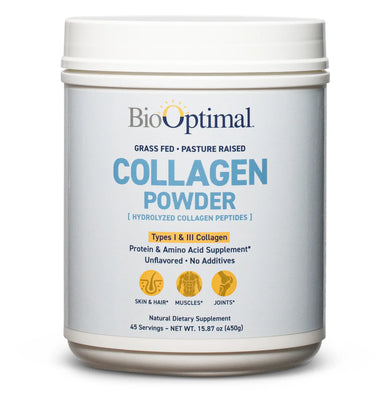
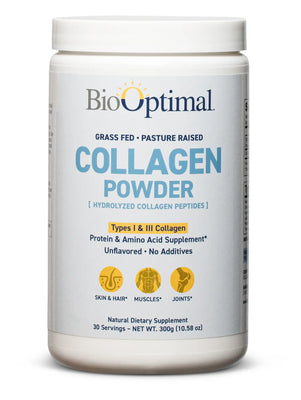
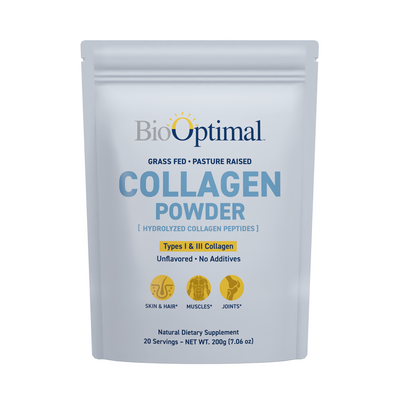
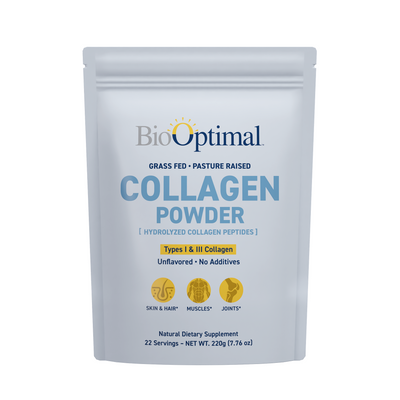
If you are comparing formats and sources, BioOptimal's collagen peptide products are double hydrolyzed from grass-fed, pasture-raised bovine, so you can see how a clean peptide supplement is built before you buy one.
Collagen vs Collagen Peptides vs Gelatin
Gelatin often gets lumped into this conversation, and it deserves its own line in the comparison. Gelatin is also derived from collagen, but it goes through a partial breakdown rather than full hydrolysis. That partial processing is exactly why gelatin forms a gel when it cools, the same property that makes it useful in cooking, while fully hydrolyzed collagen peptides stay dissolved in both hot and cold liquid and never set.
|
Ingredient |
Description |
Typical Use |
|---|---|---|
|
Collagen |
The original, unprocessed structural protein |
Rarely used as a standalone supplement |
|
Collagen peptides |
Collagen broken into small peptide chains through hydrolysis |
Daily powders and capsules, mixes into any drink |
|
Gelatin |
A partially broken down form of collagen that gels when cooled |
Cooking, baking, and gelled foods |
For everyday supplementation, most people reach for collagen peptides simply because they do not need to heat or set anything. If you want a supplement you can stir into a cold glass of water in ten seconds, gelatin is not built for that job the way collagen peptides are.
Are Collagen Peptides Better Than Collagen
Collagen peptides are not a different ingredient competing with collagen. They come from the same protein source, and the real question is which form fits how you actually want to use it. If your goal is a daily supplement you can mix into a drink and forget about, collagen peptides are the practical choice. If you are cooking, baking, or making something that needs to set, that is gelatin's job, not a peptide powder's.
What Should You Look For When Choosing Collagen Peptides
Check The Collagen Source
Source matters as much as the word “peptides” on the front of the label. Look for clear language about where the collagen comes from, such as grass-fed, pasture-raised bovine, and whether the animals were raised without hormones or antibiotics. BioOptimal's collagen powder and capsules list this sourcing information directly on the product page rather than burying it in fine print.
Review Ingredients And Serving Information
A short ingredient list is a good sign. Collagen peptides should be the only thing in the container, without fillers, binders, artificial flavors, or added sugar. On serving size, research generally supports a daily range of about 2.5 to 10 grams of hydrolyzed collagen, taken consistently for at least 4 to 8 weeks, as a reasonable starting point for most people.
Consider Brand Transparency
Collagen powders have come under scrutiny for heavy metal contamination tied to poor sourcing. A transparent brand will publish third-party lab results rather than asking you to take purity on faith. You can see how BioOptimal approaches this in its breakdown of heavy metal testing in collagen powder, which explains what to check before you trust a label.
How BioOptimal Collagen Products Fit Into Your Routine
Understanding the difference between collagen and collagen peptides makes it a lot easier to evaluate what is actually in your supplement. BioOptimal builds its collagen line around the peptide form for exactly the reasons covered above: easy mixing and easier use by your body, while keeping sourcing and testing transparent.
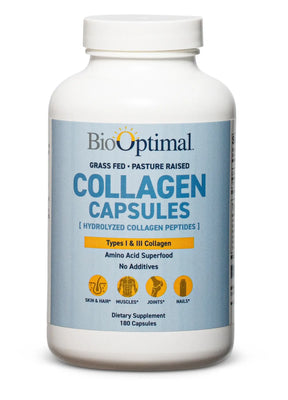
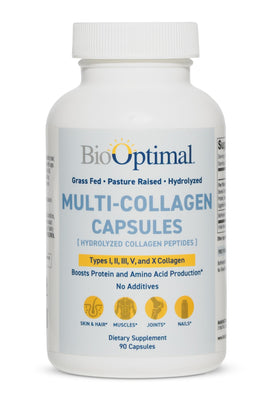
The BioOptimal Collagen Powder is a single-ingredient, double-hydrolyzed peptide powder that dissolves into coffee, smoothies, or water. If capsules fit your routine better, the Collagen Peptides Capsules deliver the same type I and III peptides in a form you can take on the go, and the Multi-Collagen Capsules add types V and X for a broader blend.
Still deciding between formats? The guide to collagen powder versus collagen pills walks through the tradeoffs in more detail. And if you are looking to pair collagen with broader nutritional support, pairing a multivitamin with collagen is worth a look, since nutrients like vitamin C play a role in your body's own collagen production.
Common Questions People Ask About Collagen Peptides
Are Collagen Peptides A Weaker Or Fake Version Of Collagen
No. Collagen peptides come from real, whole collagen. Processing changes the size of the protein chains, not the source. Nothing synthetic gets added during hydrolysis; it is a physical breakdown of the same protein.
Do Collagen Peptides Get Delivered Directly To Your Skin
Not quite. Once you swallow a collagen peptide supplement, your digestive system breaks it down further into amino acids and small peptides, which your body then uses as raw material, including for its own collagen production. Peptides support that process rather than traveling to your skin intact.
Is A Higher Hydrolysis Level Always Better
Higher hydrolysis generally improves solubility and ease of mixing, which is why double hydrolyzed formulas like BioOptimal's dissolve without clumping. Beyond a certain point, though, the main benefit is practical: a smoother mixing experience, rather than a dramatic difference in how your body uses the protein.
FAQs
1. Are collagen and collagen peptides the same?
Not exactly. Collagen peptides are collagen that has been broken down through hydrolysis into smaller peptide chains, making them easier to dissolve and use in supplements.
2. What's the difference between collagen and hydrolyzed collagen?
There isn't one. Hydrolyzed collagen and collagen peptides are different names for the same product.
3. Are collagen peptides better than collagen?
They aren't a different or superior ingredient—they're simply the more convenient form of collagen, making them ideal for powders and capsules.
4. Why do supplements use collagen peptides?
Collagen peptides dissolve easily, mix well in drinks, and are easier for the body to digest than whole collagen.
5. Are collagen peptides a complete protein?
No. They lack the essential amino acid tryptophan, so they should complement, not replace, complete protein sources.
6. Are collagen peptides easier to absorb?
Yes. Hydrolysis breaks collagen into smaller peptides, making them easier to digest and absorb.
7. What should I look for in a collagen peptide supplement?
Choose a product made with grass-fed, pasture-raised collagen, minimal ingredients, and third-party testing for quality and purity.
8. Can I take collagen peptides every day?
Yes. Daily use is generally considered safe for most healthy adults. If you're pregnant, nursing, or have a medical condition, consult your healthcare provider before starting any supplement.
Choose Collagen Peptides You Can Trust
Collagen and collagen peptides are not competing products; they are two stages of the same protein. Once you know that hydrolysis is the whole story behind the label, choosing a supplement comes down to source, ingredient quality, and transparent testing rather than guessing which word sounds more effective.
When you are ready to add a clean, single-ingredient collagen peptide supplement to your routine, shop BioOptimal's collagen powder and capsules and pick the format that fits your day.
For more collagen sourcing and safety questions, see the BioOptimal Help and FAQ page, or compare sourcing further in collagen peptides vs marine collagen.