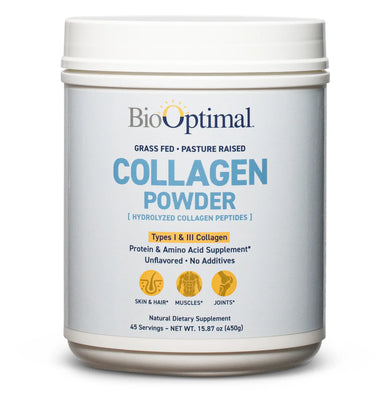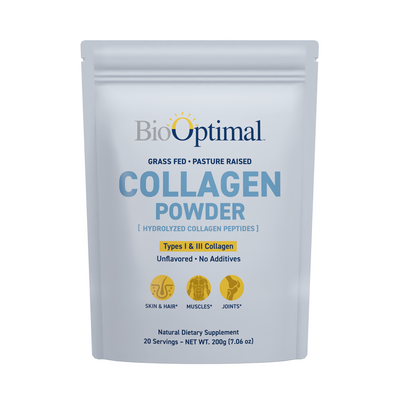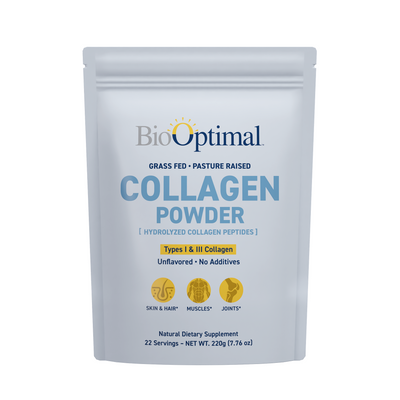


The best collagen for women over 50 is a hydrolyzed Type I and III collagen peptide powder taken daily at around 10 grams, from a single-ingredient source that publishes third-party heavy metal testing. BioOptimal Collagen Powder delivers 10 grams per scoop, 45 servings per tub, with no fillers or added sugar.
Louis's takeaways:
After 50, your body makes less collagen than it used to, so the goal of a supplement is a steady daily supply of the amino acids that hair, skin, nails, joints, and bones are built from. Three things decide whether a product is worth buying: the type (I and III for skin, hair, and nails), the ingredient list (one ingredient beats ten), and proof of third-party heavy-metal testing. Format is a lifestyle choice, not a quality one. Consistency matters more than brand.
Table of Contents:
SUMMARY:
As women age, collagen levels decline, affecting skin, joints, and bones. Supplementing with high-quality collagen can improve hydration, mobility, and vitality. This guide helps women over 50 choose the best collagen for their specific needs.
What actually changes after 50
Collagen is the protein your body uses to build skin, hair, nails, tendons, cartilage, and the framework of bone. Your body produces it naturally, and that production slows steadily from your mid-twenties onward. By your fifties, the decline is well established, and it shows up in the places that depend most on collagen: skin that holds less moisture and firmness, nails that split, hair that feels thinner, and joints that feel less comfortable after activity.
This is normal aging, not a deficiency or a condition. A collagen supplement does not reverse it. What it does is supply the amino acids, mainly glycine, proline, and hydroxyproline, that your body uses as raw material for its own collagen production. Think of it as topping up the supply, alongside protein in your diet and vitamin C, which your body needs to make collagen at all.

What to look for in a collagen supplement over 50
Five checks, in order of how much they matter.
1. Hydrolyzed Types I and III
Type I is the most abundant collagen in skin, hair, nails, and bone. Type III sits alongside it in skin and connective tissue. Together, they cover what most women over 50 are actually buying collagen for. Hydrolyzed means the protein has been broken into shorter peptide chains that your body absorbs more readily. Type II is specific to cartilage and shows up in multi-collagen blends.
2. A short ingredient list
One ingredient is the ideal. Every filler, binder, sweetener, flavoring, and "proprietary blend" is something you are paying for that is not collagen. It also makes it impossible to know how much collagen you are actually getting.
3. Third-party heavy-metal testing with published results
This matters more than any marketing claim on the tub. Collagen comes from animal hides and bones, and animals accumulate lead, arsenic, mercury, and cadmium from their environment. Independent testing has found measurable levels in a share of popular brands. Ask for the Certificate of Analysis. If a brand will not show you one, choose another. Our guide to heavy metal testing in collagen powders walks through how to read a COA in under a minute.
4. Grass-fed, pasture-raised sourcing
Cattle raised on pasture generally carry a lower environmental contaminant load than industrially farmed animals. It is not a guarantee on its own, which is why it sits below testing on this list, but it stacks with it.
5. A dose you will actually take
Ten grams a day of something you enjoy beats twenty grams of something you abandon in week three.
On sourcing, briefly: bovine collagen delivers Types I and III, marine collagen delivers mainly Type I, and there is no such thing as plant-based collagen. Plants contain nutrients that support your own collagen production, but no plant contains collagen itself. Products marketed that way are collagen *builders*, which is a different thing.
BioOptimal collagen powder meets all five: one ingredient, double-hydrolyzed Type I and III peptides from grass-fed, pasture-raised bovine, hormone and antibiotic-free, non-GMO, third-party tested for heavy metals every batch, made in a GMP-certified facility, 10-gram scoop, 45 servings.

Which format is best: powder, capsules, or liquid
Format changes convenience and cost, not quality. Pick the one you will keep using.
|
Powder |
Highest, around 10g per scoop |
Daily routine, lowest cost per serving, flexible dose |
Requires mixing, though a good powder dissolves in seconds |
|
Capsules or pills |
Lower, several capsules per dose |
Travel, no mixing, disliking the texture of drinks |
You need several capsules to approach a powder serving |
|
Tablets |
Lower, similar to capsules |
Same as capsules |
Same as capsules |
|
Liquid |
Varies widely |
Convenience, pre-measured |
Usually the most expensive per gram, and often contains added sugar, flavoring, and preservatives to stay shelf-stable |
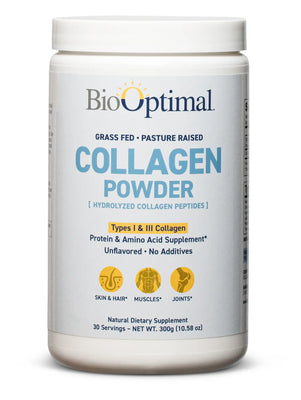
For most women over 50, powder is the better buy. You get more collagen per serving, you control the dose, and it costs less per gram. Shop the 45-serving collagen powder at $34.99, or the 20-serving size at $16.99 if you want to try it first.
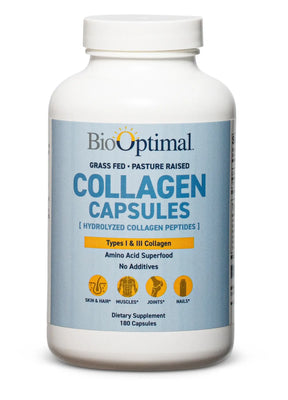
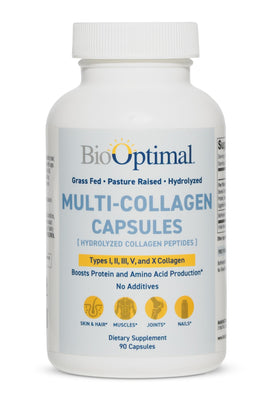
Choose capsules if mixing is what will keep you from being consistent. Collagen capsules deliver the same Type I and III collagen with a glass of water. If you want more collagen types in a single capsule, the multi-collagen capsules include Types II, V, and X.
For a fuller comparison of the two main formats, read "collagen powder vs. pills."
SUMMARY:
Collagen supplementation offers numerous benefits for women over 50, including improving skin texture, joint health, bone density, muscle mass, hair, and nail strength. It also promotes gut health by reducing inflammation and supporting digestion. These benefits make collagen a valuable addition to maintaining overall well-being as we age.
How much collagen per day after 50
Ten grams a day is a sensible, common serving, and it is what one BioOptimal scoop delivers. Some people take twice that. More is not automatically better, and consistency beats dose size.
Three things that help it work harder:
-
Pair it with vitamin C. Your body cannot synthesize collagen without it. A scoop of coffee alongside fruit or a vitamin C supplement covers it.
-
Pick a time you will not forget. Morning coffee is the most common answer among our customers, precisely because it is already a habit. Collagen does not need to be taken on an empty stomach, though if you are curious, we cover taking collagen on an empty stomach separately.
-
Keep your overall protein intake up. Collagen is not a complete protein. It works alongside the protein in your diet, not instead of it.
If you are going through or past menopause and want specifics for that stage, read "Collagen for Menopause."

What to avoid
-
Flavored and sweetened blends. Sugar, sweeteners, and flavorings dilute what you are paying for and often leave sediment.
-
Proprietary blends. If the label will not tell you how many grams of collagen are in a serving, assume the answer is not flattering.
-
No published lab result—the single biggest red flag. See the heavy metal testing guide.
-
"Plant-based collagen." No plant contains collagen. These are collagen-support formulas sold under a misleading name.
-
Buying the biggest tub of something you have not tried. Start with a small size, confirm you will actually take it daily, then buy for value.
SUMMARY:
Preventing collagen loss involves a balanced diet rich in vitamins and protein, regular exercise, and sun protection. Avoiding smoking and alcohol and managing stress also play key roles in preserving collagen and supporting skin, joint, and overall health.
How long before you notice anything
You will need approximately 8 to 12 weeks of regular use. That is the honest answer, and it is worth knowing before you start so you do not quit at week three.
Nails and hair tend to be the first places people notice a difference, because they grow continuously and visibly. Skin feel and firmness take longer. Joint comfort is the slowest and the most variable.
Our customers describe the same pattern. Several reports noted nothing at three weeks and a clear difference by six to eight weeks. Others report nothing dramatic at all, but keep taking it. That range is normal, and any brand promising results in a fortnight is overselling.
For a week-by-week view of what to expect, read our honest 12-week results guide.

SUMMARY:
To choose the right collagen supplement, consider the type (Type I for skin, Type II for joints, or a blend for overall benefits), the source (marine or bovine), and additional ingredients like vitamin C for absorption. Opt for reputable brands with transparency, quality sourcing, and positive customer reviews to ensure effectiveness.
Frequently Asked Questions
1. What is the best collagen for women over 50?
Hydrolyzed Type I and III collagen peptides from grass-fed, pasture-raised bovine, with one ingredient, and published third-party heavy-metal testing. Types I and III are found in skin, hair, nails, and bone. Powder provides the most collagen per serving at the lowest cost, and capsules are the better choice if mixing would keep you from taking it daily. Ten grams a day is a common serving.
2. Is collagen worth taking after 50?
Your natural collagen production declines with age, so a daily supplement provides amino acids your body uses as raw material for hair, skin, nails, joints, and bones. It is not a treatment for any condition, and it does not reverse aging. Taken consistently over 8 to 12 weeks alongside adequate dietary protein and vitamin C, it is a reasonable, low-cost addition to a routine.
3. How much collagen should a woman over 50 take daily?
Ten grams a day, roughly one 10-gram scoop of powder, is a common and sensible serving. Some people take up to 20 grams. Consistency matters more than dose size. Pair it with vitamin C, which your body needs to make collagen.
4. Which is better after 50, collagen powder or capsules?
Both deliver the same Type I and III collagen. Powder gives more collagen per serving, a flexible dose, and a lower cost per gram, so it is the better buy for most people. Capsules require no mixing and travel easily, which makes them a better fit if convenience is what keeps you consistent.
5. What is the best collagen for women over 60?
The same criteria apply at 60 as at 50: hydrolyzed Type I and III peptides, single ingredient, grass-fed bovine, third-party tested. Nothing about the formulation needs to change with the decade. What matters more with age is choosing a format you will take every day and ensuring adequate dietary protein alongside it.
6. Is liquid collagen better for women over 50?
Not usually. Liquid collagen is convenient and pre-measured, but it is typically the most expensive option per gram of collagen and often contains added sugar, flavoring, and preservatives to remain shelf-stable. A single-ingredient powder gives you more collagen for less, with nothing added.
7. How long does collagen take to work after 50?
Give it 8 to 12 weeks of daily use. Nails and hair usually show changes first because they grow continuously. Skin feel takes longer, and joint comfort is the slowest and most variable. Reporting results within two weeks is not realistic.
Get started
If you want one recommendation: start with the 45-serving collagen powder, one scoop in your morning coffee, for twelve weeks. It is one ingredient, grass-fed, third-party tested for heavy metals, and unflavored,d so it will not change your drink. Prefer not to mix? Get the collagen capsules. View the full collagen collection to compare sizes and formats.