

Table of Contents:
- Why Does Menopause Affect Collagen?
- Does Collagen Help During Menopause?
- Collagen for Menopause- Evidence by Goal
- What Collagen Cannot Treat During Menopause?
- What Type of Collagen Is Best for Menopause?
- How to Choose a Collagen Supplement During Menopause
- Can You Take Collagen With HRT?
- Who Should Be Careful With Collagen Supplements?
- Frequently Asked Questions
- Is Collagen Worth Considering During Menopause?
Collagen supplements may support skin hydration, elasticity, joint comfort, and bone structure during menopause. They do not treat hot flashes, mood changes, vaginal symptoms, weight gain, or hormonal imbalance. Benefits depend on the goal, product, and study evidence, and collagen should not replace adequate protein, exercise, medical care, or prescribed menopause treatment.
Menopause changes far more than the menstrual cycle. Falling estrogen levels can affect skin, bones, body composition, sleep, temperature regulation, vaginal tissues, and emotional well-being. Collagen is relevant to some of these tissues, but that does not mean a collagen supplement can address every menopause concern. The useful question is not simply whether collagen “works.” It is the outcome you are considering, how closely the research aligns with menopausal women, and whether the product matches the formula used in the study.
Why Does Menopause Affect Collagen?
Collagen is found in skin, bone, tendons, ligaments, cartilage, blood vessels, and other connective tissues, as a structural protein. Types I, II, and III are among the most familiar forms. Type I is common in skin, bone, tendons, and ligaments. Type II is found mainly in cartilage, while Type III occurs in skin, muscles, arteries, and organs. The body builds collagen from amino acids and also requires nutrients, such as vitamin C, for normal collagen production.
Perimenopause is the transition leading to the final menstrual period. Menopause is confirmed after 12 months without a period, and postmenopause follows for the rest of one's life. During this transition, estrogen and progesterone production change and eventually fall to low levels. These hormonal changes get evident on skin and a lead to a higher risk of bone loss. Still, they also cause symptoms that collagen cannot treat, including hot flashes and vaginal symptoms.
Research reviews often combine participants of different ages and do not always report menopause status. A 2026 umbrella review of 16 systematic reviews and 113 randomized trials found that it could not assess menopause status as a modifier because the underlying studies did not provide sufficient detail. This matters because findings in athletes, adults with osteoarthritis, or mixed-age skin studies should not be presented as direct proof for menopausal women.
For wider age-related guidance, read BioOptimal’s collagen options for women over 50. This menopause guide uses a narrower evidence and safety lens.
Does Collagen Help During Menopause?
The most accurate answer is “possibly for selected tissue-related goals, but not for menopause itself.” Research on oral collagen has examined skin hydration, elasticity, joint discomfort, bone measures, body composition, and exercise outcomes. The certainty is not the same for each goal, and product formulas, serving amounts, study length, and participant groups vary widely.
The evidence on skin shows why careful wording is needed. Earlier reviews reported improvements in hydration and elasticity. A 2025 meta-analysis of 23 randomized trials also found favorable pooled results, but those effects disappeared in studies without industry funding and in higher-quality studies. A separate 2026 umbrella review reported favorable findings for skin and musculoskeletal outcomes, while noting that certainty across many areas was moderate to low and that many prior reviews had quality or publication-bias concerns.
In a randomized trial of postmenopausal women with low bone mineral density, a specific collagen peptide formula was associated with improved bone mineral density after 12 months. Other trials have studied collagen alongside calcium and vitamin D. These results are worth discussing. Still, they do not prove that every collagen product prevents fractures or treats osteopenia or osteoporosis.
Collagen for Menopause- Evidence by Goal
|
Concern |
Evidence level |
What the research suggests |
What collagen does not replace |
|
Dry or less elastic skin |
Mixed |
Some reviews report better hydration or elasticity, while a 2025 funding and quality analysis found no benefit in non-industry-funded or higher-quality studies. |
Sunscreen, skin care, or dermatology care |
|
Joint stiffness or discomfort |
Supporting, mostly indirect |
Research in adults with joint concerns and exercise-related discomfort suggests possible symptom support. |
Assessment and treatment for arthritis or injury |
|
Bone health |
Limited direct research |
Trials in postmenopausal women have studied specific peptides and bone measures. |
Bone-density testing or osteoporosis treatment |
|
Muscle retention |
Indirect |
Collagen supplies protein and amino acids, but it is not a complete protein. |
Adequate complete protein and resistance exercise |
|
Hair thinning |
Insufficient |
There is no sound menopause-specific evidence that collagen regrows hair. |
Evaluation for thyroid, iron, hormonal, genetic, or scalp causes |
|
Weight gain |
Insufficient |
Collagen has not been shown to cause menopause-specific fat loss. |
Nutrition, activity, sleep, and medical assessment |
|
Hot flashes or night sweats |
No supporting evidence |
No established collagen benefit. |
Hormonal or nonhormonal menopause care |
|
Hormonal balance |
No supporting evidence |
Collagen is a protein supplement, not a hormone treatment. |
Medical assessment or prescribed therapy |
Skin Hydration and Elasticity
Skin dryness, thinning, and reduced elasticity can become more noticeable around menopause. Oral collagen studies often measure hydration, elasticity, or wrinkle depth over several weeks. Some pooled analyses report small improvements, but the research base includes short trials, different formulas, and frequent industry involvement. The newer 2025 analysis is an important counterweight, as favorable results were not observed in non-industry-funded or higher-quality subgroups.
A fair consumer message is that collagen may support skin hydration or elasticity for some people, but results are not assured, and it should not be sold as an anti-aging treatment. Daily sun protection, adequate nutrition, and suitable skin care remain central.
Joints, Tendons, and Ligaments
Collagen is part of cartilage, tendons, and ligaments. Reviews of collagen peptide research have reported possible reductions in joint discomfort and changes in recovery or connective-tissue measures. However, much of this work involves athletes, active adults, or people with osteoarthritis rather than menopausal women as a distinct group.
Collagen may be considered an add-on for joint comfort, but persistent swelling, locking, instability, marked pain, or reduced movement warrant medical assessment. A supplement should not delay diagnosis of arthritis, tendon injury, or another cause.
Bone Mineral Density
Bone deserves extra care after menopause because low estrogen is linked to faster bone loss. In one 12-month randomized trial, 5 grams per day of a specific collagen peptide formula improved bone mineral density measures in postmenopausal women with age-related low bone mineral density. Later work examined the effects of calcium and vitamin D on collagen, and a smaller open follow-up reported continued gains among participants who remained on the specific peptide product.
These studies do not establish collagen as an osteoporosis treatment. They used defined formulas and selected participants, and bone health depends on calcium, vitamin D, protein, weight-bearing activity, resistance training, fall prevention, medical history, and prescribed treatment when needed. Anyone with osteopenia, osteoporosis, a low-trauma fracture, or significant height loss should discuss formal bone care with a clinician.
Muscle and Dietary Protein
Collagen provides protein, but its amino acid profile differs from that of complete proteins such as dairy, eggs, soy, fish, meat, or balanced plant combinations. It is low in some essential amino acids and should not displace the protein needed for muscle maintenance. Research on collagen plus exercise is interesting, but it does not make collagen a substitute for enough complete protein or resistance training.
For a menopause routine, count collagen as part of total protein intake, while ensuring meals still provide complete protein sources. A registered dietitian can help when appetite, kidney disease, digestive conditions, or dietary restrictions make protein planning difficult.
Hair and Nails
Hair thinning during perimenopause or postmenopause can have several causes, including genetic pattern hair loss, thyroid disease, low iron, rapid weight change, stress, medication effects, or scalp conditions. Collagen contains amino acids used throughout the body, but direct evidence that collagen treats menopause-related hair loss is insufficient. Nail research is also limited and often product-specific.
Rapid shedding, patchy loss, scalp inflammation, or thinning accompanied by fatigue or other symptoms deserves assessment rather than self-treatment with collagen alone.
|
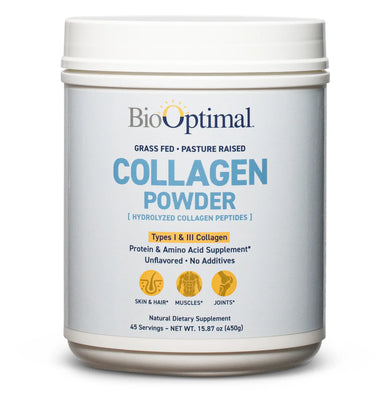
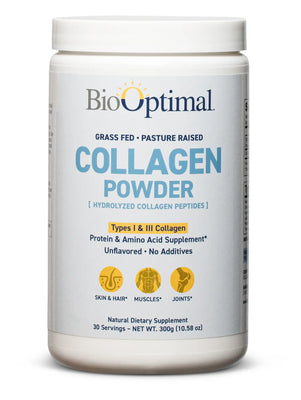
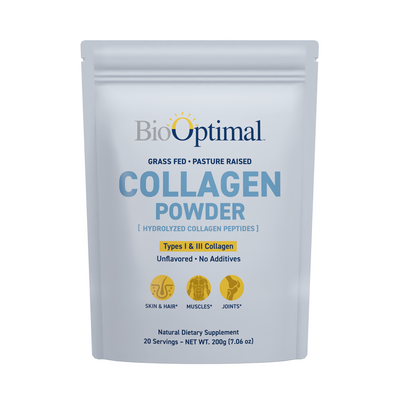
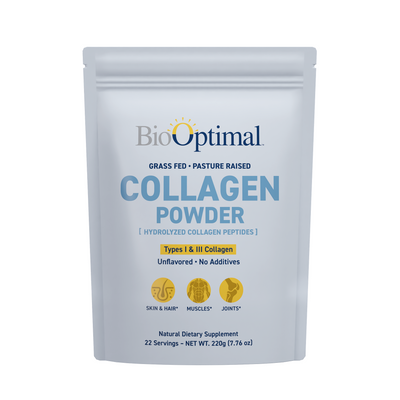
Product option- Readers who prefer a one-ingredient bovine peptide powder can reviewBioOptimal Type I and III collagen powder. The current product page lists a 10-gram scoop, hydrolyzed Types I and III, grass-fed and pasture-raised bovine sourcing, and third-party contaminant testing. Check the final label before publication. |
What Collagen Cannot Treat During Menopause?
Collagen is not a treatment for menopause or for the hormonal changes that cause menopause symptoms. It has not been shown to treat hot flashes, night sweats, mood changes, vaginal dryness, pain during sex, urinary symptoms, or sleep disruption driven by vasomotor symptoms. It also does not “balance” estrogen or progesterone.
The same boundary applies to diagnosed conditions. Collagen should not be described as preventing or treating osteoporosis, arthritis, kidney disease, or hair-loss disorders. People may choose collagen while receiving medical care, but the supplement should not replace bone-density screening, menopause hormone therapy, nonhormonal medicines, vaginal treatments, physical therapy, or any prescribed plan.
This distinction is important for trust and for compliance. FDA permits certain structure-function claims when they are truthful and supported, but dietary supplements cannot legally claim to treat, prevent or cure disease.
What Type of Collagen Is Best for Menopause?
There is no single collagen type proven to be best for every menopausal woman. The better choice depends on the goal, source, serving amount, allergies, added ingredients, test records, and whether the format can be used consistently.
Type I and Type III Collagen
Type I is common in skin, bone, tendons, and ligaments. Type III often occurs with Type I in the skin and other tissues. Bovine collagen peptides commonly provide Types I and III. These labels describe the source proteins, but the type number alone does not guarantee a specific result.
Type II Collagen
Type II is the main collagen in cartilage. Some joint products use hydrolyzed Type II, while others use undenatured Type II in much smaller amounts. These are not interchangeable forms. A product should be judged by its exact ingredients, serving information, and research rather than the words “Type II” alone.
Multi-Collagen Products
A multi-collagen label may list Types I, II, III, V, and X from several animal sources. More listed types do not automatically mean a better outcome. Check how much collagen the serving provides, where each source comes from, whether the product contains egg, fish, shellfish, chicken, porcine, or bovine ingredients, and whether the label matches your dietary needs.
Bovine Versus Marine Collagen
Bovine collagen is commonly rich in Types I and III. Marine collagen is usually rich in Type I and may suit people who prefer a fish source. Fish-allergic consumers must avoid marine products, and people with beef restrictions may prefer another source. Direct head-to-head evidence is not strong enough to say that one source always works better or is absorbed better. The 2026 umbrella review identified source and format comparisons as an open research question.
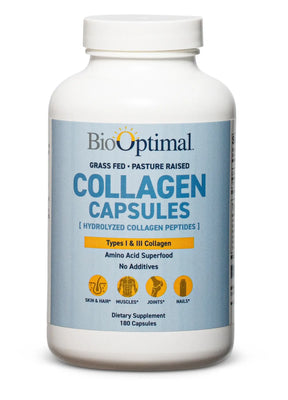
Collagen Powder Versus Capsules
|
Format |
May suit |
Check before buying |
|
Powder |
People who want to mix collagen into coffee, smoothies, oatmeal, or other foods |
Collagen amount per scoop, flavor, added ingredients, scoop size, mixing directions |
|
Capsules |
People who prefer a pre-measured format with no mixing |
Capsules per serving, collagen amount, capsule ingredients, and swallowability |
|
Multi-collagen capsules |
People who want several listed collagen types |
Animal sources, allergens, amount per serving, evidence for the intended goal |
|
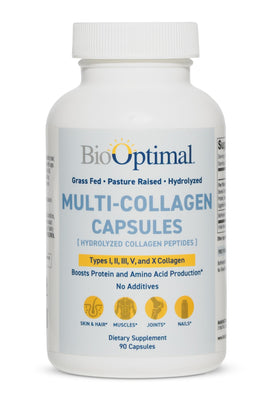
Capsule option- Compare the current label and animal sources forBioOptimal multi-collagen capsules with Types I, II, III, V, and X. The page currently lists 90 capsules and a 30-day supply. Still, some supporting copy appears copied from the powder page. Verify the final Supplement Facts panel and source list before publishing claims. |
How to Choose a Collagen Supplement During Menopause
Use a label-first decision process rather than choosing by the longest benefit list.
- Define the main goal. Skin, joint comfort, bone support, and dietary protein are different questions.
- Check the exact collagen source. Look for bovine, marine, chicken, egg, porcine, or mixed sources.
- Read the amount per serving. Do not assume a capsule product provides the same amount as a scoop of powder.
- Check whether the product contains hydrolyzed collagen peptides, undenatured collagen, gelatin, or another form.
- Review every allergen and dietary restriction before use.
- Look for added sweeteners, vitamins, herbs, flavors, or fillers that may affect suitability.
- Ask for current testing information when contaminant testing is part of the buying decision.
- Choose a format you can take according to the label without displacing meals or complete protein.
- Do not copy a serving amount from a study that used a different patented peptide or product.
- Ask a healthcare professional when medicines, kidney disease, pregnancy, cancer care, or a diagnosed condition is involved.
FDA advises consumers to discuss supplement use with a doctor, pharmacist, or other healthcare professional, as supplements can pose risks and may interact with medicines or underlying health conditions. How Should You Take Collagen During Menopause?
Follow the product directions. Collagen research uses a wide range of serving amounts and study periods, so there is no single research dose that applies to every formula or goal. A powder and a capsule product may deliver very different amounts per serving.
Consistency is more useful than chasing a special time of day. There is no reliable evidence that collagen works better for everyone in the morning or before bed. Take it at a time that fits your routine and does not cause digestive discomfort. For research timelines by goal, see BioOptimal’s guide on how long collagen may take to work.
Collagen should not replace meals or serve as a complete protein source. Support normal collagen formation with enough dietary protein and vitamin C from citrus fruit, berries, peppers, broccoli, and other produce. Vitamin C is required for collagen biosynthesis, but that does not mean every collagen product must contain added vitamin C if the diet already supplies enough. Weight-bearing exercise supports bone health, resistance exercise supports muscle, and sun protection reduces ultraviolet damage to the skin. These habits address factors a collagen supplement cannot cover.
Can You Take Collagen With HRT?
Collagen itself is a dietary protein, but it is not possible to rule out concerns for every collagen product, as some formulas may add herbs, vitamins, minerals, sweeteners, or other active ingredients. HRT also varies by hormone, dose, route, and personal health history.
Do not use collagen in place of menopause hormone therapy, and do not start or stop HRT based on a supplement article. Show the full Supplement Facts panel to the clinician or pharmacist who manages your medicines. This is especially important if the product contains more than collagen or if you use several supplements.
Who Should Be Careful With Collagen Supplements?
Check the animal source before use. People with fish or shellfish allergy should avoid marine collagen unless a qualified allergy professional says otherwise. Egg, chicken, porcine, and bovine sources also matter for allergies, dietary rules, and personal preferences.
People with chronic kidney disease or a prescribed protein limit should ask their kidney clinician or dietitian before adding a protein supplement. Protein needs differ by kidney function and dialysis status. People who have previously suffered from calcium oxalate kidney stones should also discuss frequent intake of high-collagen or gelatin, as hydroxyproline metabolism contributes to urinary oxalate excretion. Stop using the product and seek urgent care for trouble breathing, facial or throat swelling, or any other severe allergic reaction. Contact a healthcare professional for persistent digestive symptoms, rash, or other suspected adverse effects.
Medical assessment is also more important than supplement shopping when there is a low-trauma fracture, marked height loss, severe or swollen joints, rapid hair loss, unexplained weight change, bleeding after menopause, or menopause symptoms that interfere with daily life.
Frequently Asked Questions
1. Is collagen good for menopause?
Collagen may support selected tissue-related goals during menopause, such as skin hydration, joint comfort, and bone structure. Evidence varies by outcome and product, and skin findings are disputed when funding and study quality are considered. Collagen does not treat menopause, hot flashes, hormonal imbalance, or other hormone-driven symptoms.
2. What type of collagen is best for menopause?
There is no single best type for every person. Types I and III are common in bovine products and are associated with skin and connective tissues, while Type II is found in cartilage. Choose by goal, source, amount per serving, allergies, added ingredients, label directions, and available testing information.
3. Does collagen help with menopause symptoms?
Collagen has not been shown to treat core menopause symptoms like hot flashes, mood changes, night sweats, vaginal dryness, or sleep disruption caused by vasomotor symptoms. Research, in contrast, focuses on tissue measures such as skin hydration, joint discomfort, and bone outcomes. Menopause symptoms need suitable medical guidance.
4. Can you take collagen with HRT?
Many collagen-only products are dietary proteins, but formulas differ and may contain other ingredients. Do not assume every product is suitable for every medicine. Show the complete label to the clinician or pharmacist managing your HRT, and do not replace prescribed hormone therapy with collagen.
5. Does collagen help with menopause hair loss?
There is insufficient direct evidence that collagen treats menopausal hair loss. Hair thinning can result from genetic pattern baldness, thyroid disease, low iron levels, stress, rapid weight changes, medications, or scalp conditions. Rapid, patchy, or persistent loss should be assessed instead of managed with collagen alone.
6. How long does collagen take to work?
Study periods vary by goal and formula. Skin studies often assess changes after several weeks, joint studies may run for months, and bone studies in postmenopausal women have lasted a year or longer. Results are not assured, so follow the product directions and judge progress against a defined goal.
7. Can collagen help with menopause weight gain?
Collagen has not been shown to cause menopause-specific weight loss. It can add protein, but it is not a complete protein and must not be treated as a substitute for balanced meals. Weight changes during menopause may involve activity, sleep, medications, appetite, muscle loss, and health conditions that require a broader plan.
8. Who should not take collagen supplements?
People with an allergy to the product source should avoid it. Anyone with kidney disease, a prescribed protein restriction, a history of kidney stones, pregnancy, active cancer care, or several medicines should ask a healthcare professional first. Stop and seek care if you have signs of a severe allergic reaction.
Is Collagen Worth Considering During Menopause?
Collagen can be considered as an optional supplement for a defined tissue-related goal, not as a treatment for menopause. The strongest consumer decision starts with the concern you want to address, the degree of research alignment with that concern, and the exact product label. Evidence is mixed for skin, supporting but often indirect for joint comfort, and limited to specific formulas for bone outcomes in postmenopausal women.
Choose the source and format carefully, keep complete protein and exercise in the plan, and seek medical care for symptoms or conditions that collagen cannot address.