

Take the powder if you want the most collagen per serving and the lowest cost. Take pills if you travel, dislike mixing, or know that any extra step will stop you from being consistent. Both deliver the same hydrolyzed Type I and III collagen and are absorbed the same way, because absorption depends on hydrolysis, not on format. The real difference is grams per serving and cost per gram, and powder wins both
Louis's takeaways:
This is a convenience-versus-value decision, not a quality one. Hydrolyzed collagen peptides are absorbed the same whether they arrive as powder in your coffee or inside a capsule shell. Powder gives you about 10 grams per scoop at the lowest cost per gram. Pills give you a few grams per serving with no mixing. The best format is whichever one you will still be taking in twelve weeks, because consistency is what actually determines whether collagen does anything for you.
Table of Contents:
Collagen powder vs pills at a glance
|
Collagen types |
Type I and III |
Type I and III |
|
Per serving |
One 10g scoop |
[CONFIRM: capsules per serving from label] |
|
Absorption |
Same. Depends on hydrolysis, not format |
Same |
|
Cost per gram |
Lower |
Higher |
|
Mixing required |
Yes, dissolves in seconds |
No |
|
Dose flexibility |
Yes, adjust the scoop |
No, fixed per capsule |
|
Travel |
Bulkier, needs a drink |
Easy, pocketable |
|
Taste |
Unflavored, undetectable in coffee |
None |
|
Best for |
Daily routine, value, higher dose |
Convenience, travel, no-fuss consistency |
The one-line verdict: Powder for value and dose, pills for convenience. Nothing about the collagen itself differs.

Is collagen absorbed better in powder or pill form?
No. Both are absorbed the same way, and format does not determine absorption.
What determines it is hydrolysis. Whole collagen is a large, tightly wound protein that your gut cannot absorb intact. Hydrolyzing it breaks the protein into short peptide chains small enough to cross the intestinal wall. Once collagen has been hydrolyzed into peptides, your digestive system treats those peptides the same, whether they arrived loose in a liquid or inside a capsule that dissolves in your stomach within minutes.
So the question to ask a brand is not "powder or pill." It is:
- Is it hydrolyzed? If not, absorption is genuinely poor regardless of format.
- How hydrolyzed? Double-hydrolyzed peptides are broken down twice, producing shorter chains. BioOptimal uses double-hydrolyzed peptides in both the powder and the capsules.
- How many grams per serving? This is where the formats really differ, and it matters far more than absorption.
A capsule adds a few minutes while the shell dissolves. That is the entire practical difference, and it has no bearing on how much collagen ends up in your bloodstream.

SUMMARY:
Collagen powder offers higher doses, better absorption, and flexibility for mixing into drinks or food. Capsules are more convenient and travel-friendly but usually provide lower doses, requiring multiple pills for the same effect.
How much collagen do you actually get from each
This is the difference that matters, and it is the one most comparisons skip.
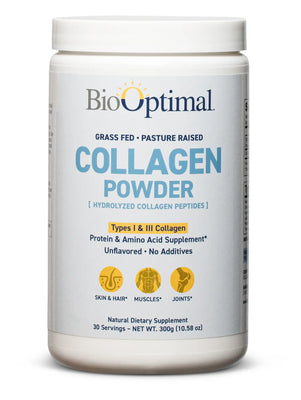
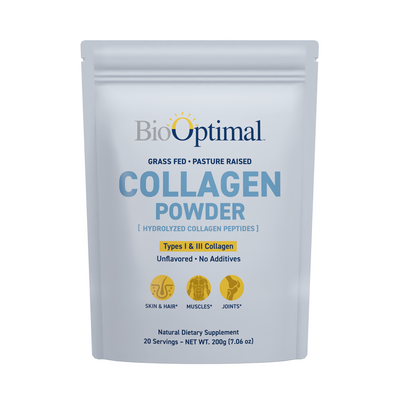
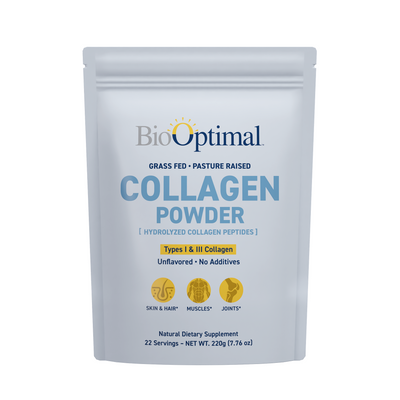
Powder delivers around 10 grams of collagen per 10-gram scoop, because the scoop is pure collagen with nothing else in it-one scoop, one serving, done.
Capsules hold a fraction of that each, because a capsule shell can only physically contain so much powder. To reach a powder-equivalent dose, you would take several capsules. That is not a flaw; it is physics, and it is why capsule servings are typically smaller.
The practical consequence is that if you want a larger daily dose, powder is the only sensible route. If you are content with a smaller, consistent dose, capsules are fine.
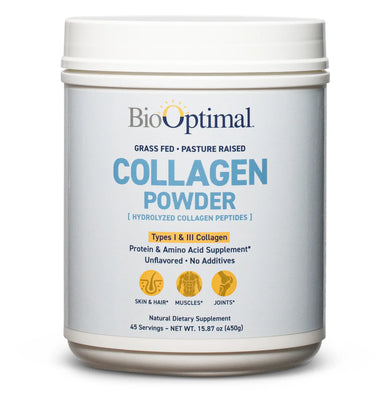
BioOptimal collagen powder: One 10-gram scoop, 45 servings per tub, single ingredient, double-hydrolyzed Type I and III from grass-fed pasture-raised bovine, third-party tested for heavy metals.
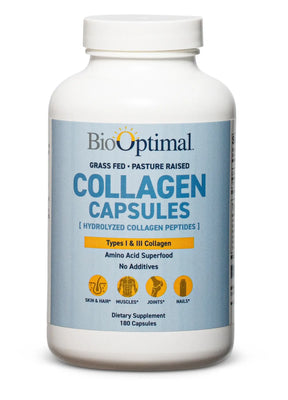
BioOptimal collagen capsules: The same Type I and III collagen, no mixing, $22.99.
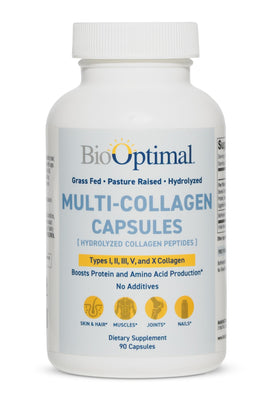
BioOptimal multi-collagen capsules: 90 capsules, a 30-day supply, adding Types II, V, and X to the I and III, from $19.99
Cost per gram, compared honestly
Capsules cost more per gram of collagen than powder. That is true of essentially every brand, not just this one, and the reason is manufacturing: someone has to make, fill, and pay for the capsule shell.
|
Collagen Powder, 45servings |
$34.99 |
45 |
Lowest cost per gram in the range |
|
$16.99 |
20 |
Smallest starter size |
|
|
$22.99 |
See label |
Convenience, no mixing |
|
|
$19.99 |
30 days |
Five collagen types in capsule form |
Buying powder in a 2-pack at $66.99 or a 3-pack at $102.99 lowers the per-serving cost further, which is worth doing once you know you will keep taking it.
The honest framing: If cost per gram were the only thing that mattered, nobody would buy capsules. People buy them because a supplement you actually take beats a cheaper one you skip
Which should you choose?
Pick the row that describes you.
|
You already drink coffee, tea, or a smoothie daily |
Powder. It disappears into a habit you already have |
|
You want the most collagen for your money |
Powder. Lowest cost per gram, biggest serving |
|
You want to take more than a standard dose |
Powder. Capsules cannot practically get you there |
|
You travel often or work away from a kitchen |
Capsules. No scoop, no shaker, no drink required |
|
You dislike the texture of anything in your drink |
Capsules. Though a double-hydrolyzed powder leaves none |
|
You have abandoned powders before because of the mixing |
Capsules. Consistency beats theoretical value |
|
You want more than Types I and III |
Multi-collagen capsules. Adds Types II, V, and X |
|
You are not sure |
Powder, the smallest size. Try it for 20 days, then decide. |
On mixing, if that is the sticking point. Most complaints about powder come down to technique rather than product. Put the liquid in the cup first, then add the powder while stirring; the double-hydrolyzed powder dissolves in seconds. Our guide on how to mix collagen powder without clumping covers it in full. If you have tried that and still prefer not to bother, capsules are a perfectly good answer.
Whichever you pick, the criteria for a good product are the same: hydrolyzed Type I and III, a short ingredient list, and published third-party heavy-metal testing. See our guide to heavy metal testing in collagen.
View the full collagen collection to compare every size and format side by side.
SUMMARY:
Collagen powder offers flexibility and customizable dosages, making it ideal for fitness enthusiasts and those seeking higher doses. Pills provide a simpler, pre-measured option for those who prefer convenience. While powder may have better absorption, the right choice depends on your lifestyle—smoothie lovers may prefer powder, while pill users value ease of use.

Frequently Asked Questions
1. Is collagen powder or pills better?
Powder is better for value and dose, pills are better for convenience. Both deliver the same hydrolyzed Type I and III collagen and are absorbed the same way, because absorption depends on hydrolysis rather than format. One 10-gram scoop of powder delivers more collagen than a capsule serving and costs less per gram. Choose the format you will take consistently, because consistency matters more than either.
2. Is collagen absorbed better in powder or pill form?
Neither. Once collagen has been hydrolyzed into short peptide chains, your body absorbs those peptides the same way whether they arrive in a drink or inside a capsule that dissolves in your stomach. What affects absorption is whether the collagen is hydrolyzed at all and, if so, how thoroughly. Format does not.
3. How many collagen capsules equal a scoop of powder?
A 10-gram scoop of powder is pure collagen, while each capsule holds only a fraction of that because of the physical limit of the shell. Reaching a powder-equivalent dose means taking several capsules. Check the label for grams per serving on both and compare directly rather than counting capsules.
4. Are collagen pills a waste of money?
No, but they cost more per gram of collagen than powder does, because someone has to manufacture and fill the capsule shell. That premium buys convenience. If it is the reason you take collagen every day rather than most days, it is money well spent. If you would take the powder anyway, it's the better buy.
5. Can you take collagen powder and pills together?
Yes, there is no interaction between the formats; they are the same protein. Some people use powder at home and keep capsules for travel. Just count the total daily grams from both to avoid unintentional double-counting.
6. Do collagen tablets work as well as powder?
Tablets face the same constraint as capsules: less collagen per serving than a scoop of powder. The collagen itself works the same if it is hydrolyzed. Compare grams per serving on the label rather than assuming one form is inherently more effective.
7. Which is better for travel, collagen powder or capsules?
Capsules. They need no scoop, no shaker bottle, and no drink, and they pass through security without attracting the questions a bag of loose powder can. Powder is the better everyday choice at home, so many people keep both.