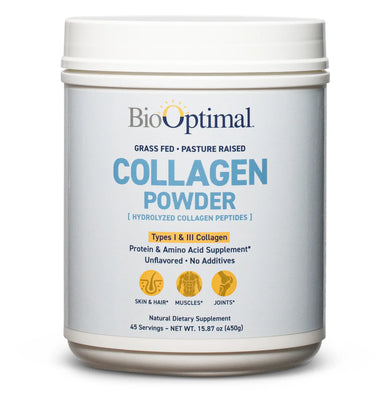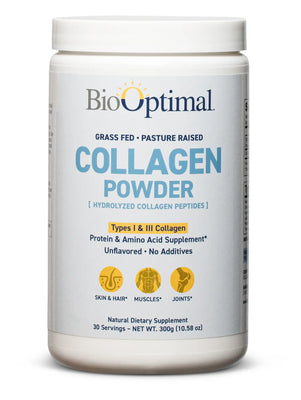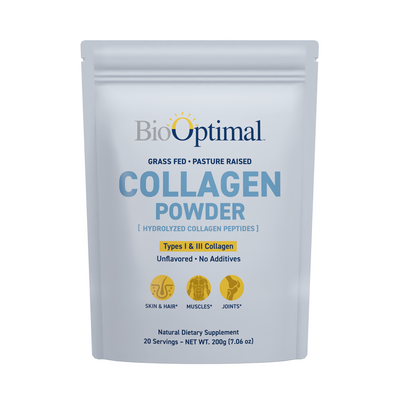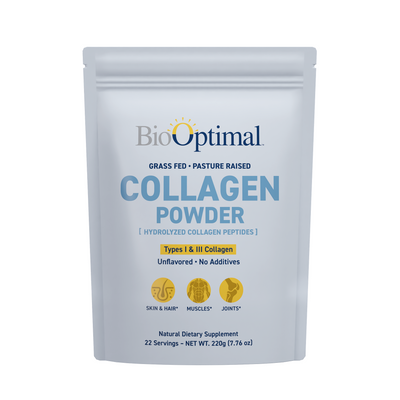


To mix collagen powder without clumping, add the powder to your cup first, pour a small amount of liquid in, and stir into a paste before topping up. Warm liquid dissolves it faster than cold. Double-hydrolyzed collagen, like BioOptimal's 10 gram scoop, dissolves without a shaker.
Louis's takeaways:
To prevent collagen powder from clumping, always mix it properly—preferably with hot liquids first or using a blender, shaker bottle, or milk frother for cold beverages. Quality matters: choose hydrolyzed collagen that dissolves easily, like BioOptimal’s pasture-fed collagen powder. With the right technique and product, you can enjoy smooth, clump-free collagen drinks that support your health effortlessly.
Table of Contents:
- Why does collagen powder clump?
- How to mix collagen powder without clumping, step by step
- Why is my collagen powder sticky or gritty?
- Can you mix collagen powder with milk?
- How to mix collagen into cold drinks and smoothies
- Why some powders will not dissolve no matter what you do
- Frequently Asked Questions
Collagen powder clumps when dry powder meets liquid all at once, because the outside of each lump wets first and seals the dry powder inside. Fix it by putting the liquid in the cup first, then adding the powder while you stir. Warm liquid dissolves fastest. For cold drinks, use a shaker bottle, a frother, or a blender. A single-ingredient, double-hydrolyzed powder dissolves more easily than a blended or flavored one.
Why does collagen powder clump?
Collagen peptides attract water. When a spoonful lands in liquid as one mass, the outer surface hydrates instantly and forms a gel skin. That skin is waterproof, so the dry powder trapped behind it never gets wet. What you are left with is a lump that feels soft on the outside and floury on the inside, and no amount of stirring fully rescues it.
Three things make it worse:
- Pouring liquid onto powder. This is the most common mistake. It wets the top layer first and seals everything under it. Reverse the order.
- Not stirring while you add. Collagen needs the liquid to move. Powder dropped into still liquid sinks as a clump and stays one.
- Moisture in the tub. Collagen powder draws moisture from the air. Once the powder has absorbed moisture, it cakes in the container, and caked powder goes into your cup as lumps before mixing even starts. Keep the lid sealed and the scoop dry, and store it somewhere cool and dry rather than beside the kettle.
One thing that is not the cause: temperature ruining the powder. Hydrolyzed collagen peptides do not melt and resettle. Heat helps dissolve, but it does not damage the powder.
SUMMARY:
Collagen can be added to your diet through collagen-rich foods and supplements. Since natural collagen production declines with age, supplements—especially powders taken once or twice daily—offer a convenient way to maintain optimal intake, often mixed into smoothies or meals.
How to mix collagen powder without clumping, step by step

This works in any drink, hot or cold, with any brand.
- Put the liquid in the cup first. Fill it before the powder goes anywhere near it.
- Add the powder while the liquid is moving. Stir with one hand, sprinkle with the other. Do not dump the whole scoop in one go.
- Stir for about 20 to 30 seconds. Use a small whisk, a spoon with a stirring motion rather than a folding one, or a frother.
- Warm liquid dissolves fastest. Coffee, tea, and warm water help collagen almost immediately. Cold works too; it just needs more agitation.
- Drink it reasonably soon. Collagen stays dissolved, but any powder left standing in a still liquid for hours will settle. If you like preparing drinks in advance, see the cold drinks section below.
That is the whole method. Most clumping complaints disappear at step one.
A note on dry scooping. Some people take the powder straight from the scoop and chase it with water. Do not. Dry powder is easy to inhale and unpleasant to swallow, and you gain nothing after 20 seconds of stirring.
Which powder you start with matters,s too. BioOptimal collagen powder is double hydrolyzed, meaning the peptide chains are broken down twice, so the particles disperse instead of gelling. It is a single ingredient with no fillers, binders, or anti-caking agents. Customers consistently report that it dissolves in both hot and cold liquids without grit or sediment.
Why is my collagen powder sticky or gritty?

Two different problems with two different answers.
Sticky, stringy, or gel-like means partial hydration. Some of the powder has wet out, and some has not, and the gel is holding the rest hostage. Add a little more liquid, keep stirring, and the gel will thin and disperse. Next time, add the powder more slowly to the moving liquid.
Gritty or sandy at the bottom usually means the powder has not been agitated enough for the temperature you are using, or the formula contains ingredients that do not dissolve at all. Flavored and blended powders often contain sweeteners, thickeners, gums, or cocoa that remain suspended rather than dissolve, and they settle out as sediment. An unflavored single-ingredient powder contains nothing that can leave grit behind.
Caked into a solid block in the tub means moisture got in. Break it up, and from then on keep the lid tight, keep the scoop dry, and store it away from steam and heat. If it smells off or has changed color, do not use it. Our guide on how long collagen powder lasts covers storage and signs of spoilage in full.
SUMMARY:
To mix collagen powder without clumping, use hot liquids like tea or coffee by adding the powder first, then pouring in the liquid. For cold drinks, use a shaker bottle, hand blender, or milk frother to ensure a smooth and lump-free blend.
Can you mix collagen powder with milk?
Yes, it mixes well, but milk behaves differently from water, which catches people out.
Milk is already a protein suspension, so it is thicker than water, and it does not accept powder as readily. Two things help:
- Warm the milk slightly. Warm milk takes collagen far more easily than fridge-cold milk. A latte or warm milk with a frother is close to foolproof.
- Use a frother or shaker for cold milk. A milk frother is the single best tool here. Ten seconds and the powder is gone. A shaker bottle with a ball or mesh works nearly as well.
It works in dairy milk and in plant milks. Oats and soy, being thicker, need a bit more agitation than almond milk. Collagen is unflavored, so it will not change how any of them taste.
Milk-based options that work well: warm milk with cinnamon, a latte or flat white, milky tea, an iced coffee with a splash of milk, or a smoothie with milk as the base. Because BioOptimal collagen is unflavored and zero sugar, it does not fight anything you add.
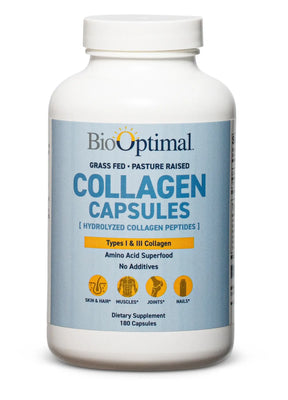
If you prefer to skip the mixing step altogether, collagen capsules deliver the same Type I and III collagen with water, with no stirring required.

How to mix collagen into cold drinks and smoothies
Cold liquid slows dissolving, so replace heat with movement. Any of these works:
|
Shaker bottle with ball or mesh |
Cold water, iced tea, on the go |
15 seconds |
|
Milk frother |
Cold milk, iced coffee, single servings |
10 seconds |
|
Blender |
Smoothies, larger batches |
30 seconds |
|
Spoon and patience |
Any cold drink, if you add slowly |
45 seconds |
Iced coffee trick. Stir the collagen into the hot espresso or hot coffee first, then pour it over ice. You get instant dissolving and a cold drink.
Smoothies. Add the collagen with the liquid at the start rather than on top of the frozen fruit, so it disperses before the thick ingredients go in. A well-made single-ingredient powder should not foam.
On preparing drinks ahead of time. If you fill bottles in the morning for later, expect some settling. This is not the powder failing; it is gravity acting on a solution left completely still for hours. Either shake before drinking or mix it into a warm liquid first, then chill it to help keep it in solution. Mixing fresh in the cup you are drinking from remains the most reliable option.
Why some powders will not dissolve, no matter what you do
If you have the technique right and it still does not clear, the formula is the reason. Four things to look at on the label:
- Hydrolysis. Collagen that has not been hydrolyzed, or has only been hydrolyzed once, has longer peptide chains that gel rather than disperse. Double-hydrolyzed peptides dissolve markedly more easily.
- Ingredient count. One ingredient dissolves. Ten ingredients means several of them probably will not.
- Anti-caking agents. They are added to stop clumping in the tub, but if they are unevenly distributed, they can clump in the cup instead. A powder that does not need them is a better answer than one that relies on them.
- Flavorings and sweeteners. These are a frequent cause of sediment and film.
BioOptimal collagen powder is one ingredient: double-hydrolyzed Type I and III collagen peptides from grass-fed, pasture-raised bovine: no fillers, binders, additives, preservatives, or anti-caking agents, no flavoring, and no sugar. Every batch is tested by a third party for heavy metals and is made in a GMP-certified facility. If you want details on testing, read our guide to collagen powder and heavy-metal testing.
Shop the 45-serving collagen powder for the best value per serving, buy the 20-serving size to test the mixability yourself, or view the full collagen collection to compare powder and capsule formats
SUMMARY:
Collagen powder can be mixed into hot drinks like coffee, tea, hot chocolate, or bone broth for easy blending and better taste. For cold drinks, use a blender or milk frother to mix it into smoothies, milk, or with other protein powders, ensuring a smooth texture without clumps.
Frequently Asked Questions
1. Why does collagen powder clump?
Clumping happens when powder hits liquid all at once and the outside of each lump dissolves first, sealing dry powder inside. Cold liquid makes it worse because the powder dissolves more slowly. Powder that has absorbed moisture in storage also clumps more readily than fresh powder.
2. How do you dissolve collagen powder properly?
Put the powder in the cup first, add a small splash of liquid, and stir it into a smooth paste before topping up with the rest. This is the single most effective technique and it needs no equipment. Adding powder to a full cup is what causes most clumping.
3. Does collagen dissolve better in hot or cold liquid?
Hot or warm liquid dissolves collagen faster and more completely. In cold drinks, add the powder first and stir it into a paste, or use a shaker bottle or blender. Collagen does not lose its protein content in hot liquid, so coffee and tea are both fine.
4. Can you mix collagen powder into coffee?
Yes, and it is one of the easiest ways to take it. Unflavored collagen does not change the taste of coffee. Stir it into the first splash before filling the mug, or add it before the milk. Hot coffee dissolves collagen quickly with normal stirring.
5. Do you need a shaker bottle or blender for collagen?
No, not if the collagen is well hydrolyzed. A double-hydrolyzed powder dissolves with a spoon in a warm drink. A shaker or frother helps with cold drinks or with coarser powders. BioOptimal Collagen Powder is double hydrolyzed, so a 10 gram scoop stirs in with a spoon.
6. Is it bad if collagen powder clumps?
No. Clumping affects texture, not quality or nutritional content. The collagen in a clump is the same collagen. Break lumps against the side of the cup with a spoon, or add a little more warm liquid and keep stirring. Persistent clumping usually points to moisture in storage.