

Table of Contents:
- What is Collagen?
- What the Body Needs to Make Collagen
- Why Collagen Matters for Growing Kids?
- Is Collagen Safe for Kids?
- Natural Food Sources of Collagen and Nutrients That Help the Body Make It
- Do Kids Need Collagen Supplements?
- Choosing a Safe Collagen Supplement for Kids
- How Much Collagen Should Kids Take?
- Easy Ways to Add Collagen to Your Child’s Diet
- Food-First Alternatives & Healthy Recipes
- When to Be Careful of Potential Risks?
- Final Thoughts
There’s a lot of noise out there when it comes to kids’ nutrition, and collagen is right at the center of it. From probiotics to omega-3s, families want to support healthy growth in the smartest way possible. One supplement gaining attention is collagen protein for kids.
Powders, gummies, and drinks are all marketed like they’re essential for your child’s growth, immunity, and overall health. And most parents are left wondering whether this is real science or just really good marketing.
So let’s slow this down.
Before buying powders or mixing scoops into smoothies, we need to ask a few honest questions. Is collagen actually safe for kids? Do children need collagen supplements at all? Or are we solving a problem that does not really exist?
Instead of leaning on trends or influencer advice, we are going to look at collagen the way parents should. Through safety, basic biology, and real food. No scare tactics. No miracle claims. Just clear thinking that helps you make decisions you can stand behind.
Key Highlights
- Collagen is a natural protein that the body already makes, including in children
- Most healthy kids get what they need to support collagen through everyday foods
- In specific medical or nutritional situations, supplementation may be considered with professional guidance
- Food quality and overall diet matter more than relying entirely on supplements
What is Collagen?

Collagen isn’t a trendy supplement. It’s the most abundant protein in the body, making up about 30% of all body protein. Its job is simple but essential: it holds the body together. Think of collagen like the steel rods inside concrete. You don’t see them, but without them, everything weakens and cracks.
Collagen gives:
- Skin's firmness
- Bones their strength
- Tendons and ligaments can stretch without tearing
- Joints smooth movement
- The gut lining's structure
Without collagen, the body loses stability. This is where many parents get confused. Children naturally produce collagen, but that process depends on good nutrition. The body knows how to make collagen, but it still needs the right raw materials from food to do it properly.
What the Body Needs to Make Collagen
-
Amino acids such as glycine, proline, and hydroxyproline form the basic structure of collagen.
-
Key nutrients, such as vitamin C, zinc, copper, and manganese, act as helpers that enable the body to assemble amino acids correctly.
When children consume a balanced diet that provides these nutrients, collagen production occurs naturally. When the diet is limited or missing key nutrients, collagen production can slow down, even though the body still can make it.
There are multiple types, but three matter most for growth and development.
|
Collagen Type |
Where It’s Found |
What It Does |
|
Type I |
Skin, bones, tendons, ligaments |
Provides strength and structure. This is the main collagen that keeps bones solid, skin firm, and connective tissues tough and resilient. |
|
Type II |
Cartilage and joints |
Supports joint cushioning and smooth movement. Helps joints handle impact and daily motion without stiffness or wear. |
|
Type III |
Skin, blood vessels, organs |
Adds flexibility and elasticity. Works alongside Type I to keep tissues strong but not rigid, especially during growth. |
Why Collagen Matters for Growing Kids?
Let’s cut through the confusion. When parents hear about collagen, the first question is usually “What does this actually do for my child?” Below is a clear, realistic look at how collagen may support children’s growth and day-to-day development, without overstating its role.
1. Supports Joints and Active Play

Collagen is a building block of tendons, ligaments, and cartilage. It helps keep joints cushioned and flexible, supporting comfortable movement in active kids.
2. Helps Build Strong, Flexible Bones

Bones grow around a collagen framework that gives them flexibility. Minerals like calcium strengthen this framework, helping bones stay strong without becoming brittle.
3. Supports Healthy Blood Vessels as Kids Grow
Collagen helps maintain the structure and elasticity of blood vessels and heart valves as children grow.
4. May Support Better Sleep and Recovery
Collagen contains glycine, an amino acid linked to calming the nervous system. While evidence in children is limited, it may indirectly support rest and recovery.
5. Helps Support Digestive Comfort
Collagen-related amino acids help maintain the gut lining, supporting digestive comfort especially during illness or recovery.
6. Supports Gums and Developing Teeth
Collagen contributes to gum tissue and dentin. It supports oral tissue health but does not replace proper dental care.
7. Supports Skin and Everyday Healing
Collagen helps strengthen skin and supports normal healing from cuts and scrapes, common in growing kids.
Is Collagen Safe for Kids?
Collagen itself is not harmful. It’s a natural protein the body already makes, and kids regularly consume it through foods like bone broth, meat, poultry, and fish. From whole foods, collagen is normal and safe.
The concern is collagen supplements, not collagen as a nutrient.
Dietary supplements are not FDA-approved before sale, so product quality can vary widely. According to Harvard nutrition experts, research on collagen supplements in children is very limited, which is why caution is advised. Some tests have found trace heavy metals such as lead, arsenic, or cadmium in certain collagen powders due to poor sourcing or manufacturing, not the collagen itself.
If parents still consider supplementation, they should consult a pediatrician or pediatric dietitian first. Parents should also watch for:
- Allergens (fish or egg sources)
- Digestive upset in sensitive children
- Contaminants in low-quality products
Natural Food Sources of Collagen and Nutrients That Help the Body Make It

Collagen doesn’t come from plants. True dietary collagen is found only in animal-based foods, where it exists in connective tissue, skin, and cartilage. When children eat these foods, they get collagen in its natural form along with supportive nutrients.
Foods That Naturally Contain Collagen
Collagen is most concentrated in connective tissues, including:
- Bone broth made from chicken, beef, or fish bones
- Chicken or fish skin
- Beef cuts like brisket or chuck
- Pork rinds and gelatin (gelatin is cooked collagen)
Bone broth is a classic example. Slow simmering releases collagen and minerals into the liquid, making it easy to digest and traditionally used to support growth and recovery.
Gelatin isn’t a different protein; it’s simply collagen that has been cooked. When it melts in warm liquid and sets when cooled, that’s collagen at work.
Foods That Help Your Child’s Body Make Collagen

Even without eating collagen directly, the body can make it efficiently when given the right nutrients.
-
Protein-rich foods (eggs, milk, yogurt, cheese, legumes, poultry, lean meats) provide amino acids like glycine and proline, the building blocks of collagen.
-
Vitamin C–rich fruits and vegetables (oranges, strawberries, bell peppers, tomatoes, kiwi) are essential for proper collagen formation.
- Nuts and seeds (pumpkin seeds, cashews, sunflower seeds) supply zinc and copper, which activate enzymes needed for collagen production.
Do Kids Need Collagen Supplements?
For most healthy children, the answer is no.
Nutrition guidelines recommend meeting nutrient needs through real, varied foods, not routine supplements. When kids eat balanced meals with enough protein, fruits, vegetables, and whole foods, their bodies can produce collagen naturally.
When Extra Collagen Might Be Considered?

These are exceptions, not the norm:
-
Extremely limited diets due to severe picky eating
-
Medical conditions affecting nutrient absorption or connective tissue
- Recovery after injury, surgery, or illness
In these cases, supplementation should be guided by a healthcare professional, not used routinely.
Choosing a Safe Collagen Supplement for Kids
If you and your child’s doctor decide a collagen supplement is appropriate, how it’s made matters just as much as what it claims.
1. Third-party testing is non-negotiable: Independent labs test supplements to confirm two things,
- The product actually contains what the label says
- It is free from contaminants like heavy metals or harmful residues
Look for trusted certifications such as NSF Certified for Sport, U.S. Pharmacopeia (USP), Informed-Choice, or ConsumerLab. These seals mean the product has been checked beyond the company’s own claims.
2. Clear sourcing matters: Quality products clearly state their source (e.g., grass-fed bovine hide or wild-caught fish skin). Vague sourcing is a red flag.
3. Choose hydrolyzed collagen (peptides): Collagen peptides dissolve easily, are tasteless, easier to digest, and more practical for children.
4. Keep ingredients minimal: Avoid gummies, added sugars, artificial colors, flavors, or dyes. A plain collagen powder is the safest option.
Where BioOptimal Fits In
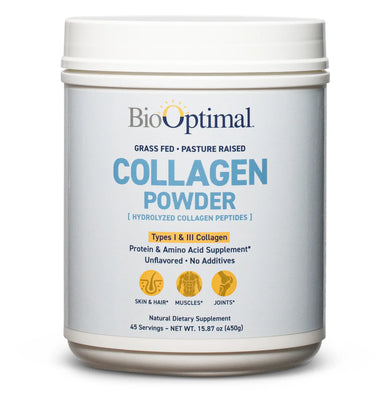
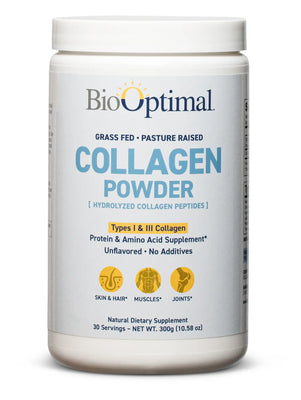
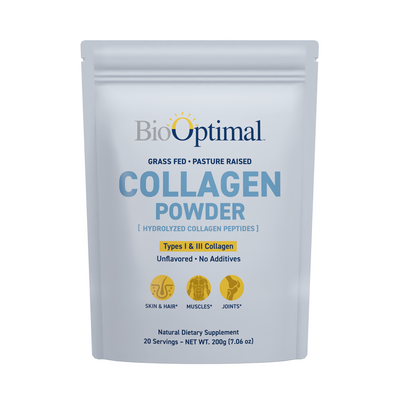
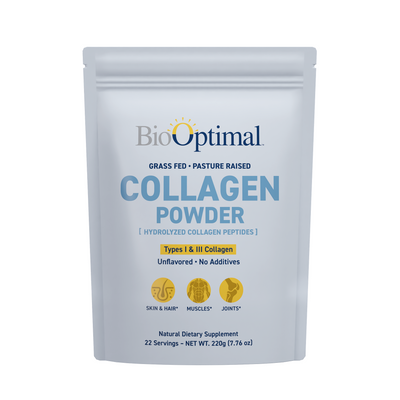
BioOptimal aligns well with the safety principles above because it is typically offered as a hydrolyzed collagen peptide powder with a simple, no-frills ingredient profile. Its neutral taste and easy solubility make it practical for parents who want to mix a small amount into everyday foods or drinks rather than introducing a separate “supplement routine” for kids.
Important Safety Note:
Before you start any supplement:
- Confirm with your child’s doctor that it’s a suitable choice for their age, growth pattern, and dietary needs.
- Start with small amounts mixed into foods or drinks your child already enjoys.
How Much Collagen Should Kids Take?
Collagen dosing for children should be conservative and ideally discussed with a pediatrician. The guidance below explains how amounts are typically estimated and why lower doses are preferred.

Commonly Used Rule of Thumb
Nutrition experts suggest a general reference point of ~7 grams of collagen per 50 pounds of body weight per day
This is not a prescription, just a cautious framework used in practice.
Collagen Intake by Child’s Weight
|
Child’s Weight |
Suggested Daily Amount |
Practical Explanation |
|
~50 lb |
~7 g per day |
About 1 scoop daily |
|
60–75 lb |
7–10 g per day |
Slight increase as weight rises |
|
~100 lb |
Up to 14 g per day |
Still well below adult intake |
These ranges (7–14 g/day) are much lower than adult doses, which often start at 20 g or more per day.
Why Starting Low Is Important
Children’s bodies are still growing and adapting. Starting with a lower dose helps to
- Reduce the chance of digestive discomfort
- Allow parents to observe tolerance
- Avoid unnecessary excess protein
Many parents find it helpful to split the dose across the day, for example
- Half in the morning
- Half in the evening
This can support easier digestion.
Upper Limits to Keep in Mind
|
Guidance |
Reason |
|
Do not exceed ~20 g/day without medical advice |
Higher intakes are not well studied in children |
|
Higher doses mentioned for teens are not needed for most kids |
Younger children typically benefit from much less |
Easy Ways to Add Collagen to Your Child’s Diet
Powdered collagen from BioOptimal is flavorless and dissolves well, which means it can be added to foods your child already eats without changing taste or texture.

Food-First Alternatives & Healthy Recipes
A food-first approach is the best way to support collagen in children. Whole foods naturally supply the protein, vitamin C, and minerals the body needs to make collagen on its own, and for most families, this is more than enough.
On busy days or with limited diets, a clean, neutral collagen powder from BioOptimal can complement meals without replacing real food.
1.Hearty Bone Broth Soup: Simmer chicken or beef bones with water, a splash of vinegar, garlic, onions, carrots, and celery for 6-24 hours. Use the broth as a soup or cooking base.
Tip: Freeze leftovers in ice cube trays for quick use.
When homemade broth isn’t available, a small amount of BioOptimal’s collagen powder can be stirred into warm soups or stews.
2. Citrus-Berry Smoothie Bowl: Blend orange slices, berries, spinach, and Greek yogurt. Top with pumpkin seeds, almonds, and kiwi. Vitamin C, protein, zinc, and copper support natural collagen production. BioOptimal collagen powder blends in easily without changing taste.
3. Nut & Seed Trail Mix: Combine sunflower seeds, pumpkin seeds, chopped cashews, dried cranberries, and a few dark chocolate chips for a mineral-rich snack.
4. Veggie Egg Scramble: Cook eggs with bell peppers and spinach, then top with a little cheese. Eggs provide collagen-building amino acids; veggies add vitamin C.
5. Chicken & Veggie Stir-Fry: Stir-fry chicken with broccoli, red peppers, and mushrooms. Finish with lemon juice or orange zest. Serve with brown rice.
These meals use real foods that support growth and everyday repair. For young children, keep salt and spices light, and follow age-appropriate feeding guidelines.
When to Be Careful of Potential Risks?
Collagen is generally well-tolerated, but parents should be aware of a few concerns.
-
Heavy metal contamination: Some low-quality collagen products have tested positive for lead or arsenic.
-
Digestive discomfort: Mild bloating or constipation may occur, especially at first.
-
Histamine sensitivity: Rare flushing, itching, or headaches in sensitive children.
- Allergies: Fish- or egg-based collagen may trigger reactions.
Tip: Choose third-party tested products like BioOptimal collagen powder, start with a small amount, and monitor your child’s response.
When to Stop and Consult a Doctor
-
Rash, vomiting, or severe bloating
-
Known kidney issues or food allergies
- Long-term daily use without guidance
Final Thoughts
For most children, a balanced, whole-food diet is enough. Real foods already provide the protein and nutrients needed for natural collagen production, and supplements should never replace healthy meals.
That said, real life isn’t perfect. During periods of restricted eating, recovery, or when advised by a pediatrician, collagen can be a reasonable option. In those cases, BioOptimal is one of the best supplements. It's clean, hydrolyzed collagen, simple ingredient list, and easy mixability make it practical to use alongside everyday meals without changing taste or routine.
Collagen isn’t a cure-all. Used intentionally, in moderation, and with professional guidance, it can be a supportive addition while keeping whole foods at the center of a child’s nutrition.