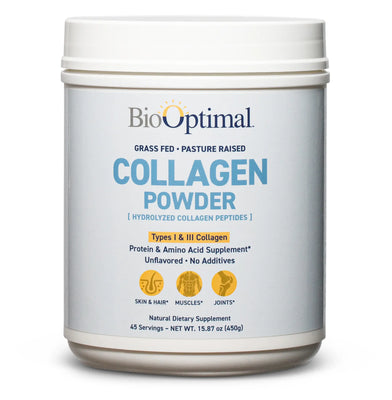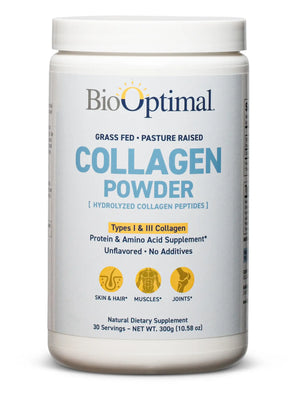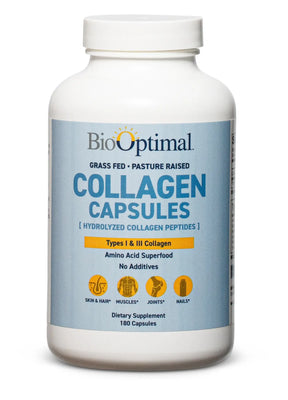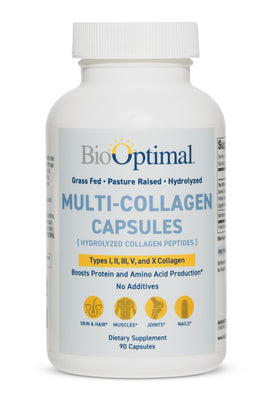


Hydrolyzed collagen peptides, particularly Types I and III, are common choices for people considering collagen supplements for hair health. However, no collagen supplement is clinically proven to regrow lost hair. Choose products with clear ingredient labels, disclosed sources, and third-party testing. Consult a dermatologist for persistent thinning or excessive shedding.
Louis's takeaways:
- Collagen provides amino acids that support normal protein and tissue functions, but it has not been proven to regrow hair or treat medical hair-loss conditions.
- Hydrolyzed collagen peptides containing Type I or Types I and III are common supplement options, although no collagen type is proven superior for hair growth.
- Marine and bovine collagen differ in their sources and collagen profiles, but neither has demonstrated better results for scalp hair growth.
- Choose collagen supplements with clearly stated serving sizes, simple ingredient lists, allergen information, and third-party testing.
- Collagen powders and capsules offer different levels of convenience, but neither format has been shown to produce better hair-growth results.
- Persistent shedding, sudden hair loss, patchy bald spots, or gradual thinning may indicate underlying health conditions that require professional evaluation.
Table of Contents:
- What Is the Best Collagen for Hair Growth?
- Before Choosing Collagen, What Kind of Hair Problem Do You Have?
- Does Collagen Actually Help Hair Grow?
- Does the Hair Research Test Collagen Alone?
- What Type of Collagen Should You Look For?
- Marine vs. Bovine Collagen for Hair: Is One Better?
- What Should You Look for When Buying Collagen for Hair?
- Do Biotin and Added Vitamins Make Collagen Better for Hair?
- Collagen Powder vs. Capsules: Which Is Better for Hair?
- When Hair Loss Needs Evaluation Before Another Supplement
- Best Collagen for Hair: Quick Decision Table
- How Long Should You Assess Collagen for Hair?
- Frequently Asked Questions
- Choosing Collagen for Your Hair Goals
There is no proven “best” collagen for regrowing lost hair. If you want collagen as part of your nutrition routine, look for hydrolyzed collagen peptides with a clearly stated source and serving amount, a simple ingredient list, appropriate allergen information, and third-party testing. Persistent hair loss should be evaluated separately.
What Is the Best Collagen for Hair Growth?
If you are searching for the best collagen for hair growth, focus first on product quality rather than promises of new hair growth.
Hydrolyzed collagen peptides are a practical option because the collagen has been broken into smaller peptides. Bovine collagen commonly provides Types I and III collagen, while marine collagen is generally rich in Type I.
However, collagen selection and hair-loss treatment are not the same question. Current evidence does not show that plain collagen supplements reliably regrow hair lost due to alopecia, pattern hair loss, or other medical conditions.
A good collagen product should make its source, serving size, ingredient list, allergen information, and testing practices easy to identify.
Before Choosing Collagen, What Kind of Hair Problem Do You Have?
“Hair loss” can describe several different problems. Before buying collagen for hair loss, identify whether you are dealing with breakage, shedding, gradual thinning, or a sudden change.
That distinction matters because a supplement intended to support nutrition cannot replace evaluation or treatment for an underlying hair-loss condition.
Hair Concern |
What It May Mean |
Role of Collagen |
Breakage |
Hair shafts are snapping |
Do not confuse less breakage with new follicular growth |
Gradual thinning |
Pattern hair loss or another cause may be involved |
Collagen is not an established treatment |
Heavy shedding |
Illness, stress, weight change, medications, or telogen effluvium may contribute |
Identify the cause first |
Patchy loss |
Alopecia areata or another condition may be involved |
Medical evaluation matters |
Receding hairline or widening part |
May suggest androgenetic alopecia |
Collagen should not replace treatment evaluation |
Dry or brittle strands |
Styling, environmental exposure, shaft damage, or nutrition may contribute |
This differs from follicular hair loss |
Hair Breakage and Brittle Strands
Breakage occurs when the hair shaft snaps. Heat styling, chemical processing, friction, and other forms of damage can contribute to brittle strands.
A change in breakage should not automatically be described as hair growth. The follicle produces new hair, while breakage happens along the existing shaft. These are different outcomes.
Gradual Thinning
If your hair slowly becomes less dense, or your part appears wider, the change may be due to pattern hair loss or another cause.
Collagen is not an established treatment for androgenetic alopecia. If thinning continues, consider speaking with a dermatologist rather than relying solely on another supplement.
Increased Shedding
Heavy shedding can occur with telogen effluvium and may follow illness, major stress, weight changes, medication changes, or other health events.
If you suddenly notice much more hair in your brush, shower, or on your pillow, identifying the cause should take priority over selecting a collagen product.
Patchy or Sudden Hair Loss
Patchy bald spots or rapid hair loss deserve medical attention. Alopecia areata and other conditions can cause this pattern.
The American Academy of Dermatology recommends identifying the cause of hair loss because many different conditions can lead to thinning or shedding.
For side effects or unexplained hair loss, please contact a healthcare professional for medical advice when in doubt.
Does Collagen Actually Help Hair Grow?
The case for collagen and hair includes a biological rationale, but biological plausibility is not the same as proof that a supplement regrows scalp hair.
What Collagen Provides Biologically
Collagen peptides provide amino acids, including glycine and proline. Your body uses amino acids to build many structural proteins and support normal tissue functions.
Hair itself is made primarily from keratin rather than collagen. Providing amino acids through food or supplements can contribute to overall protein intake, but that fact alone does not prove increased hair count or density.
What Human Studies Actually Show
Human hair studies involving collagen need careful interpretation. Some formulas include collagen together with vitamins, minerals, amino acids, and other active ingredients.
When several ingredients appear in a single formula, researchers cannot automatically attribute an observed result to collagen unless the study design isolates collagen's effect.
For that reason, claims that collagen alone increases hair count, reverses thinning, or causes new follicular growth go beyond what the evidence currently establishes.
What Collagen Has Not Been Shown to Treat
Collagen should not be treated as a proven therapy for:
- Androgenetic alopecia
- Alopecia areata
- Telogen effluvium
- Unexplained persistent shedding
- Other medically driven forms of hair loss
You can still choose to include collagen in your nutrition routine, but keep its role separate from the diagnosis and treatment of hair loss.
Does the Hair Research Test Collagen Alone?
This question is essential when you assess any collagen hair claim.
Hair-related evidence can fall into three broad groups.
- Biological plausibility: Collagen supplies amino acids such as glycine and proline.
- Multi-ingredient supplement evidence: A study may combine collagen with iron, selenium, vitamins, amino acids, or other compounds.
- Collagen-only evidence: A study of collagen by itself would provide more useful information about what collagen specifically contributed.
If a study tests collagen plus several other active ingredients, an improvement in hair outcomes cannot automatically be attributed to collagen alone.
Check the actual study formula before assuming that a positive result proves a benefit from collagen peptides.
What Type of Collagen Should You Look For?
For routine supplementation, Type I and Type III hydrolyzed collagen peptides are common choices.
Type I Collagen
Type I collagen is widely present in skin and connective tissues. It is commonly found in bovine and marine collagen products.
Its presence in those tissues does not mean supplemental Type I collagen has been proven to restart inactive scalp follicles.
Type III Collagen
Type III collagen also occurs in connective tissue and is commonly paired with Type I in bovine collagen supplements.
If you prefer a bovine formula, a product containing hydrolyzed Types I and III collagen peptides gives you a clearly identified collagen profile.
Why Hydrolyzed Collagen Peptides Are Common
Hydrolysis breaks collagen into smaller peptide fragments. This makes collagen peptides practical for powders, capsules, and other supplement formats.
Look for the words hydrolyzed collagen peptides on the label rather than relying on vague terms such as “beauty collagen.”
Marine vs. Bovine Collagen for Hair: Is One Better?
Current evidence does not establish that marine or bovine collagen is universally better for scalp and hair growth.
Marine collagen typically provides Type I collagen and is derived from fish. Bovine collagen commonly provides Types I and III.
Your choice can instead depend on source preferences, allergies, collagen profile, serving amount, formula transparency, testing, and cost. If you have a fish allergy, check marine collagen labels carefully.
A higher price or a marine source does not by itself prove better hair-growth results.
What Should You Look for When Buying Collagen for Hair?
A clear buying framework can help you compare supplements without relying on aggressive hair-growth marketing.
Buying Check |
What to Look For |
Avoid Assuming |
Form |
Clearly identified hydrolyzed collagen peptides |
“Beauty collagen” is a technical category |
Source |
Bovine, marine, or another disclosed source |
Marine collagen is automatically better |
Serving amount |
Clearly stated amount per serving |
More capsules always mean more collagen |
Ingredient list |
A formula you can easily review |
More ingredients produce better results |
Added nutrients |
Clear amounts and purposes |
Added biotin proves stronger hair growth |
Testing |
Independent contaminant testing information |
Premium branding guarantees quality |
Research |
Evidence matching the ingredient and outcome |
Any collagen study proves hair growth |
Format |
Powder or capsules that fit your routine |
Format determines effectiveness for hair |
Check the Collagen Form
Choose a product that clearly lists hydrolyzed collagen peptides. You should be able to tell what you are taking without having to decode marketing terminology.
Check the Amount per Serving
Review the Supplement Facts panel to see how much collagen a serving provides. Do not compare products by scoop size, capsule count, or container size alone.
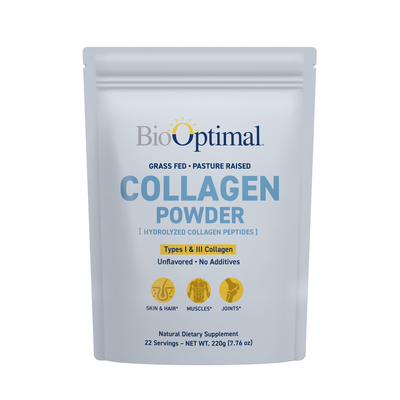
BioOptimal's grass-fed Type I and III collagen peptide powder lists a 10-gram scoop and a one-ingredient formula.
Check the Source
Choose a source that fits your preferences and dietary needs. BioOptimal's collagen powder uses grass-fed, pasture-raised bovine Types I and III hydrolyzed collagen peptides.
Read the Full Ingredient List
Some products combine collagen with biotin, vitamins, minerals, flavoring ingredients, or other compounds. More ingredients do not automatically mean better results.
Look for Third-Party Testing
Testing can provide additional quality information related to contaminants such as heavy metals. BioOptimal states that its collagen products undergo third-party testing.
Check Whether the Evidence Matches the Claim
A skin study does not automatically support a scalp-hair claim. A study of a multi-ingredient product also does not prove that collagen caused the result.
Looking for a Simple Collagen Formula? Review BioOptimal's grass-fed Types I and III hydrolyzed collagen peptide powder and compare its serving size, ingredient profile, and testing information.
Do Biotin and Added Vitamins Make Collagen Better for Hair?
Hair formulas frequently contain biotin, vitamin C, zinc, iron, selenium, vitamin A, or vitamin E.
These nutrients have roles in normal human nutrition, but that does not mean taking extra amounts will make your hair grow faster.
The key principle is simple: an ingredient can be relevant to normal nutrition without proving that adding more of it improves hair growth.
This distinction is particularly important with biotin. A collagen product containing biotin should not automatically be considered more effective than plain collagen.
Iron, zinc, selenium, and other micronutrients also should not be treated as “more is better” ingredients. Your nutritional needs and any deficiencies matter.
Collagen Powder vs. Capsules: Which Is Better for Hair?
Neither powder nor capsules has been shown to improve hair growth solely because of their delivery format.
Choose the form that makes it easier for you to use the product consistently.
Powder |
Capsules |
Can provide a larger collagen serving conveniently |
Portable and requires no mixing |
Mixes into drinks or foods |
Offers a fixed serving |
BioOptimal powder provides 10 g per scoop |
Amount depends on capsule count |
Suits people who are comfortable with mixing |
Suits people who value convenience |
BioOptimal's collagen peptide capsules use grass-fed, pasture-raised bovine Types I and III hydrolyzed collagen and are third-party tested.
Prefer Collagen Without Mixing? Compare BioOptimal collagen peptide capsules with the powder format to choose the option that works best with your routine.
When Hair Loss Needs Evaluation Before Another Supplement
Consider a professional evaluation if you notice:
- Sudden or patchy hair loss
- A widening part or receding hairline
- Persistent heavy shedding
- Rapid changes in hair density
- Hair changes associated with other symptoms
Possible contributors include thyroid disease, iron deficiency, hormonal changes, genetic hair loss pattern, illness, medications, or scalp conditions.
For menopause-related concerns, read more about collagen and menopause-related hair thinning.
Collagen should not delay evaluation when your hair-loss pattern suggests an underlying condition.
Best Collagen for Hair: Quick Decision Table
Question |
Practical Choice |
Which form? |
Hydrolyzed collagen peptides |
Which source? |
Bovine or marine, based on preferences and allergies |
Which type? |
Clearly identified collagen types, commonly Type I or Types I and III |
How much? |
Choose a product with a clearly stated serving amount |
More ingredients? |
Not automatically better |
Powder or capsules? |
Choose based on convenience and serving needs |
Testing? |
Look for independent contaminant testing |
Hair loss treatment? |
Seek evaluation rather than relying on collagen alone |
How Long Should You Assess Collagen for Hair?
There is no firm clinical timeline indicating when plain collagen should produce scalp hair growth.
Hair changes also occur slowly because hair follows a biological growth cycle. Avoid using short-term changes in shedding, texture, or breakage as proof that new follicles are growing.
If you take collagen as part of your routine, set realistic expectations and evaluate the product on its own, separate from any ongoing hair-loss condition.
For broader timing information, see how long collagen may take to work.
Frequently Asked Questions
1. Does collagen help hair growth?
Collagen provides amino acids your body can use for normal protein and tissue functions, but current evidence does not establish plain collagen as a proven hair-regrowth treatment. Some studies use collagen in multi-ingredient formulas, making it difficult to determine whether collagen itself caused changes in hair outcomes.
2. What type of collagen is best for hair growth?
No collagen type has been clinically proven to be the universal best option for scalp and hair growth. If you want a collagen supplement, look for clearly labeled hydrolyzed collagen peptides, a disclosed source, an appropriate serving size, transparent ingredient lists, allergen information, and independent testing.
3. Can collagen help with thinning hair?
Collagen can be part of your nutrition routine, but it is not an established treatment for gradual thinning or androgenetic alopecia. If your part is widening, your hairline is receding, or your density keeps decreasing, consider a professional evaluation to identify the cause.
4. How long does collagen take to work for hair?
There is no reliable clinical timeline for hair regrowth from plain collagen supplements. Hair grows slowly, and available hair research may involve multi-ingredient formulations. Avoid assuming that changes in texture, breakage, or shedding prove that collagen has caused new follicular growth.
5. Is marine or bovine collagen better for hair growth?
Current evidence does not establish one source as superior for scalp-hair growth. Marine collagen commonly provides Type I, while bovine collagen often supplies Types I and III. Choose based on allergies, sourcing preferences, serving amount, formula transparency, testing, and cost rather than hair-growth marketing.
6. Is collagen or biotin better for hair growth?
Neither ingredient should be treated as a universal hair-growth solution. Biotin is an important nutrient, but increasing its intake does not automatically improve hair growth. Collagen supplies amino acids, but has not been proven to treat common forms of hair loss. Your nutritional status and the cause of thinning matter.
7. Can collagen stop hair shedding?
Collagen has not been established as a treatment for persistent shedding. Heavy shedding may occur with telogen effluvium, illness, stress, weight changes, medications, hormonal changes, or other causes. If shedding is sudden, severe, or persistent, identifying the reason should come before relying on a supplement.
8. When should I see a dermatologist instead of taking a hair supplement?
Consider seeing a dermatologist if you have sudden hair loss, patchy bald areas, persistent heavy shedding, a widening part, a receding hairline, or continuing loss of density. Medical evaluation can help identify conditions or nutritional and hormonal factors that a collagen supplement alone cannot address.
Choosing Collagen for Your Hair Goals
The best collagen for hair growth is not a proven hair-loss treatment. Your better buying strategy is to choose a transparent hydrolyzed collagen product while treating unexplained thinning or shedding as a separate health question.
Look for a clearly disclosed source, a useful serving amount, a simple ingredient profile, appropriate allergen details, and third-party testing.
BioOptimal offers grass-fed, pasture-raised bovine Types I and III collagen peptides in both powder and capsule formats. You can compare BioOptimal collagen supplements by serving format and ingredient profile to find the option that best fits your routine.
For side effects or persistent hair-loss concerns, get in touch with a healthcare professional for medical advice.