

Retinol is generally the more established option for addressing fine lines, wrinkles, and uneven skin texture, while collagen supplements may support skin hydration and elasticity. Retinol works topically, whereas collagen provides peptides through oral supplementation. Both can be included in the same routine, but neither replaces sunscreen or guarantees a reversal of visible skin aging.
Louis's takeaways:
- Collagen supplements and retinol serve different purposes. Collagen provides amino acids through oral supplementation, while retinol is a topical vitamin A derivative used in skincare.
- Retinol has an established role in improving the appearance of fine lines, wrinkles, uneven skin tone, and skin texture.
- Hydrolyzed collagen peptides may support skin hydration and elasticity, although clinical research shows mixed results and benefits are not guaranteed.
- Collagen and retinol can be used together as part of a skincare and wellness routine since they work through different approaches.
- Retinol may cause dryness or irritation, especially when introduced too quickly. Gradual use and proper skincare can help improve tolerance.
- Daily sunscreen, balanced nutrition, moisturizing, and consistent skincare remain important for maintaining healthy-looking skin as you age.
Table of Contents:
- Why Are Collagen and Retinol Compared for Aging Skin?
- What Is Collagen and How Does It Support Your Skin?
- What Is Retinol and How Does It Work for Aging Skin?
- Collagen vs Retinol: What Is the Difference?
- Which Is Better for Wrinkles and Fine Lines?
- What Does Research Say About Collagen and Retinol?
- Can You Use Collagen and Retinol Together?
- Should You Choose Collagen, Retinol, or Both?
- How Should You Choose a Collagen Supplement for Aging Skin?
- Powder or Capsules: Which Is Better for Your Routine?
- What Can You Realistically Expect From Collagen and Retinol?
- Frequently Asked Questions
- How Can You Build a Simple Anti-Aging Skin Routine?
- Choosing the Right Approach for Your Aging Skin
If you are comparing collagen vs. retinol, you are probably looking for a practical way to support your skin as it changes with age. The good news is that you do not necessarily have to choose one over the other. Collagen supplements and retinol have different roles. Retinol is a topical vitamin A derivative used in skincare, while collagen supplements provide hydrolyzed collagen peptides as part of your daily nutrition routine. Your choice depends on what you want to support, how you prefer to care for your skin, and what you can use consistently. For some people, that may mean retinol. For others, collagen. Some may find that both fit naturally into their routine.
Why Are Collagen and Retinol Compared for Aging Skin?
When you begin noticing fine lines, changes in skin texture, or less firmness than you had before, it is completely natural to start looking for ways to support your skin.
That is often where collagen and retinol enter the conversation.
You may have heard that retinol can help with fine lines and wrinkles. You may also have seen collagen supplements promoted as a way to support youthful-looking skin. That can make it seem as though you have to decide which one is better.
But collagen and retinol are not actually doing the same thing.
Collagen is a structural protein found throughout your body. A collagen supplement provides hydrolyzed collagen peptides, which supply amino acids that your body uses as part of its normal protein and tissue processes.
Retinol, on the other hand, is a vitamin A derivative that you apply directly to your skin.
So instead of asking, "Which one wins?" a more useful question is:
Which approach makes the most sense for your skin goals and your everyday routine?
Once you understand the difference, choosing between collagen supplements vs retinol becomes much easier.
What Is Collagen and How Does It Support Your Skin?
Collagen is one of the body's major structural proteins. It is found in connective tissues throughout the body, including your skin, bones, tendons, and cartilage.
As you age, your body's natural collagen production changes. This is one factor associated with changes in skin firmness and elasticity over time.
When you take a hydrolyzed collagen supplement, the collagen has already been broken down into smaller peptides. These peptides provide amino acids such as glycine and proline that your body can use in normal protein and tissue processes.
That does not mean the collagen you consume travels directly to a wrinkle and replaces the collagen that has been lost there. Your body does not work quite that simply.
Instead, the reason collagen supplements are being studied is that consuming collagen peptides may influence certain measures of skin health.
Research has been encouraging in some areas. A 2023 systematic review and meta-analysis of 26 randomized controlled trials reported improvements in skin hydration and elasticity compared with placebo. The researchers also noted limitations and potential bias among the studies included in the review.
If you want to look at the research yourself, you can review the 2023 collagen systematic review on PubMed.
For us at BioOptimal, that is an important distinction. We want you to understand what collagen may support without making promises that a supplement cannot guarantee.
What Is Retinol and How Does It Work for Aging Skin?
Retinol belongs to the retinoid family of vitamin A-based skincare ingredients.
Unlike a collagen supplement, retinol is applied directly to your skin. Retinoids are well established in dermatology, and the American Academy of Dermatology explains that retinoids can increase surface skin cell turnover and stimulate collagen production.
Retinoid-based products are commonly used to address concerns such as fine lines, wrinkles, uneven skin tone, pigmentation, and texture.
If you are considering adding retinol to your skincare routine, the American Academy of Dermatology's guidance on retinoids and retinol is a useful place to start.
There is one thing we would encourage you to remember: using more retinol does not necessarily mean getting better results.
Introducing it too quickly or using a product too aggressively can leave your skin feeling dry or irritated. If you have sensitive or inflamed skin, or you are unsure which retinoid is appropriate for you, speaking with a dermatologist can help you choose an approach that your skin can tolerate.
Collagen vs Retinol: What Is the Difference?
The easiest way to understand the collagen vs retinol comparison is to look at how each one fits into your routine.
Factor |
Collagen Supplements |
Retinol |
Category |
Oral dietary supplement |
Topical skincare ingredient |
Main ingredient |
Hydrolyzed collagen peptides |
Vitamin A derivative |
How you use it |
Taken orally as directed |
Applied to the skin |
Common research areas |
Hydration, elasticity, skin appearance |
Fine lines, texture, uneven tone, wrinkles |
Role in your routine |
Nutrition and wellness support |
Targeted skincare step |
May suit you if |
You want to add collagen peptides to your routine |
You want a topical retinoid-based approach |
The important takeaway is that these options do not have to compete.
If you want to explore the supplement side of the comparison, you can browse BioOptimal's collagen products and compare the available formats.
Which Is Better for Wrinkles and Fine Lines?
If wrinkles and fine lines are your main concern, you may be wondering whether you should choose collagen or retinol.
There is no universal winner because they support your routine in different ways.
If your priority is a topical skincare ingredient that directly targets concerns such as fine lines, wrinkles, texture, and uneven tone, retinol may be the more direct fit.
If you prefer a nutrition-based approach and want to add hydrolyzed collagen peptides to your daily routine, collagen may be a better fit for you.
And you do not necessarily have to choose one.
You can use retinol as part of your topical skincare routine while taking collagen as part of your daily supplement routine.
The more important question is what you can consistently maintain.
Research on oral collagen has produced promising findings, but it is worth keeping the evidence in perspective. A 2025 meta-analysis of 23 randomized controlled trials reported improvements in hydration, elasticity, and wrinkles overall. However, the researchers also found that these apparent benefits were not seen in studies without pharmaceutical industry funding or in higher-quality studies.
That does not mean collagen has no place in your routine. It means you should choose it with realistic expectations and understand that the research is still developing.
You can read the 2025 PubMed review if you want to explore the evidence in more detail.
What Does Research Say About Collagen and Retinol?
Collagen and retinol have been studied in very different contexts, so comparing them as though they are interchangeable treatments can make the decision more confusing than it needs to be.
What Does the Research Say About Collagen?
Clinical studies on oral collagen have looked at outcomes including skin hydration, elasticity, firmness, and wrinkle appearance.
The 2023 systematic review mentioned earlier found statistically significant improvements in hydration and elasticity, although the authors also identified limitations and potential bias.
More recent research adds some important context.
A 2025 systematic review of randomized controlled trials found improvements across several skin outcomes, but many of the included trials had a high risk of bias.
So what does that mean for you?
It means hydrolyzed collagen may support certain measures of skin health, but the evidence is not strong enough to promise that collagen will erase wrinkles or reverse the natural aging process.
That is why we believe it is more useful to think about collagen as one supportive part of your overall routine rather than a single solution for every skin concern.
What Does the Research Say About Retinol?
Retinoids have a longer and more established history in dermatology.
According to the American Academy of Dermatology, retinoids can increase surface skin cell turnover, stimulate collagen, and improve fine lines and wrinkles.
Retinol is generally milder than prescription retinoids, but that does not mean you should rush into using it every day. Giving your skin time to adjust can make it easier to build a routine that you can maintain.
Can You Use Collagen and Retinol Together?
Yes.
In fact, collagen and retinol can fit into different parts of the same routine because they are used differently.
You can take collagen orally as part of your daily supplement routine while using a topical retinol product as part of your skincare routine.
If you use retinol, remember that sunscreen is an important part of your routine. Protecting your skin from ultraviolet exposure matters because sun exposure is one of the major contributors to visible skin aging.
A simple foundation might include:
- A gentle cleanser
- A moisturizer your skin tolerates
- Daily sunscreen
- Retinol, if appropriate for your skin
- Collagen, if it fits your nutrition and wellness routine
You do not need a complicated 10-step routine to take care of your skin.
The goal is to build something that works with your lifestyle and that you will actually stick with.
If you choose collagen, consistency matters too. BioOptimal recommends a daily serving of its hydrolyzed collagen powder or capsules. Rather than expecting an overnight change, give your routine time and pay attention to how your skin looks and feels over several weeks.
If you want to understand what a realistic timeline can look like, our collagen timeline guide can help you set more practical expectations.
Should You Choose Collagen, Retinol, or Both?
Your skin goals can help you decide.
If your goal is... |
You may want to consider... |
Adding a supplement to your daily wellness routine |
Collagen |
Adding a targeted topical skincare step |
Retinol |
Focusing primarily on fine lines and skin texture |
Retinol may be the more direct fit |
Adding hydrolyzed collagen peptides to your nutrition routine |
Collagen |
Building a broader approach to aging skin |
Collagen and retinol may both fit |
Think of this as a starting point rather than a strict rule.
Your preferences matter too.
If you dislike complicated skincare routines, adding another topical product may not make sense for you. If you already take daily supplements and want to add collagen to that routine, powder or capsules may be convenient.
The best routine is usually the one that fits naturally into your life.
How Should You Choose a Collagen Supplement for Aging Skin?
If collagen feels like the right addition to your routine, you do not need to choose a product simply because its label contains the longest ingredient list.
Instead, start with a few basics.
Look for Hydrolyzed Collagen Peptides
Hydrolyzed collagen has been broken down into smaller peptides, making it the form commonly used in collagen supplements.
Check the Serving Amount
You should be able to clearly see how much collagen you are getting per serving. This makes it easier to understand how the product fits into your routine.
Look for Transparent Sourcing
Knowing where collagen comes from gives you useful information when comparing products.
Consider Testing Information
Third-party testing can provide additional information about product quality and contaminants.
Keep the Formula Easy to Understand
A straightforward formula makes it easier for you to know what you are taking.
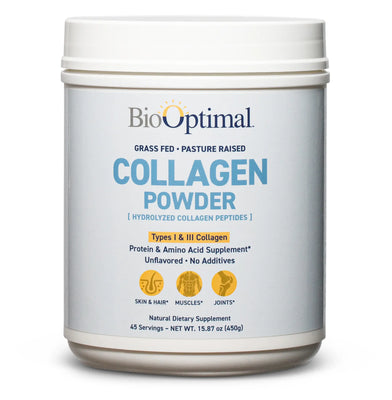
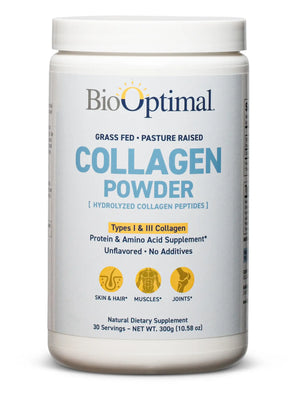
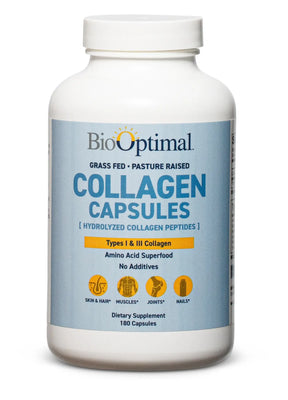
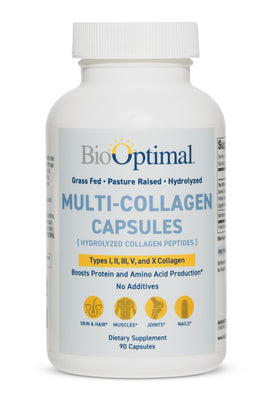
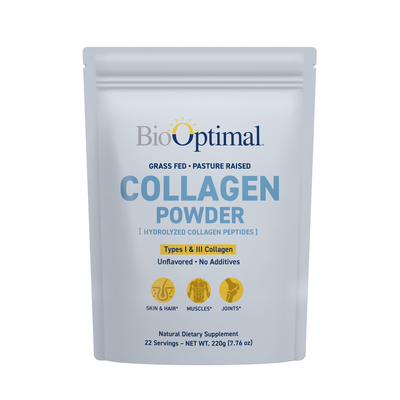
At BioOptimal, our current collagen line includes powder and capsule options. Our standard collagen powder and capsule products use hydrolyzed Types I and III collagen sourced from grass-fed and pasture-raised bovine sources.
BioOptimal states that its collagen products are free from fillers, binders, additives, and preservatives, and that batches are third-party tested for heavy metals and other contaminants.
If a mixable format works better for you, take a look at BioOptimal Collagen Powder.
If you prefer something portable that does not require measuring or mixing, BioOptimal Collagen Capsules may fit your routine more easily.
Powder or Capsules: Which Is Better for Your Routine?
There is no need to choose the "better" format in theory. Choose the one you are most likely to use consistently.
If you enjoy adding something to your morning drink, collagen powder can be an easy option. You can mix it into coffee, tea, smoothies, or water.
BioOptimal's current powder instructions recommend one 10-gram scoop once daily.
If you are frequently away from home or simply do not want to measure and mix a supplement, capsules can be more convenient.
We have also created a guide comparing collagen powder and pills if you want to take a closer look at the differences before choosing a format.
What Can You Realistically Expect From Collagen and Retinol?
When you start a new skincare or wellness routine, it can be tempting to look for a dramatic change as quickly as possible.
Instead, give yourself time to see how your routine fits you.
Collagen and retinol can both play useful roles, but neither should be expected to do everything.
Collagen may support certain measures of skin health. Research suggests hydrolyzed collagen may support skin hydration and elasticity, with some studies also reporting improvements in wrinkle-related outcomes.
Retinol can provide a targeted topical approach. It has an established role in skincare for concerns such as fine lines, wrinkles, texture, and uneven tone.
Neither replaces sunscreen. Daily sun protection remains an important part of caring for aging skin.
Neither stops natural aging. Aging is a normal process, and no single supplement or skincare ingredient can stop it.
Neither should be judged after a few days. Consistency and time matter when you are evaluating a new routine.
Instead of asking whether an ingredient will completely change your skin, consider smaller and more useful questions:
- Is my routine easy enough to maintain?
- Am I using my products consistently?
- Does my skin tolerate my skincare products well?
- Am I protecting my skin from the sun?
- Am I supporting my overall nutrition and wellness?
Those questions can help you build a routine that works for you rather than constantly jumping from one product to another.
Frequently Asked Questions
1. Is Collagen Better Than Retinol for Wrinkles?
Not necessarily. They serve different purposes.
Retinol is a topical ingredient with an established role in dermatology for concerns including fine lines and wrinkles. Collagen supplements have produced promising findings in some studies, particularly for measures such as hydration and elasticity, but the evidence is mixed and should be interpreted realistically.
If wrinkles are your main concern, retinol may be the more direct topical option. If you want to add collagen peptides to your daily nutrition routine, collagen may complement your overall approach.
2. Can You Use Collagen and Retinol Together?
Yes. They can be part of the same routine because they work through different routes.
Collagen is taken orally, while retinol is applied topically. You do not necessarily have to choose between them.
3. Should I Take Collagen or Use Retinol?
Start with your goal.
If you want a topical approach to fine lines, wrinkles, texture, or uneven tone, retinol may fit your routine better.
If you want to add hydrolyzed collagen peptides to your nutrition and wellness routine, collagen may be the better fit.
If you want to support your skin from multiple angles, you can also consider using both.
4. Does Retinol Increase Collagen Production?
Retinoids have been associated with increased collagen production and improvements in skin structure. The American Academy of Dermatology notes that retinoids can boost collagen and improve fine lines and wrinkles.
5. Does Collagen Help With Fine Lines?
Some clinical studies have reported improvements in wrinkle-related outcomes after oral hydrolyzed collagen supplementation.
However, research findings are not completely consistent, and more recent reviews have raised concerns about study quality and bias.
For that reason, it is better to view collagen as a potential supportive addition to your routine rather than a guaranteed solution for fine lines.
6. What Is Better for Aging Skin: Collagen or Retinol?
There is no single answer.
Retinol gives you a direct topical skincare approach, while collagen gives you a way to add hydrolyzed collagen peptides to your daily nutrition routine.
Your skin goals, preferences, and overall routine should guide your decision.
7. Can Collagen Supplements Replace Skincare Products?
No.
A collagen supplement should not be treated as a replacement for sunscreen, moisturizer, cleansing, or an appropriate topical treatment.
Think of collagen as one part of your overall approach rather than a substitute for taking care of your skin externally.
8. How Long Does Collagen Take to Work Compared With Retinol?
Neither should be judged after just a few days.
BioOptimal's educational material discusses several weeks of consistent collagen use before evaluating results. Retinol also generally requires consistent use over time.
Individual results can vary, so give your routine enough time before deciding whether it is working for you.
How Can You Build a Simple Anti-Aging Skin Routine?
You do not need to make your routine complicated to make it meaningful.
Start with the basics.
In the morning, focus on gentle cleansing if needed, moisturizing, and sunscreen.
In the evening, cleanse your skin and use your chosen skincare products according to their directions. If retinol is part of your routine, introduce it gradually and give your skin time to adjust.
Throughout the day, focus on your overall nutrition and hydration. If you have decided that collagen fits your routine, take your daily serving consistently according to the product directions.
This approach gives each part of your routine a clear purpose without asking one product to do everything.
Choosing the Right Approach for Your Aging Skin
When comparing collagen and retinol for aging skin, you do not have to choose one over the other.
Retinol offers a targeted topical approach for concerns such as fine lines, wrinkles, texture, and uneven tone. Collagen provides hydrolyzed peptides that research suggests may support skin hydration and elasticity.
At BioOptimal, we focus on making your supplement choices simple and informed. Our collagen products feature hydrolyzed peptides, grass-fed and pasture-raised sourcing, and third-party testing. Choose capsules or powder based on whichever fits your routine best.
If you are considering collagen, explore BioOptimal’s collagen collection and find a format you can use consistently.
The best routine is one you understand, feel comfortable with, and can maintain.