

The best collagen supplement for women over 30 depends on individual health goals. Hydrolyzed Types I and III collagen peptides are common options for skin and connective tissue support, while Type II is associated with cartilage. Look for clear ingredient labels, appropriate serving sizes, and third-party testing. Collagen can complement a balanced diet but is not essential solely because of age.
Louis's takeaways:
- Women over 30 do not automatically need collagen supplements. The decision should depend on personal health goals, nutritional needs, and lifestyle.
- Hydrolyzed collagen peptides are commonly used in supplements and have been studied for potential benefits related to skin, joints, and bone health.
- Types I and III collagen are commonly associated with skin and connective tissues, while Type II collagen is primarily found in cartilage.
- Bovine collagen typically provides Types I and III, while marine collagen mainly contains Type I. Neither source is universally better.
- Collagen powder, capsules, and multi-collagen formulas offer different serving options, but no single format is proven superior for everyone.
- Choose collagen supplements with clearly labeled ingredients, appropriate serving sizes, responsible sourcing, and third-party testing rather than relying on age-based marketing claims.
Table of Contents:
- Do Women Over 30 Need a Collagen Supplement
- Start With Your Goal
- How to Choose the Best Collagen Supplement After 30
- Which Type of Collagen Is Best for Women Over 30
- Marine vs Bovine Collagen
- Collagen Powder vs Capsules vs Multi-Collagen
- Best Collagen Choice by Goal
- What to Check Before Buying Collagen
- Frequently Asked Questions
- Choosing a Collagen Supplement After 30
Your 30s can change what you look for in a supplement, but your age alone does not tell you which collagen product is right for you.
The best collagen supplement for women over 30 starts with your goal. If you are looking to support skin, joints, bones, or your everyday nutrition, look for a product with a clearly identified collagen source and type, a practical serving size, and transparent information about its ingredients and quality. Hydrolyzed collagen peptides are a common choice because they are widely used in human research and are available in convenient powder and capsule formats.
We believe choosing collagen should be about understanding what you are taking, not simply choosing a product because the label says it is made for women over 30. Different goals call for different considerations, and a thoughtful choice comes down to the collagen type, source, serving, evidence, and format that fit your routine.
Do Women Over 30 Need a Collagen Supplement
No. Turning 30 does not mean you suddenly need a collagen supplement. Your body naturally produces collagen using amino acids and nutrients such as vitamin C, while protein intake, regular exercise, sleep, and sun protection all support overall connective tissue health.
For some people, collagen peptides are a convenient addition to a daily routine. They can complement a balanced diet but should not replace complete protein sources or be treated as a solution for aging or medical conditions.
The best reason to take collagen is not simply your age. It is having a specific goal and choosing a product that fits your needs.
For more information, see the FDA's consumer guidance on dietary supplements.
Start With Your Goal
Collagen can support different parts of your daily wellness routine, so the right choice depends on what you want to support. Skin, joints, bones, hair, and nails each have different considerations, and not every collagen product has been studied for the same purpose.
For Skin Support
If healthy-looking skin is your priority, collagen peptides are one option worth considering. Research has examined their potential effects on skin hydration, elasticity, and the appearance of wrinkles.
A 2025 systematic review found favorable results when all 23 randomized controlled trials were considered together. However, those benefits were no longer significant when researchers looked only at higher-quality studies or studies without pharmaceutical industry funding. The evidence is encouraging, but it is not conclusive.
That is why we focus on realistic expectations. Collagen can be part of a thoughtful skin care routine, but it does not replace daily sun protection, balanced nutrition, or consistent skin care.
Read the 2025 systematic review and meta-analysis and the 2023 collagen skin meta-analysis for more detail.
For Joint Support
If joint comfort and mobility are your main concerns, collagen has also been studied for joint health, particularly in people with knee osteoarthritis.
A 2025 systematic review and meta-analysis of 11 randomized controlled trials involving 870 participants found improvements in pain and physical function among people with knee osteoarthritis who used oral collagen-based supplements. While these findings are encouraging, they do not mean every collagen product will produce the same results.
When choosing collagen for joint support, consider the specific collagen form, serving size, study population, and outcome used in the research. Persistent or worsening joint pain should also be discussed with a healthcare professional rather than managed with supplements alone.
Read the 2025 systematic review on collagen and knee osteoarthritis for a closer look at the evidence.
For Bone Support
Collagen is an important structural protein in bone, making it another area of interest for collagen research. Some studies have examined collagen peptides and bone-related outcomes, including research involving postmenopausal women.
However, collagen should be viewed as one part of a broader approach to bone health. Adequate calcium and vitamin D, regular weight-bearing exercise, sufficient protein, and appropriate medical care all remain important.
For Hair and Nail Support
Hair and nails are often associated with collagen supplements, but the evidence here is less direct than it is for some skin and joint outcomes.
Collagen provides amino acids that contribute to your body's overall protein supply, but it should not be presented as a treatment for hair loss or a guarantee of stronger nails. Hair and nail changes can have many causes, including nutrition, genetics, hormonal changes, stress, medications, and underlying health conditions.
If your goal is simply to add collagen peptides to your daily routine, they can be a convenient option. But if you are experiencing sudden hair shedding, significant nail changes, or other persistent symptoms, it is worth looking into the underlying cause rather than relying on a supplement alone.
How to Choose the Best Collagen Supplement After 30
Choosing collagen should feel simple and purposeful. We focus on clean formulas, clear labeling, responsible sourcing, and practical formats that make daily supplementation easy.
1. Match the Collagen Type to Your Goal
Type I is abundant in skin, bone, tendons, and connective tissues, while Type III commonly occurs alongside Type I. Type II is a major collagen found in cartilage. Understanding these differences can help you choose a product that fits your goals with greater confidence.
2. Choose Hydrolyzed Collagen Peptides
Hydrolyzed collagen is broken down into smaller peptide fragments and is widely used in oral collagen research. We use hydrolyzed collagen peptides because they are straightforward, versatile, and easy to add to a daily routine.
3. Consider the Serving Size
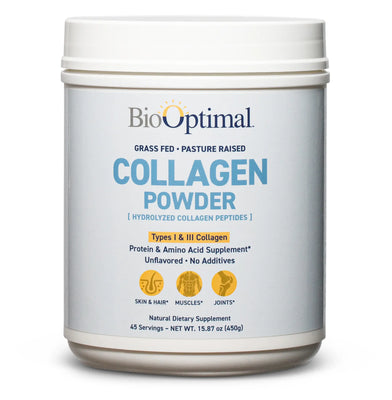
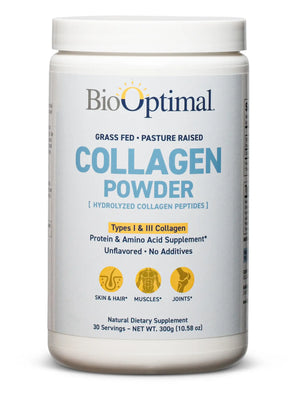
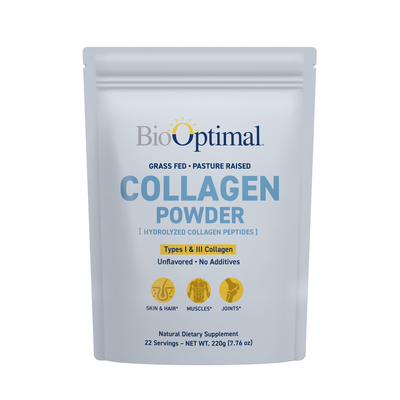
Collagen research uses different preparations and serving amounts, so the details matter. Our BioOptimal Collagen Powder provides a 10-gram serving of double-hydrolyzed Types I and III bovine collagen peptides. We recommend checking the current Supplement Facts panel for the most up-to-date serving and ingredient information.
You can also review the full details of our BioOptimal Collagen Powder when comparing your options.
4. Know Your Collagen Source
Bovine collagen commonly provides Types I and III, while marine collagen is generally associated with Type I. We recognize that the source can matter for dietary preferences, allergies, sourcing priorities, and formulation. Neither source is automatically the right choice for everyone.
If you are comparing the two, our resource on marine collagen and bovine collagen peptides offers more practical context.
5. Look for Clear Quality Standards
We believe you should know what you are taking. Our collagen products are third-party tested for heavy metals and other contaminants, with an emphasis on GMP-certified manufacturing and responsible sourcing. We also keep our formulas simple, without fillers, binders, preservatives, added sugar, or artificial flavors.
Our quality standards and sourcing practices explain more about how we approach product quality.
6. Choose a Format That Fits Your Routine
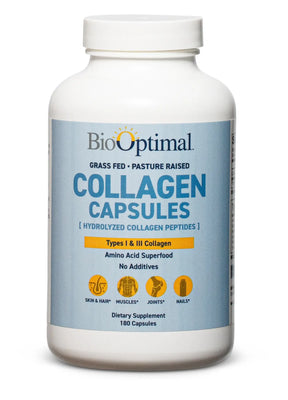
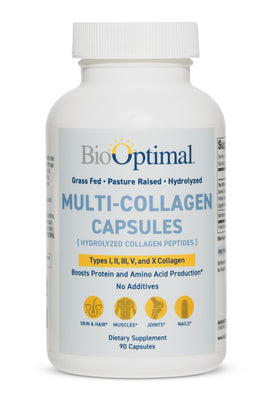
Powder is a natural fit for coffee, smoothies, water, or meals, while capsules offer a simple, pre-measured option without mixing. Our multi-collagen capsules provide several listed collagen types in one convenient format.
We do not believe one format is automatically better than another. The right choice is the one that provides a suitable serving and fits naturally into your routine. For a closer look at the differences, see our comparison of liquid collagen versus powder.
Which Type of Collagen Is Best for Women Over 30
Type I Collagen
Type I is the most abundant collagen type in the body and is found in skin, bone, tendons, and other connective tissues. It is common in bovine and marine collagen products.
Type II Collagen
Type II is strongly associated with cartilage. If joint and cartilage support is your main reason for taking collagen, look closely at the exact Type II preparation and research rather than treating every Type II product as equivalent.
Type III Collagen
Type III often occurs with Type I and is found in skin and other connective tissues. It is commonly included with Type I in bovine collagen peptide products.
Do You Need Multiple Collagen Types
Not necessarily. More collagen types do not automatically mean a better product. The advantage of a multi-collagen formula is that it provides several listed collagen types in one product. Whether that matters depends on your goal and the actual amounts and sources provided.
Marine vs Bovine Collagen
Marine and bovine collagen are both used in supplements, but they are not identical sources. Bovine collagen is commonly rich in Types I and III, while marine collagen is generally Type I. Fish allergy is an important consideration for marine products, while people avoiding bovine sources may prefer another option.
BioOptimal's core collagen range uses bovine collagen sourced from grass-fed and pasture-raised animals. The brand states that its collagen is free from hormones and antibiotics, non-GMO, and third-party tested for heavy metals and other contaminants.
Compare the current BioOptimal collagen powder and collagen capsules.
Collagen Powder vs Capsules vs Multi-Collagen
Format |
May suit |
What to check |
Powder |
People who want to mix collagen into coffee, smoothies, water, or food |
Collagen amount per scoop, ingredients, source, serving directions |
Collagen capsules |
People who want a convenient pre-measured option |
Capsules per serving, collagen amount, source, capsule ingredients |
Multi-collagen capsules |
People who specifically want several listed collagen types |
Types, animal sources, allergens, amount per serving, intended goal |
BioOptimal currently offers collagen powders, collagen capsules, and Multi-Collagen Capsules. The standard powder and capsule products use Types I and III bovine collagen peptides. The Multi-Collagen Capsules list Types I, II, III, V, and X.
Compare the current BioOptimal collagen collection before choosing a format.
Best Collagen Choice by Goal
Primary goal |
What to examine |
What not to assume |
Skin support |
Type I and III source, hydrolyzed peptides, relevant human research |
A beauty-focused formula automatically works better |
Joint support |
Research relevant to the actual collagen form and joint outcome |
All collagen types have identical joint evidence |
Bone support |
Research on the specific collagen preparation plus overall bone care |
Collagen replaces calcium, vitamin D, exercise, or medical treatment |
Simple daily routine |
Short ingredient list, serving, taste, format |
More ingredients mean higher quality |
Ingredient-conscious purchase |
Source, allergens, testing, label clarity |
A higher price guarantees better quality |
Several collagen types |
Exact types, amounts, sources, and allergens |
More collagen types automatically produce better results |
What to Check Before Buying Collagen
- Your main reason for taking collagen.
- The collagen type or types listed on the label.
- Whether the product uses hydrolyzed collagen peptides or another collagen form.
- The amount of collagen per serving.
- The animal source and relevant allergens.
- The complete Supplement Facts panel.
- Testing information and what that testing actually covers.
- Added ingredients that may or may not be useful to you.
- Whether the format fits your daily routine.
- Whether a healthcare professional should review the supplement because of pregnancy, breastfeeding, medication use, allergies, kidney disease, or another medical condition.
Frequently Asked Questions
1. What type of collagen is best for women over 30?
There is no single best type for every woman. Types I and III are common for skin and connective tissue-focused products, while Type II is associated with cartilage. The most useful choice depends on your goal, the exact collagen preparation, serving, source, and evidence.
2. Do women over 30 need collagen supplements?
No. Age alone does not mean you need collagen. Your body produces collagen from amino acids, and normal collagen formation also requires nutrients such as vitamin C. A collagen supplement can be a convenient addition to a routine, but it does not replace balanced nutrition or complete protein.
3. Is marine or bovine collagen better?
Neither is automatically better. Bovine collagen commonly supplies Types I and III, while marine collagen is generally Type I. Compare source, allergies, sourcing, serving size, testing, and the evidence relevant to your goal.
4. How much collagen should a woman over 30 take?
There is no universal amount that applies to every product and goal. Clinical studies use different preparations and serving amounts. Follow the product label and compare its serving with research on the same or closely comparable preparation.
5. How long does collagen take to work?
There is no guaranteed timeline. Many collagen studies measure outcomes over several weeks or months, and the timeframe varies by goal and product. BioOptimal's current educational content commonly discusses a four-to-twelve-week window for noticeable changes, but that should be treated as an expectation rather than a promise.
6. Is collagen powder better than capsules?
Not automatically. Powder may be easier when you already mix drinks or food, while capsules are convenient and portable. Choose the format that provides an appropriate serving and fits your routine. Liquid is not automatically superior simply because it is liquid.
7. Can you take collagen every day?
Many collagen products are intended for daily use, but you should follow the directions for the specific product. If you take medications, have a medical condition, or are pregnant or breastfeeding, ask a healthcare professional whether the product is appropriate for you.
8. Who should not take collagen supplements?
Anyone with an allergy to the collagen source should avoid that product. People who are pregnant or breastfeeding, taking medications, managing a medical condition, or unsure whether a supplement is appropriate should discuss it with a healthcare professional before starting.
Choosing a Collagen Supplement After 30
Choosing collagen does not have to mean sorting through a wall of promises. Start with the goal, then look at the collagen type, source, form, serving, research, testing, and ingredients. That gives you a much clearer basis for comparison than age-based marketing alone.
BioOptimal takes a straightforward approach to this category. The brand emphasizes responsibly sourced ingredients, clean formulas, third-party testing, and GMP-certified manufacturing. Its current collagen range gives you a standard Types I and III option in powder or capsule form, along with a Multi-Collagen Capsule option containing Types I, II, III, V, and X.
We believe that is the useful way to think about collagen after 30. Choose the formula that matches your goal, understand what is actually in it, and build it into a routine you can maintain.
If that approach fits what you are looking for, compare BioOptimal collagen supplements and choose the format that works naturally with your day.