

Yes, collagen can generally be taken alongside supplements such as multivitamins, magnesium, creatine, and protein powder. However, check product labels for overlapping nutrients, allergens, and recommended serving amounts. Some ingredients may interact with medications or require specific timing. Consult a healthcare professional if you take prescription medications or have health concerns.
Louis's takeaways:
- Collagen can be taken with many common supplements, but compatibility depends on the ingredients, serving amounts, and individual health needs.
- Always check Supplement Facts labels for repeated vitamins and minerals, including vitamin C, biotin, zinc, and magnesium.
- Vitamin C supports normal collagen production, but taking an additional vitamin C supplement is not always necessary.
- Collagen can be used alongside creatine, protein powder, magnesium, and multivitamins, depending on the products and individual circumstances.
- There is no universal rule requiring collagen to be taken separately from other supplements. Timing depends on specific ingredients and medication interactions.
- Consult a healthcare professional before combining supplements with prescription medications, especially if you have an existing medical condition.
Table of Contents:
- Can You Take Collagen With Other Supplements?
- Check What Is Actually in Your Collagen Supplement
- How to Check Your Entire Supplement Routine
- Can Two Supplements Be Taken Together, or Do They Work Better Separately?
- Can You Take Collagen With Common Supplements?
- Do You Need Vitamin C With Collagen?
- Should You Take Collagen and Other Supplements at the Same Time?
- What Supplements Should Not Be Taken With Collagen?
- What If You Take Prescription or Over-the-Counter Medications?
- A 5-Minute Supplement Stack Checklist
- Frequently Asked Questions
- Adding Collagen to Your Supplement Routine
Yes, collagen can often fit alongside other supplements, but the right approach depends on every product in your routine. Check each Supplement Facts label for repeated vitamins, minerals, serving amounts, added ingredients, and allergens. If you use medications or have a health condition, review the full list with a healthcare professional.
The key is to review the whole routine rather than judge collagen in isolation. A plain hydrolyzed collagen powder may contain only collagen peptides, while another collagen product may also contain vitamin C, biotin, zinc, copper, herbs, sweeteners, or other active ingredients. Those added ingredients can change what you need to check before combining products.
The U.S. Food and Drug Administration (FDA) notes that problems can occur when people combine dietary supplements, mix them with medicines, or take too much of certain supplement ingredients. The FDA also requires a Supplement Facts panel that lists serving size, dietary ingredients, and amounts per serving. That label is the best starting point for reviewing a supplement routine.
Can You Take Collagen With Other Supplements?
For many people, collagen can be part of a routine that also includes vitamins, minerals, protein products, creatine, probiotics, or other dietary supplements. That does not mean every combination is appropriate for every person. The answer depends on the exact formulas, the amounts you take, your diet, allergies, medications, health conditions, and whether several products repeat the same nutrients.
Recent reviews of oral hydrolyzed collagen trials describe collagen as generally well tolerated in the study populations examined. Still, tolerability in clinical trials does not establish the safety of every possible supplement stack or medication combination.
Collagen is only one item in the stack. The rest of the labels may create more important safety or duplication questions.
Check What Is Actually in Your Collagen Supplement
Start by identifying whether your collagen is a simple collagen peptide product or a multi-ingredient formula. Hydrolyzed collagen peptides are collagen proteins broken into smaller peptide chains. Depending on the product, the label may list bovine, marine, chicken, or another animal source.
Look beyond the front of the package. FDA labeling rules distinguish dietary ingredients from other ingredients such as fillers, binders, preservatives, sweeteners, and flavorings. The Supplement Facts panel shows the serving size and amount of each declared dietary ingredient.
This matters because two products that both say "collagen" on the front can create very different supplement-stacking questions. A collagen-only powder is simpler to compare against a multivitamin than a beauty blend that already contains several vitamins, minerals, or botanicals.
You can check for:
- Collagen source: bovine, marine, chicken, or another source
- Collagen form: hydrolyzed peptides or another form
- Serving size and number of servings per day
- Added vitamins or minerals, such as vitamin C, biotin, zinc, copper, magnesium, calcium, or vitamin D
- Other active ingredients, including herbs or hyaluronic acid
- Allergen information and any dietary restrictions that apply to you
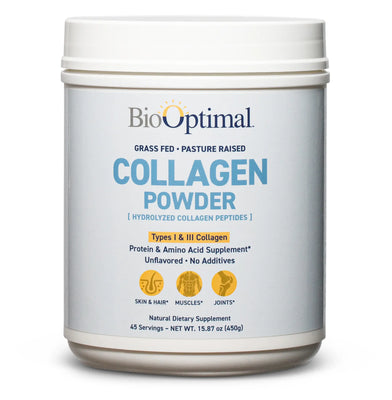
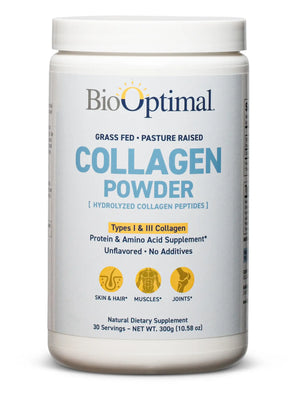
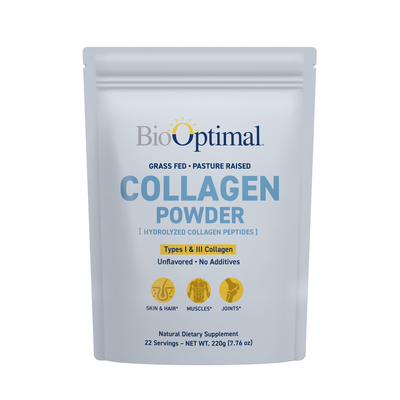
Prefer a simpler formula? BioOptimal Collagen Powder lists one ingredient: grass-fed, pasture-raised bovine Types I and III hydrolyzed collagen peptides. See the single-ingredient collagen peptide powder.
How to Check Your Entire Supplement Routine
Instead of asking whether collagen is compatible with one supplement at a time, build a quick inventory of everything you take. This makes duplicate ingredients easier to spot and gives a healthcare professional a more useful list if you need individual guidance.
FDA dietary supplement guidance specifically recommends telling healthcare professionals about all dietary supplements and medications you use, including dosages and how often you take them.
Step |
What to Check |
Why It Matters |
1. List every product |
Include collagen, multivitamins, single nutrients, sports products, herbal products, gummies, powders, and drinks. |
A nutrient can appear in more than one product. |
2. Read each Supplement Facts panel |
Write down the ingredient amount per serving and how many servings you actually take. |
The total daily amount may differ from the amount shown for one serving. |
3. Mark repeated nutrients |
Pay attention to vitamin C, vitamin D, biotin, zinc, copper, magnesium, calcium, and iron. |
Repeated nutrients can raise total intake without being obvious from the front label. |
4. Check source and allergens |
Review fish, bovine, chicken, dairy, soy, or other relevant sources and ingredients. |
The source may matter for allergies and dietary preferences. |
5. Separate medication questions |
List prescription and over-the-counter medicines separately. |
Some supplement ingredients can change medication absorption, metabolism, or excretion. |
6. Review changes one at a time |
If practical, avoid adding several new products on the same day. |
It is easier to identify the cause if you develop an unwanted effect. |
Can Two Supplements Be Taken Together, or Do They Work Better Separately?
First, compatibility asks whether there is a known reason the products must not be used in the same routine. Second, biological relationship asks whether one nutrient participates in a process related to collagen. Third, added benefit asks whether human studies show that taking the two products together improves a meaningful outcome compared with taking one alone.
A biological relationship does not automatically prove a better result from a supplement combination. Vitamin C is a good example. The National Institutes of Health (NIH) states that vitamin C is required for normal collagen biosynthesis. That fact does not prove that every collagen user needs an extra vitamin C pill or that taking vitamin C and collagen at the same moment produces better results.
When a product claims that two ingredients are a stronger pair, look for research on the specific combination, amount, population, and outcome rather than relying only on a biological explanation.
Can You Take Collagen With Common Supplements?
The table below is a screening guide, not a personal interaction checker. The main lesson is that collagen is often not the ingredient that creates the key caution. Other vitamins, minerals, herbs, or medications may matter more.
Combination |
Practical Answer |
Main Check |
Collagen + multivitamin |
They can be part of the same routine for many people, but compare both labels first. |
Repeated vitamins and minerals, plus total daily amounts. |
Collagen + vitamin C |
Vitamin C has a normal role in collagen formation, but a separate vitamin C supplement is not automatically needed. |
Dietary intake, other supplements, and the amount already in the collagen formula. |
Collagen + magnesium |
There is no universal collagen timing rule that requires these to be separated. |
Magnesium amount and any medicines that interact with magnesium. |
Collagen + vitamin D |
Review the products together rather than treating collagen as the main concern. |
Total vitamin D from all supplements and clinician guidance when relevant. |
Collagen + biotin |
They may appear together in beauty formulas. |
Total biotin and upcoming laboratory testing. |
Collagen + creatine |
They serve different nutrition and performance purposes. |
Each product label, your goals, and personal health context. |
Collagen + protein powder |
Both add protein, but they are not interchangeable for every nutrition goal. |
Total protein intake and the amino acid profile of the other protein product. |
Collagen + omega-3 |
Assess the complete formulas and medication context. |
Other active ingredients and medicines, especially if a clinician has given bleeding-risk instructions. |
Collagen + probiotics |
Using both does not by itself prove added benefit from the combination. |
Product-specific ingredients and your tolerance. |
Collagen + iron |
Iron requires more individual attention than many basic supplement pairings. |
Reason for iron use, amount, calcium intake, and medication interactions. |
Want the pairing-specific guides? Read BioOptimal guides on collagen and creatine, collagen and protein powder, and multivitamins with collagen.
Collagen and a Multivitamin
A multivitamin and collagen may fit in the same routine, but first compare their labels. Combination collagen products can already contain vitamin C, biotin, zinc, copper, or other nutrients that also appear in a multivitamin. Use the serving amounts, not just the ingredient names, when checking overlap.
For a deeper look at this pairing, see BioOptimal's guide to taking a multivitamin with collagen.
Collagen and Magnesium
The main caution is usually magnesium itself rather than collagen. NIH notes that magnesium supplements can interfere with the absorption of some antibiotics and bisphosphonates, and certain medicines can affect magnesium status. If you use those medicines, follow your clinician or pharmacist's timing instructions rather than creating a schedule based on collagen.
Collagen and Biotin
Biotin often appears in hair, skin, and nail formulas. NIH warns that high supplemental biotin intake can interfere with some laboratory tests and produce falsely high or low results. If your collagen contains biotin and you also take a separate beauty supplement or multivitamin, add the amounts together and tell your healthcare team before relevant lab testing.
Collagen and Creatine
Collagen peptides and creatine are used for different purposes, so the more useful question is whether each product fits your goals and health context. There is no need to assume that taking them together creates extra benefit unless evidence supports the specific outcome you want. For more detail, read BioOptimal's guide to taking collagen and creatine together.
Collagen and Protein Powder
Collagen is a protein source, but it is not a complete protein and should not automatically replace a complete dietary protein source. If you use collagen plus whey, casein, soy, pea, or another protein powder, consider the combined amount in the context of your overall diet and goals. BioOptimal also has a dedicated guide on collagen and protein powder together.
Collagen and Iron
Iron is a good example of why the entire routine matters. NIH notes that iron can reduce levodopa absorption, can reduce the effectiveness of levothyroxine when taken together, and may have reduced absorption when taken with calcium. These are not collagen interactions, but they can affect a person who happens to take collagen as part of the same routine.
Do You Need Vitamin C With Collagen?
Vitamin C is required for normal collagen biosynthesis in the body. You can get vitamin C from foods and supplements, and many people already obtain it through their diet or a multivitamin.
That means a separate vitamin C product should not be treated as a mandatory companion to collagen. If a collagen formula already contains vitamin C, include that amount when reviewing your total intake. If you are considering a high-dose vitamin C product for a specific health reason, discuss that choice with a healthcare professional rather than assuming more is better.
Should You Take Collagen and Other Supplements at the Same Time?
There is no single timing rule for collagen plus every other supplement. A schedule should be built around the instructions and interaction considerations for the other products you use.
For example, a person who takes magnesium with an antibiotic may need medication-specific spacing guidance. Someone using iron and calcium may also need to think about timing because calcium can interfere with iron absorption. Those timing questions exist whether collagen is in the routine or not.
For ordinary collagen use, consistency and following the product label are more practical than forcing all supplements into the same morning or evening window. If a supplement causes stomach discomfort, taking it at a different time or with food may be appropriate depending on its label and clinician guidance.
What Supplements Should Not Be Taken With Collagen?
There is no useful universal blacklist that applies to every collagen product and every person. A better method is to check the full formula and the rest of your routine for duplicated nutrients, ingredients with their own cautions, allergens, and medication interactions.
FDA warns that supplement-related problems can occur when people combine supplements, mix supplements with medicines, or take too much of certain ingredients. This is why a collagen-only product and a collagen beauty blend should not be treated as the same interaction question.
Pay closer attention when a product contains multiple vitamins or minerals, high-dose single nutrients, botanicals, stimulants, or other active compounds. Also ask for professional review if you are pregnant or breastfeeding, preparing for surgery, managing a medical condition, or taking prescription medicines.
What If You Take Prescription or Over-the-Counter Medications?
Do not assume that a supplement is compatible with a medicine simply because the supplement is sold without a prescription. FDA explains that some dietary supplement ingredients can change how medicines are absorbed, metabolized, or excreted, which can affect the amount of medicine your body receives.
Collagen may not be the ingredient that creates the concern. A multi-ingredient collagen product could contain a vitamin, mineral, herb, or other compound with its own medication considerations. Magnesium and iron are two examples of nutrients with documented medication interactions.
Before adding collagen to a routine that includes prescription or over-the-counter medicines, bring your complete product list, serving amounts, and medication schedule to a physician or pharmacist. This is especially important if your health status changes, you are pregnant or breastfeeding, or you have an upcoming procedure.
A 5-Minute Supplement Stack Checklist
Use this quick check before adding collagen to a routine that already contains other supplements.
- Read the Supplement Facts and Other Ingredients sections on the collagen product.
- Write down every vitamin, mineral, protein powder, sports supplement, herbal product, and other supplement you take.
- Circle ingredients that appear in more than one product and calculate the amounts from your actual daily servings.
- Check collagen source and other ingredients for relevant allergies or dietary restrictions.
- Review any medication-specific timing or interaction instructions with a physician or pharmacist.
- If you are adding several products, consider changing one thing at a time so an unwanted effect is easier to trace.
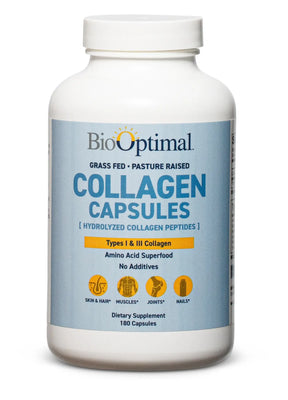
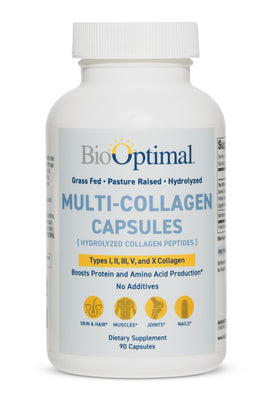
Ready to compare collagen options? Browse BioOptimal collagen supplements and compare powder and capsule formats based on the formula that fits your current routine.
Frequently Asked Questions
1. Can you take collagen with a multivitamin?
For many people, collagen and a multivitamin can be part of the same routine. The main step is to compare both labels for repeated nutrients such as vitamin C, biotin, zinc, or other vitamins and minerals. Add the amounts from your actual daily servings rather than assuming two separate products cannot overlap.
2. What supplements should not be taken with collagen?
There is no single supplement blacklist that applies to every collagen product. Check the complete collagen formula, repeated nutrients, allergens, and the cautions for every other supplement you use. FDA notes that problems can occur when supplements are combined or mixed with medicines, so individual context matters.
3. Do you need to take vitamin C with collagen?
Vitamin C is required for normal collagen biosynthesis, but that does not mean every collagen user needs a separate vitamin C supplement. Consider vitamin C from food, multivitamins, and the collagen formula itself. Extra supplementation should be based on your nutritional needs rather than treated as a required collagen pairing.
4. Can you take collagen and magnesium together?
There is no universal collagen timing rule that requires magnesium to be taken separately. However, magnesium can interact with some medicines, including certain antibiotics and bisphosphonates. If you use those medications, follow your physician or pharmacist's timing advice and check the magnesium amount across all of your supplements.
5. Can you take collagen and creatine together?
Collagen and creatine are used for different purposes, and people may include both in one routine. Review each product separately, follow its directions, and consider your goals, health history, and other supplements. Do not assume that using them together creates extra benefit unless research supports the specific outcome you are targeting.
6. Can you take collagen and protein powder together?
Collagen and protein powder can both contribute protein, but they are not identical nutrition products. Collagen is not a complete protein, so consider the amino acid profile and your total dietary protein intake. If both fit your nutrition plan, compare serving sizes and other ingredients rather than treating one as a replacement for the other.
7. Do I need to take collagen separately from my other supplements?
Not necessarily. There is no single rule requiring collagen to be separated from all other supplements. Timing should follow the directions and interaction concerns of the other products in your routine. Iron, calcium, magnesium, and some medications can have timing considerations that matter independently of collagen.
8. Can I take collagen with prescription medications?
Do not rely on a general yes-or-no answer when prescription medicines are involved. FDA warns that some supplement ingredients can affect medication absorption, metabolism, or excretion. Review the complete collagen formula, all other supplements, and your medication list with a physician or pharmacist before changing your routine.
Adding Collagen to Your Supplement Routine
Collagen can fit into many supplement routines, but the safest way to add it is to read every label together. Start with the collagen formula, check repeated vitamins and minerals, count your real daily servings, review allergens, and treat medication questions separately.
If you prefer fewer added ingredients, a single-ingredient collagen peptide powder can make label comparison simpler. If you want to compare formats, shop BioOptimal collagen supplements and choose the product that best fits your routine and dietary preferences.